

Pre-Sale Guarantee Trust: What Really Protects You
What a guarantee trust (fideicomiso de garantía) in a pre-sale does and doesn't protect, who gets paid first, which clauses to read, and how to verify it before reserving your home or condo.
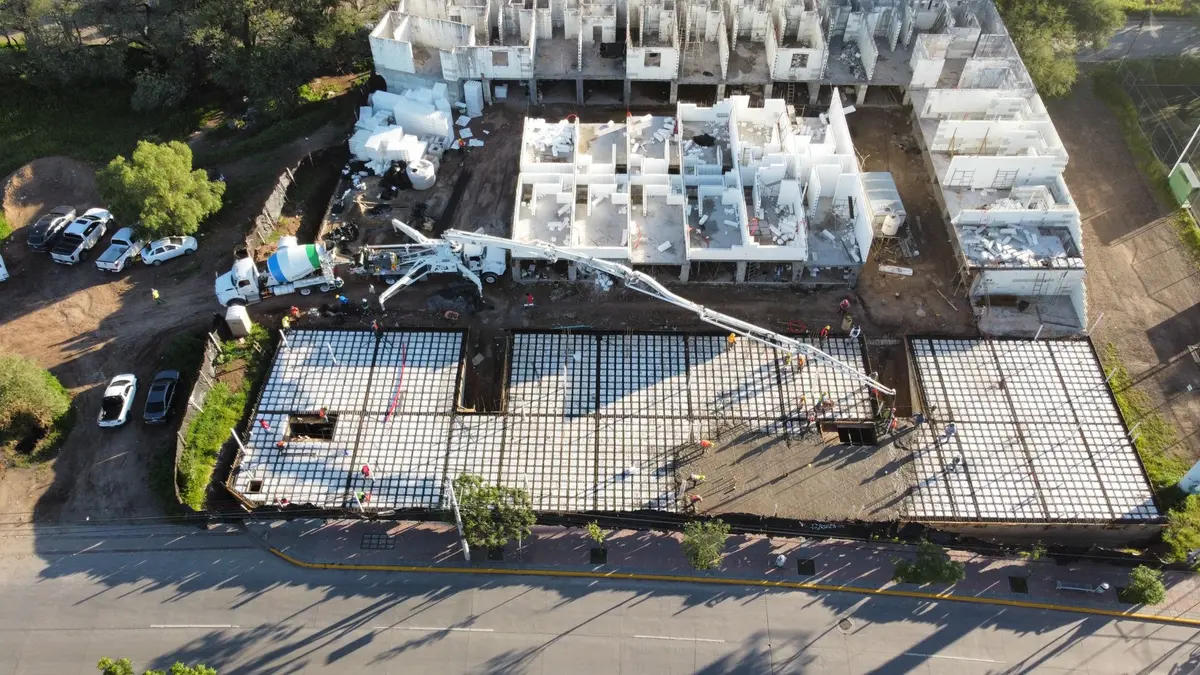
A guarantee trust (fideicomiso de garantía) in a pre-sale protects you only if your money goes directly into the trust's account, if the land has been contributed to that trust, and if the contract recognizes you as a beneficiary with the right to receive your deed or get back what you paid. If any one of those three pieces is missing, the trust can exist, have a bank as trustee and appear in the brochure, and still protect someone else: usually the bank financing the construction. "We have a trust" is a sales line, not a guarantee. In this guide we explain how a trust works in a pre-sale in Mexico, which risks it truly covers, which ones it never covers, and which documents to ask for before you pay the reservation deposit.
What a trust is in a pre-sale
A trust (fideicomiso) is a contract in which a person (the settlor, or fideicomitente) hands over assets or money to an authorized institution (the trustee, or fiduciaria) to manage for a specific purpose, for the benefit of someone (the beneficiary, or fideicomisario). It is regulated by the Ley General de Títulos y Operaciones de Crédito (Articles 381 and following), and only entities authorized by that law can act as trustees: banks, brokerage firms, insurers, bonding companies and certain financial companies.
In a pre-sale, the typical structure looks like this:
- Settlor (fideicomitente): the landowner and/or the developer, who contribute the property to the trust.
- Trustee (fiduciaria): a bank or institution that becomes the legal owner of the land while construction lasts and receives the buyers' payments.
- Beneficiaries (fideicomisarios): here is the key. It can be the developer, the bank providing the bridge loan, the buyers, or several of them in different orders of priority.
- Technical committee (comité técnico): the group that gives instructions to the trustee, for example to release money to the developer or to deed each unit.
The idea is a good one: if the land and the buyers' money are inside the trust, the developer cannot sell them twice, mortgage them on its own, or use your payments on another project. But that protection depends entirely on what the contract says, not on the name of the bank.
Guarantee, administration or "project" trust: they're not the same
Pre-sale brochures use "guarantee trust" for almost everything. In practice there are three distinct structures, and each one protects a different party:
| Type | Purpose | Who it protects first | What it means for you |
|---|---|---|---|
| Guarantee (for the bridge loan) | Ensure the developer repays the loan used to build | The creditor bank | Your unit is only released when the developer pays the portion of the loan that corresponds to it |
| Administration / real estate | Pool land, permits and buyer payments, and deed the units at the end | Whoever the contract names as beneficiary | It protects you if you are registered as the beneficiary of your unit and your payments go in there |
| Mixed (administration + guarantee) | Both at once, with an order of priority | Usually the bank first, buyers second | You have rights, but behind the creditor if the project fails |
| Escrow or deposit account | Hold your money until a condition is met | Depends on the agreed condition | Useful for the reservation deposit; it gives you no rights over the land |
The question that sums it all up is: where do I stand if the project is never finished? If the contract says the creditor bank is paid first from the sale of the land and whatever has been built, and only afterward, "if there is a surplus," the buyers, your protection is much weaker than it sounds.
Heads up: a bridge loan is not a bad sign in itself; most established developments use one and the bank supervises the construction. What matters is that the contract provides for how your unit is released from the lien when the deed is signed (the so-called partial release) and that you see it in writing.
What it protects and what it doesn't
When properly structured, a pre-sale trust solves the most common frauds, but it does not turn the purchase into a risk-free investment.
What it does cover (if the contract is well drafted)
- Double sales: the trustee, as owner of the land, controls the allocation of each unit; it is harder for your condo to be sold to two people.
- Diversion of your payments: if you deposit into the trust's account, the money only leaves on the technical committee's instructions, normally against verified construction progress.
- Attachments against the developer: the contributed land stops being part of the developer's assets, so its ordinary creditors cannot seize it as if it were the developer's own (with exceptions if the contribution was made to defraud creditors).
- Orderly deeding: when construction is finished, the trustee appears before a notary public (notario público) and transfers your unit.
What it never covers
- Delivery delays: the trust does not force anyone to finish on time; that is set by your purchase contract and its penalties.
- Construction quality and hidden defects: the trustee is neither the builder nor a finishes inspector.
- Payments made outside the account: a cash reservation deposit handed to the seller, or a transfer to an agent's personal account, is not protected.
- Whether the money is enough: if the project ran short of funds, the trust distributes what there is; it doesn't multiply it.
- Appreciation: nothing guarantees the unit will be worth more at delivery.

Golden rule: if the contract mentions a trust but you are asked to deposit your down payment into an account in the name of the development company or an individual, that money is not in the trust. Ask for the CLABE in the trustee's name, with the trust contract number as the reference.
The clauses you should read
You don't need to read all 60 pages of the trust agreement, but you do need to read these parts. Ask the developer for a copy or, at the very least, an excerpt certified by the trustee.
- Parties and purposes: who the settlor is, who the trustee is, and what the trust was created for. If the purposes don't mention selling units to buyers, the trust wasn't designed with you in mind.
- Trust assets: it should include the land (with its registry details) and the funds contributed by buyers.
- Beneficiaries and order of priority: if there is a "first-priority beneficiary" that is a bank, understand that it gets paid before you.
- Buyer adhesion: how you are brought in (adhesion agreement, instruction letter, beneficiary registration). Without this document you are just another creditor of the developer.
- Release of funds: what is required for the trustee to hand money to the developer. The healthy approach is against construction progress reports signed by an independent supervisor.
- Technical committee: who sits on it. If it is made up only of the developer's people, control is weaker.
- Termination scenarios: what happens if the project is canceled or permits are not obtained; ideally it provides for the refund of contributions to buyers.
- Deeding: the deadline and manner in which the trustee transfers each unit, and who pays the trustee's fees at that point.
Your purchase agreement (or promise-to-purchase contract) must refer to that trust by number and trustee, and must match it. If the purchase agreement says one thing and the trust says another, what the trustee signed prevails.
The trust fees are normally paid by the developer during construction, but check whether any charge is passed on to you at deeding. If you want to compare, here we explain how much a bank trust costs per year, and you can estimate the rest of your closing costs with the deeding costs calculator.
How to verify the trust before reserving
These steps take a week or two and cost very little compared with the down payment you are about to put at risk:
- Ask for the trust contract number and the trustee's name. A serious developer gives them to you in writing without hesitation.
- Confirm with the trustee (through its customer service or trust division) that the trust exists, is in force and corresponds to that project. Call a number you find on the bank's official website, not the one in the brochure.
- Check the land's property folio at the Registro Público de la Propiedad (Public Property Registry) in your state: the owner of record should be the trustee. Also request the certificate of no liens (certificado de libertad de gravamen) to see whether there is a mortgage for the bridge loan and in whose favor.
- Demand the CLABE of the trust's account and deposit there starting with the reservation deposit. Keep every receipt with your unit's reference.
- Ask for your adhesion document or proof that you were registered as the beneficiary of the unit you bought.
- Cross-check against the permits: a valid building license, zoning (uso de suelo) and condominium regime. We explain how in how to verify a pre-sale developer's permits.
- If you will pay with an Infonavit or Fovissste loan, also confirm that the project is listed in the RUV (Registro Único de Vivienda); the trust does not replace that registration.
Tip: take the purchase agreement and the trust excerpt to a notary public or real estate attorney before signing. A review costs a fraction of a down payment, and it's where the "first-priority beneficiaries" the seller never mentioned get caught.
Red flags
Any of these signs justifies stopping, asking for explanations in writing, or looking at another project:
- They tell you there is a trust but won't give you the number or the trustee, or ask you to "wait until signing" to see it.
- The account for deposits is in the name of the development company, another company or an individual.
- The land at the Registro Público is still in the original owner's name or the development company's, not the trustee's.
- The "trustee" is not an authorized financial institution but a firm or an unregulated company.
- The purchase agreement doesn't mention the trust, or mentions it without a number.
- Aggressive discounts for paying 100% in cash up front, outside the trust structure.
- The technical committee is made up only of the developer's partners and there is no independent construction supervisor.
- There is no refund clause if permits are not obtained or the project is canceled.
Remember that the reservation deposit is the most exposed payment in the entire purchase. Before paying it, read how not to lose money on reservation deposits and what happens if you change your mind after the deposit. If you are still weighing whether buying off-plan makes sense for you, start with the advantages and risks of buying in pre-sale, and compare projects in the developments section or in condos for sale.
Are you a developer or owner whose project already has its trust in order? Show it in your listing with the number and the trustee: it builds trust. You can list your development on Inmobiliaria32.
Frequently asked questions
Does a pre-sale guarantee trust ensure I get my money back?
Not automatically. Only if your payments went into the trust's account, you are registered as a beneficiary, and the contract provides for the refund of contributions when the project is canceled. If there is a creditor bank in first place, it gets paid before the buyers.
How do I know if a development's trust is real?
Ask for the contract number and the trustee's name, confirm it with the bank through an official channel, and check at the Registro Público de la Propiedad that the land is in the trustee's name. The certificate of no liens (certificado de libertad de gravamen) will tell you whether there are mortgages on the property.
Who pays for the trust in a pre-sale?
During construction, the developer normally pays the trustee's fees. At deeding, check your contract: some projects pass part of the cost of transferring the unit on to the buyer, in addition to notary fees and taxes.
Does the trust protect me if delivery is delayed?
No. The trust protects the land and the money, but the delivery date and the penalties for delay are agreed in the purchase contract. Make sure that contract has a firm date, a penalty and an option to rescind with a refund.
Is it a bad sign if the development has a bridge loan?
Not necessarily: most established developments build with a bridge loan and the bank supervises the construction. What matters is that the contract explains how your unit is released from that mortgage at deeding and that your payments are inside the trust.
Listings
Recent properties
 For sale
MX$1,440,000
Land
Land for Sale in Residencial Lomas del Dorado
Boca del Río, Veracruz
 For sale
MX$3,900,000
House
House for Sale in Las Lomas, Riviera Veracruzana | 3 Bedrooms with Private Bathrooms
Alvarado, Veracruz
 For sale
MX$10,900,000
Land
Attention Investors
Puerto Vallarta, Jalisco
Keep reading
Related articles

Abusive Clauses in a Pre-Sale Contract: How to Spot Them
Abusive clauses in pre-sale contracts: the 10 most common, what Mexico's Federal Consumer Protection Law says, and what to do before and after you sign.
Inmobiliaria32 Team
What Is the RUV and Why Your Pre-Sale Home Needs to Be in It
What the RUV (Registro Único de Vivienda) is, what the CUV is, and why Infonavit and Fovissste won't lend on a pre-sale home without that registration. How to verify it.
Inmobiliaria32 Team

How to Verify a Developer's Permits Before Buying Pre-Construction
Before reserving a pre-construction condo, check the developer's RUV registration, building permit, zoning (uso de suelo) and guarantee trust (fideicomiso).
Carlos Mendoza

Fideicomiso for Foreigners: Buying in Mexico's Restricted Zone
Are you a foreigner who wants to buy a home near the beach or the border in Mexico? The law requires you to use a bank trust (fideicomiso).
Carlos Mendoza
Real estate investing
Keep learning before you decide
58 guides on real estate investing, and thousands of properties listed across Mexico.