

What Is the RUV and Why Your Pre-Sale Home Needs to Be in It
What the RUV (Registro Único de Vivienda) is, what the CUV is, and why Infonavit and Fovissste won't lend on a pre-sale home without that registration. How to verify it.
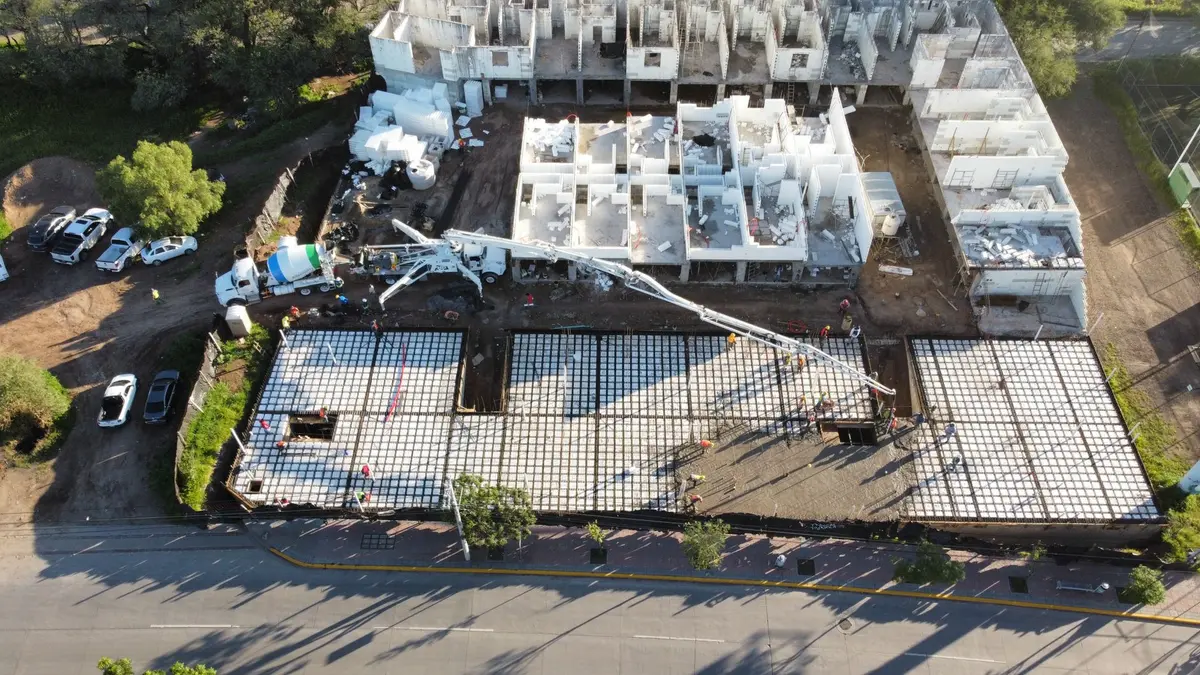
What is the RUV? It is the Registro Único de Vivienda (Single Housing Registry), the platform where developers register the new homes they want to sell with an Infonavit or Fovissste loan (and, when applicable, with federal subsidy). Every registered house or apartment receives a Clave Única de Vivienda (CUV), and the construction is reviewed by an independent verifier until it is finished and habitable. Without that registration, the institutes cannot formalize your loan on that new home, even if the project has a permit and a flawless showroom. If you are buying in pre-sale and plan to pay with Infonavit or Fovissste, the RUV is not an optional paperwork step for the developer: it is the condition for your loan to exist. Here we explain how it works, what it guarantees and what it doesn't, and how to check it before putting down a deposit.
What the RUV is and who created it
The Registro Único de Vivienda is a civil association (asociación civil) created in the mid-2000s by the country's main housing agencies, including Infonavit, Fovissste, the Sociedad Hipotecaria Federal (SHF) and the Comisión Nacional de Vivienda (CONAVI). Its goal was to stop maintaining a different registry at each institution and instead have a single registry of the new-home supply financed with workers' funds or government support.
In practice, the RUV serves three functions:
- Registration of the seller: the development company registers with its tax and legal information.
- Registration of the offering: the developer enters each project (location, number of homes, models, prices) and each home receives its CUV.
- Construction monitoring: a verifier assigned through the RUV visits the project, reports progress, and confirms when the home is finished and ready to be lived in.
In addition, RUV data feeds the official statistics on new housing in Mexico (inventory, homes in progress, completed and sold, by state and municipality), which CONAVI and the SHF use for their sector reports.
Important: the RUV applies to new homes sold with loans from the housing agencies or with subsidy. If you buy a resale home, or buy with a traditional bank loan or in cash, RUV registration is not a requirement; in those cases the review goes through the appraisal, the deed (escritura), and the certificate of no liens (certificado de libertad de gravamen).
The CUV and construction verification: how it works
The piece you'll hear about most is the CUV (Clave Única de Vivienda). It is the identifier of each individual home, not of the whole development: house 14 on lot 3 has one CUV and house 15 has another. With that code, Infonavit or Fovissste know exactly which property you are buying, who built it, what stage it is in, and whether it has already been verified.
A home's path through the RUV
- Seller registration: the development company registers as a business.
- Offering registration: it uploads the project with its documentation (among other things, municipal permits and licenses) and the CUVs for the homes are generated.
- Verification during construction: an independent verifier makes periodic visits and reports the percentage of progress on each home.
- Finished home: when the verifier confirms 100% completion and that the home has what it needs to be habitable (utilities, minimum finishes, committed eco-technologies), the home becomes available to be assigned a loan.
- Individualization (individualización): the institute links your loan to that CUV, the deed is signed before a notary public (notario público), and the developer gets paid.
That is why Infonavit and Fovissste do not finance pre-sale installments: your loan is exercised when the home is finished and verified. During construction you pay the deposit and, if applicable, the down payment with your own funds; the loan arrives at the end, at closing (escrituración).
Eco-technologies and the Hipoteca Verde
New homes financed with Infonavit must include eco-technologies (water savers, efficient light bulbs, a solar or efficient on-demand water heater, depending on the case). These features are declared in the registration and checked during verification. If the topic interests you, our guide to the Infonavit Hipoteca Verde explains how they affect your loan.
Why your pre-sale must be in the RUV
In a pre-sale purchase you pay today for something that doesn't exist yet. If your plan is to pay off the balance with an Infonavit or Fovissste loan, the RUV is what connects your money to that future home. Here are the concrete reasons to demand it:
- No CUV, no loan on a new home. If the home isn't registered and verified when construction ends, the institute can't link your loan to it. You'd be left with a paid deposit and no way to complete the purchase.
- It's a sign the project has its paperwork. To register the offering, the developer has to submit project documentation. It doesn't replace your own review, but a developer without permits will hardly manage to register.
- A third party is reviewing the construction. The verifier doesn't work for you, but they do report whether the construction is progressing and whether the home is delivered finished. That's more than you have in a pre-sale with no registration at all.
- It protects resale value. A home that was born outside the RUV can later be sold with a loan as a resale home, but the first buyer using social-housing credit could never have bought it new. That shrinks the pool of buyers for the whole development.
Tip: before looking at developments, prequalify with Infonavit or check the Fovissste requirements. Knowing your real loan amount keeps you from putting a deposit on a home you can't afford later, RUV or no RUV.
What the RUV does and doesn't guarantee
The most common mistake is reading "registered in the RUV" as a seal that the development is safe. It isn't. The RUV is a technical registry for financing, not insurance for the buyer or a sales authorization.
| Aspect | Does the RUV cover it? | What else to check |
|---|---|---|
| That the home can be financed with Infonavit or Fovissste | Yes, it's its main function | That the CUV matches the exact unit you're reserving |
| Actual construction progress | Yes, through verifier reports | Your own site visits and dated photos |
| Construction license and land-use permit | Partially: they are required to register, but the RUV is not the authority that issues them | A copy of the current license and land-use permit issued by the municipality |
| That the developer owns the land and it is free of liens | Not directly | Land deed and certificate of no liens from the Registro Público de la Propiedad |
| That your deposit and down payment are protected | No | Trust (fideicomiso) or escrow account, receipts, and a contract with penalties |
| Delivery date | No | A delivery clause in the contract with a penalty for delays |
| Quality of finishes and hidden defects | Only the minimum for habitability | Written warranties and an inspection on delivery day |
| Contract compliant with consumer law | No | Adhesion contract registered with Profeco and compliant with NOM-247-SE-2021 |
Put another way: the RUV tells you that this home will be able to receive your loan if it gets finished. It doesn't tell you it will be finished on time or that your money is safe in the meantime. For that you need the full review we explain in how to verify a developer's permits in a pre-sale.
How to verify the RUV before putting down a deposit
You don't need access to the RUV system to protect yourself. You need to ask for the right information and cross-check it with whoever will grant your loan.
- Ask directly: "Is the development registered in the RUV, and does the home I'm going to reserve already have a CUV?" Get the answer in writing, not just verbally.
- Ask for your unit's CUV. A generic project number won't do. It must correspond to the house or apartment number that appears in your contract.
- Check that the seller's name matches the legal entity (razón social) that signs your contract and issues your receipts. If the registration is under one company and a different one is charging you, ask them to explain the relationship in writing.
- Confirm it with the institute. Take the CUV to your loan advisor or to an Infonavit Service Center (Centro de Servicio Infonavit), or ask Fovissste if you are a government employee. They can tell you whether the home is registered and what stage it is in.
- Ask about verification progress. If delivery is in six months and the progress report is low, the timeline doesn't add up.
- Include the CUV in the contract. The purchase-sale or promise-to-sell contract should mention the code and the developer's commitment to keep the home eligible for an Infonavit or Fovissste loan.
Watch out for very early pre-sales: it is normal for a project in its initial stage (without a final construction license) not to have a CUV yet, because registering the offering requires documentation that is obtained later. In that case, ask in writing for the estimated registration date and for the contract to let you recover your deposit if the home isn't registered in time for your loan.
While you wait for delivery, also review the costs that come at closing: with an Infonavit or Fovissste loan you will pay the notary, the acquisition tax, and the appraisal. Calculate them with the closing cost calculator so you don't reach the end without the money.
Red flags related to the RUV
These situations don't always mean fraud, but they do mean you should stop and ask for explanations before paying:
- "We accept Infonavit" with no CUV and no date to get one. If the project is already well into construction and still has no registration, something is wrong with its paperwork.
- They ask you to pay the full amount out of pocket "and then Infonavit reimburses you." An Infonavit loan does not reimburse payments made to the developer; it pays the seller at closing.
- The CUV they give you belongs to another unit or another development. This happens when homes are reassigned; insist that the code match your contract.
- The seller's name doesn't match whoever signs the contract or issues the invoices or receipts.
- They offer to "fix" your loan outside the institute in exchange for a commission. Infonavit and Fovissste procedures are free; charging for them is a sign of fraud.
- The list price changes at closing compared to the one in your contract, with no clause justifying it.
Never deposit into a personal account. The deposit and down payment for a pre-sale are paid to the developer's legal entity or to the project's trust, with a receipt or invoice. A salesperson who asks for a transfer in their own name "to speed up the RUV" is trying to keep your money.
If what you want is a home that is already ready for a loan, without waiting for construction, check our guide to homes that accept an Infonavit loan and compare finished options in houses for sale and apartments for sale. If you are a developer or owner and want to advertise a home eligible for credit, you can list your property and note it in the description.
Frequently asked questions
What is the RUV at Infonavit?
The RUV (Registro Único de Vivienda) is the platform where developers register the new homes sold with an Infonavit or Fovissste loan. Each home receives a Clave Única de Vivienda (CUV) and a verifier reviews the construction until it is finished. Infonavit uses that code to link your loan to the exact home you are buying.
What is a home's CUV?
The CUV, or Clave Única de Vivienda, is the identifier the RUV assigns to each registered new house or apartment. It is different for each unit, not for the whole development. It must match the home that appears in your contract.
Can I buy in pre-sale with Infonavit if the development isn't in the RUV?
You can put down a deposit, but an Infonavit or Fovissste loan is only formalized when the new home is registered in the RUV, finished, and verified. If it ends up with no registration, you won't be able to use your loan on that home. Ask in writing for the registration date and for a clause refunding your deposit if it isn't met.
Does the RUV guarantee that the developer will deliver the home to me?
No. The RUV registers the home for financing and monitors the construction, but it does not protect your deposit or enforce a delivery date. For that, check the trust or escrow account, the construction license, the land deed, and the contract registered with Profeco.
Does a resale home need to be in the RUV?
No. RUV registration is for new homes sold with loans from the housing agencies or with subsidy. For a resale home, Infonavit and Fovissste review the property through the appraisal and legal documentation, such as the deed and the certificate of no liens.
Listings
Recent properties
 For sale
MX$1,440,000
Land
Land for Sale in Residencial Lomas del Dorado
Boca del Río, Veracruz
 For sale
MX$3,900,000
House
House for Sale in Las Lomas, Riviera Veracruzana | 3 Bedrooms with Private Bathrooms
Alvarado, Veracruz
 For sale
MX$10,900,000
Land
Attention Investors
Puerto Vallarta, Jalisco
Keep reading
Related articles

Infonavit Self-Build Loan: Build Your Home on Your Own Land
Infonavit self-build housing: requirements, loan amount, how funds are released in stages, and what your land must meet to build your home with credit.
Inmobiliaria32 Team

Abusive Clauses in a Pre-Sale Contract: How to Spot Them
Abusive clauses in pre-sale contracts: the 10 most common, what Mexico's Federal Consumer Protection Law says, and what to do before and after you sign.
Inmobiliaria32 Team
Pre-Sale Guarantee Trust: What Really Protects You
What a guarantee trust (fideicomiso de garantía) in a pre-sale does and doesn't protect, who gets paid first, which clauses to read, and how to verify it before reserving your home or condo.
Inmobiliaria32 Team
How to Verify a Developer's Permits Before Buying Pre-Construction
Before reserving a pre-construction condo, check the developer's RUV registration, building permit, zoning (uso de suelo) and guarantee trust (fideicomiso).
Carlos Mendoza
Buying a home
Keep learning before you decide
358 guides on buying a home, and thousands of properties listed across Mexico.