

Abusive Clauses in a Pre-Sale Contract: How to Spot Them
Abusive clauses in pre-sale contracts: the 10 most common, what Mexico's Federal Consumer Protection Law says, and what to do before and after you sign.

Abusive clauses in a pre-sale contract are the ones that let the developer change the project, the price or the date at will, release them from liability, or force you to give up your rights. Mexico's Federal Consumer Protection Law (Ley Federal de Protección al Consumidor, LFPC) declares them invalid in adhesion contracts: they are treated as "not written," even if you signed them. The most common are an open-ended delivery date, penalties that only punish you, retention of your down payment if you cancel, and a waiver of your right to go to Profeco (Mexico's consumer protection agency). This guide shows how they are worded, how to spot them before you sign, and what to do if they are already in your contract.
What an abusive clause is and what the law says in Mexico
Almost no pre-sale buyer negotiates their contract line by line. The developer hands over a pre-printed form, identical for everyone, and you just fill in your details and sign. That is an adhesion contract, and it is exactly the kind of contract the LFPC watches most closely, because one party writes everything and the other can only accept or walk away.
A clause is abusive when it breaks the balance between the parties: it gives the developer rights you don't have, or takes away rights the law gives you. Article 90 of the LFPC lists the clauses that are not valid in an adhesion contract and that Profeco must not register. In short, they are the ones that:
- Allow the supplier to modify the contract on its own or release itself from its obligations without your consent.
- Release it from civil liability, unless you are the one in breach.
- Shift its liability onto you or a third party.
- Set shorter limitation periods than the legal ones for you to file a claim.
- Require special formalities before you can sue the supplier.
- Force you to waive the protection of the law or send you to foreign courts.
For new housing there is a more specific rule: NOM-247-SE-2021 sets the minimum information and elements the consumer contract must contain, requires the contract template to be registered with Profeco, and calls for reciprocal contractual penalties for both parties. In addition, the Federal Civil Code (article 1843) states that a contractual penalty cannot exceed the value of the main obligation.
The good news
An abusive clause does not void your entire contract: only that clause is treated as not written, and the rest stays in force. In other words, you keep your right to the home and to what you paid, and the developer cannot hide behind that line.
If this is your first pre-sale and you are still comparing options, start with our guide to buying in pre-sale: advantages and risks, and if you want to see what a balanced contract looks like in a traditional purchase, check out the home purchase contract (contrato de compraventa).
The 10 most common abusive clauses in a pre-sale contract
They rarely show up with the word "waiver" in bold. They are usually written in neutral language, buried in the "general provisions" section. This table summarizes how they read in practice and what to ask for instead:
| Clause | How it is usually worded | What to ask for instead |
|---|---|---|
| 1. Open-ended delivery date | "Delivery will be approximately in the second half of the year" or "upon completion of the work" | A fixed date, a limited grace period and a penalty for each month of delay |
| 2. Unilateral extension | "The developer may extend the deadline whenever it deems necessary" | Extension only for defined causes and with written notice |
| 3. Non-reciprocal penalties | They charge you 3% per month if you fall behind; they pay nothing if they are late | The same penalty, in the same proportion, for both parties |
| 4. Changes to the project | "May modify finishes, surface areas and layout without liability" | A maximum tolerance in m² and finishes "of equal or higher quality," with a discount or termination right if exceeded |
| 5. Adjustable price | "The price may be updated according to increases in construction costs" | A fixed total price, with all charges itemized |
| 6. Total loss of what you paid | "In case of cancellation, the amounts delivered will remain in favor of the developer" | A proportional, reasonable penalty, with the rest refunded |
| 7. Refund with no deadline | "Will be reimbursed once the unit is sold to a new buyer" | A fixed refund deadline (for example, 30 or 60 days) and interest if missed |
| 8. Waiver of the right to claim | "The buyer waives any action" or "submits to mandatory private arbitration" | Remove it: your right to Profeco and to the courts cannot be waived |
| 9. Reduced warranty | "The unit is received to full satisfaction; no later claims will be accepted" | A written warranty with set periods for structure, waterproofing and other elements |
| 10. Uncapped charges | "Individualization, administration and utility connection costs are the buyer's responsibility" | A defined amount or formula from the moment of signing |
The ones that cost the most: date, cancellation and refund
Clauses 1, 6 and 7 usually come together and are the most expensive. With an open date, the developer is never late; with a 100% cancellation penalty, you cannot get out; and with a refund "when the unit is resold," even if you get out, your money stays trapped in the project. If you are already dealing with a delay, read what to do if the developer is late on delivery.
The ones that look harmless: addresses, notices and jurisdiction
Also check the procedural fine print. A clause that requires you to give notice "only by certified mail to the developer's address" (which later changes), or that sends you to litigate in another city, doesn't take your money right away, but it makes claiming so expensive that you give up. Ask that notices be valid by email to a fixed address and that jurisdiction be that of the place where the property is located.
Red flag: blank promissory notes
If, besides the contract, they ask you to sign promissory notes (pagarés) with no amount, no date, or for the full price "as a guarantee," don't do it. A promissory note is a negotiable instrument independent of the contract and can be collected through executive proceedings even if the developer delivers nothing to you.
How to review the pre-sale contract before signing
The best time to remove an abusive clause is before handing over the reservation deposit. Afterward, negotiating is much harder. Follow this order:
- Ask for the full contract before paying. Not the sales summary or the "offer letter": the contract you will sign, with its annexes (floor plans, finish specifications and payment schedule). If they won't give it to you, you already have your answer.
- Verify that it is registered with Profeco. Ask for the registration number of the adhesion contract template and compare it with the document they hand you. If the text you are signing differs from the registered one, point it out.
- Look for key words. "May modify," "at its sole discretion," "without liability," "waives," "will remain in favor," "approximately," "estimated." Each one deserves a question.
- Compare the penalties. Put side by side what you pay if you fall behind or cancel and what the developer pays if it is late or defaults. They should be equivalent.
- Check who receives your money. Payments should go to an account in the developer's name or, better yet, to a guarantee trust (fideicomiso de garantía), never to the sales agent's personal accounts.
- Confirm the permits and the project's registration. A perfect contract is worthless if the project has no building permit. Use our guide to verify a developer's permits and, if you are buying with a mortgage, check that the home is in the RUV (Registro Único de Vivienda).
- Calculate the total cost. Add to the price the closing costs you will pay at the end; you can estimate them with the closing costs (gastos de escrituración) calculator and compare with what the contract says they will charge you.

Watch out for the reservation deposit
Many developers collect the reservation deposit (apartado) before showing the contract, with a receipt that says "non-refundable." If you later read the contract and disagree, that receipt can be your first fight. Ask in writing that the deposit be returned if you don't reach an agreement on the contract. More details in what happens if I back out of the reservation deposit.
How to negotiate changes with the developer
Just because the contract is an adhesion contract doesn't mean it is untouchable. Serious developers accept adjustments, especially in early pre-sales, when they need to sell. The key is to ask for specific changes and to get them in writing:
- Use an addendum or amending agreement (convenio modificatorio) signed by the legal representative, not an email from the sales agent. The agent usually has no authority to bind the company.
- Propose alternative wording. Instead of "remove that clause," hand over the text you want: "delivery will be no later than June 30, 2027, with a grace period of 90 calendar days; after that, the developer will pay a penalty of 1% per month on the amount paid."
- Prioritize three points: a fixed date with a reciprocal penalty, a refund with a fixed deadline if either party cancels, and a maximum tolerance in square meters and finishes. If you get those three, you have eliminated most of the risk.
- Ask for a signed copy of everything, including annexes and floor plans initialed on every page.
If the developer refuses to change even a clearly unbalanced penalty, treat that refusal as information: that is how they will behave when a real problem comes up. It is also worth knowing what happens to your money in the worst-case scenario; we explain it in if the developer goes bankrupt: what happens to your money and your home.
Prefer to avoid construction risk? Compare with already completed properties at apartments for sale or houses for sale. And if you are a developer with transparent contracts, that is a selling point: you can list your development on Inmobiliaria32.
If you already signed a contract with abusive clauses
All is not lost. Since the LFPC treats those clauses as not written, you can claim as if they did not exist. The usual path is this:
1. Document everything and claim in writing
Gather the contract, annexes, payment receipts, the project's advertising (brochures, website screenshots, messages from the sales agent) and photos of construction progress. Advertising counts: what the developer publicly offered also binds them. Then send a letter identifying the clause, why you consider it abusive and what you are asking for, with proof of receipt or, better yet, through a notarial notification.
2. File a complaint with Profeco
Profeco offers free conciliation between consumer and supplier. At the hearing you can ask that the clause be set aside and that everything else be honored (delivery, refund, penalty). If several buyers in the same development have the same problem, ask about a collective complaint: it carries more weight and costs everyone less.
3. If there is no agreement, a civil lawsuit
Profeco does not enforce judgments. If conciliation fails, a lawyer can sue for nullity of the clause, performance, or rescission of the contract with a refund of what you paid. Act soon: even if the contract says you have "30 days to claim," the deadlines that count are the ones set by law.
Don't stop paying on your own
Even if a clause is abusive, suspending payments without an agreement or without advice can put you in default and give the developer a pretext to terminate. Claim in writing first, and if you are going to suspend payments, do it with legal backing.
Frequently asked questions
Is an abusive clause valid if I signed it?
No. In adhesion contracts with consumers, the LFPC treats as not written any clauses that allow the supplier to modify the contract on its own, release it from liability, or force you to waive your rights, even if you signed them. The rest of the contract remains in force.
Is it legal for the developer to keep my entire down payment if I cancel?
A penalty for canceling is valid if it is proportional and reciprocal, but keeping everything you paid regardless of the amount is questionable: the Federal Civil Code prevents the penalty from exceeding the main obligation, and NOM-247-SE-2021 calls for equivalent penalties for both parties. Profeco can review it in conciliation.
How do I know if the pre-sale contract is registered with Profeco?
Ask the developer for the registration number of its adhesion contract template and verify that the text you are signing matches the registered one. If it has no registration or the contract is different, you can point that out in your complaint to Profeco.
Can I ask for changes to an adhesion contract?
Yes. You can propose specific changes and formalize them in an addendum or amending agreement signed by the developer's legal representative. Prioritize a fixed date with a reciprocal penalty, a refund with a fixed deadline, and a maximum tolerance in square meters and finishes.
What do I do if the developer changed the finishes or the square footage of my apartment?
Compare what was delivered with the floor plans and specifications attached to the contract and with the advertising. If the difference is significant, claim in writing a discount, a correction or rescission, and if they don't respond, file a complaint with Profeco. A clause that allows them to change everything without liability is not valid.
Listings
Recent properties
 For sale
MX$1,440,000
Land
Land for Sale in Residencial Lomas del Dorado
Boca del Río, Veracruz
 For sale
MX$3,900,000
House
House for Sale in Las Lomas, Riviera Veracruzana | 3 Bedrooms with Private Bathrooms
Alvarado, Veracruz
 For sale
MX$10,900,000
Land
Attention Investors
Puerto Vallarta, Jalisco
Keep reading
Related articles

Abusive Clauses in Rental Contracts: How to Spot Them
Some rental contract clauses limit your rights well beyond what is reasonable. Learn how to identify them and what to do before you sign.
Inmobiliaria32 Team
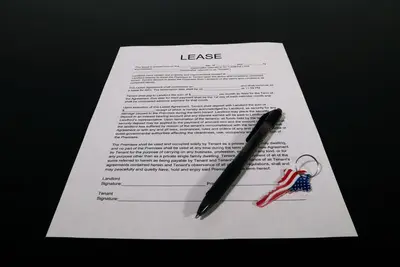
Lease Agreements in Mexico: Key Clauses and What to Check
A practical guide to lease agreements in Mexico: essential clauses, what to review before signing, and common mistakes that leave tenants or landlords unprotected.
Inmobiliaria32 Team
Pre-Sale Guarantee Trust: What Really Protects You
What a guarantee trust (fideicomiso de garantía) in a pre-sale does and doesn't protect, who gets paid first, which clauses to read, and how to verify it before reserving your home or condo.
Inmobiliaria32 Team
What Is the RUV and Why Your Pre-Sale Home Needs to Be in It
What the RUV (Registro Único de Vivienda) is, what the CUV is, and why Infonavit and Fovissste won't lend on a pre-sale home without that registration. How to verify it.
Inmobiliaria32 Team
Real estate investing
Keep learning before you decide
58 guides on real estate investing, and thousands of properties listed across Mexico.