

How a Condo Owners' Assembly Works, Step by Step
How a condo owners' assembly works: who calls it, quorum on the 1st, 2nd and 3rd call, votes by undivided share, delinquent owners and minutes. Avoid invalid decisions.
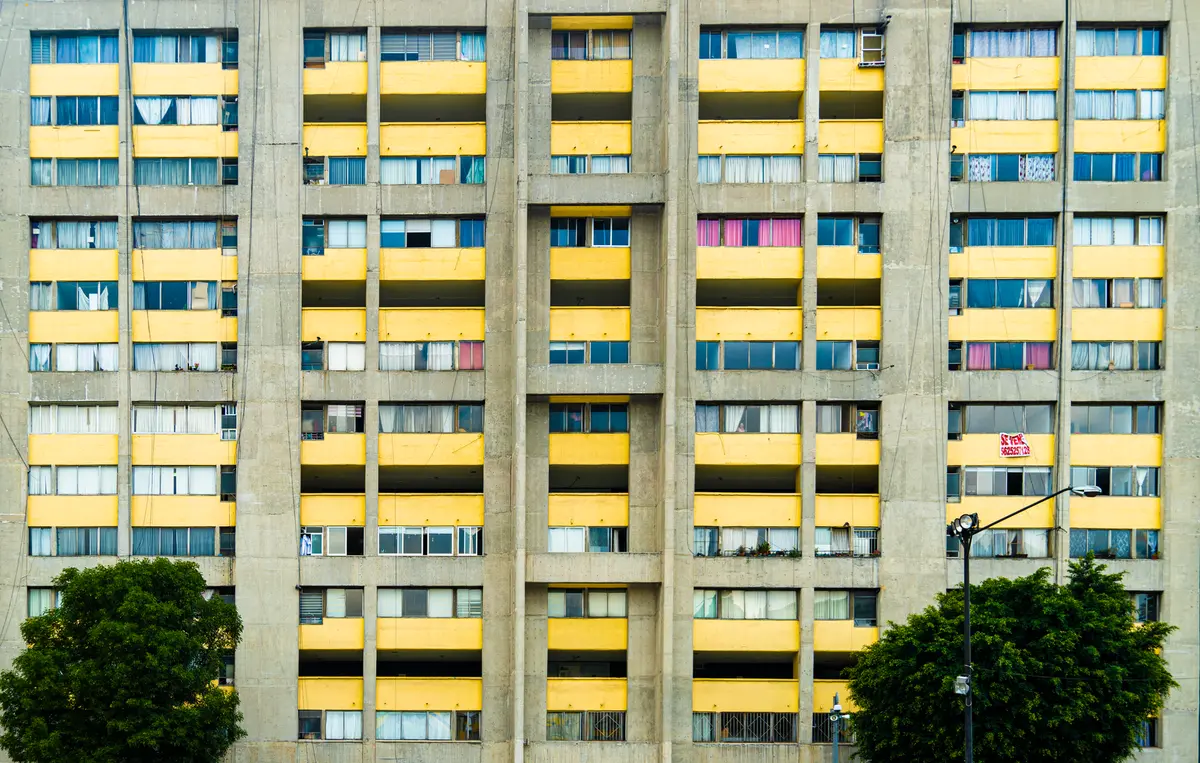
How does a condo owners' assembly (asamblea de condóminos) work? It is the meeting of the condominium's property owners and its highest decision-making body: this is where fees, the budget and construction work are approved, and where the administrator is appointed or removed. It works in eight steps: someone with the authority to do so calls the meeting with an agenda, notice is given in advance (in Mexico City, seven calendar days for an ordinary assembly), an attendance list is taken, quorum is verified according to the call (75%, simple majority, or whoever shows up), a chair, secretary and vote counters are named, each item is discussed and voted on with votes weighted by undivided share (indiviso), the minutes (acta) are drawn up, and everyone is notified of what was agreed. If any step fails, the decision can be challenged. This guide uses Mexico City's Ley de Propiedad en Condominio de Inmuebles as its reference and tells you what to check if you live in another state.
What the condo owners' assembly is and what it can decide
When a property is set up under the condominium ownership regime (régimen de propiedad en condominio), each owner has exclusive ownership of their unit and co-ownership of the common areas (parking, elevators, gardens, rooftop, cistern). Decisions about those shared areas are not made by the administrator or by the most active neighbor: they are made by the General Assembly (Asamblea General) of condo owners. Mexico City's law says it bluntly in article 29: "The highest body of the condominium is the General Assembly."
Article 33 of that same law lists its powers. The ones with the biggest impact on your wallet and your daily life are:
- Setting the fees: ordinary, extraordinary and reserve fund, as well as the collection scheme. If you want to understand how they are calculated, see our guide to the condominium maintenance fee (cuota de mantenimiento).
- Appointing, ratifying and removing the administrator, whether a resident owner or a professional company, and setting their pay and the bond they must post.
- Appointing and removing the Oversight Committee (Comité de Vigilancia), which supervises the administrator.
- Approving the annual budget and the semiannual account statements the administrator presents.
- Ordering audits when the financial statements don't add up.
- Approving or amending the internal bylaws (reglamento interno) and modifying the founding deed (escritura constitutiva).
- Deciding on security measures, surveillance and use of common areas, including rules on pets or vacation rentals.
There is one important limit: decisions bind all owners, including absentees and those who voted against (art. 32, fr. IV), but only if they were made in accordance with the law, the deed and the bylaws. For example, the assembly may restrict electricity or gas in common areas paid for with fees to a delinquent owner, but it can never cut off drinking water (art. 33, fr. XII).
Types of assembly: ordinary, extraordinary and others
Not all assemblies are the same. The type determines how much advance notice is needed, which topics can be addressed and what majority is required for a decision to be valid.
| Type | When it is held | Typical topics | Key rule (Mexico City) |
|---|---|---|---|
| General ordinary | Quarterly (art. 29, fr. I) | Administrator's report, account statements, budget, fees, maintenance | Call with 7 calendar days' notice; simple majority of votes |
| General extraordinary | Urgent or fundamental matters (art. 29, fr. II) | Amending the deed or bylaws, new construction, rebuilding, dissolving the regime | For the deed or bylaws: attendance of a simple majority and votes totaling 75% of the total value (art. 11) |
| Of administrators | In condominium complexes or condominiums divided into sections | Common areas of the entire complex | Called by the administration committee (art. 30) |
| Of a section or group | When there are several towers, wings or blocks | Areas that serve only that building or section | They cannot contradict the General Assembly |
In practice, many condominiums don't hold four ordinary assemblies a year and settle for one or two. That doesn't automatically void what gets decided, but it is a sign of opaque administration and leaves you without a forum to review the accounts.
Watch out with extraordinary assemblies: Mexico City's law has two rules for changing the internal bylaws: article 11 requires an extraordinary assembly and 75% of the total value, while article 52 speaks of 51% of the undivided share. To avoid leaving the decision exposed to a challenge, the prudent move is to call an extraordinary assembly and aim for 75%, which satisfies both.
Step by step: from the call to the minutes
This is the full path of a well-run condo owners' assembly. Use it as a checklist: if you're on the Oversight Committee, to organize it; if you're an owner, to spot whether something was skipped.
1. Who can call the assembly
Under article 32, fraction III, the following can call a General Assembly:
- The administrator.
- The Oversight Committee.
- A group of owners, registering the call with the Procuraduría Social (PROSOC, the city's social ombudsman agency): at least 20% in condominiums of 2 to 120 units, 15% for 121 to 500, and 10% for those with more than 501.
- PROSOC, when there is no administration, by court order, or at the request of at least 10% of owners if the administrator or committee refuses to call one.
Owners who are delinquent, according to the administration's report, have no right to call an assembly.
2. Drafting and serving the notice of meeting
The notice must state who is calling it, what type of assembly it is, the date, time and place (inside the condominium or wherever the bylaws specify) and the agenda. Anything not on the agenda should not be voted on: the classic "any other business" is for comments, not for approving a surprise extraordinary fee.
Notice is given in person, by posting it in a visible place or on the condominium's door, or by leaving it inside each unit. For an ordinary assembly, it must go out seven calendar days in advance of the first call. An extraordinary assembly of extreme urgency can be called with whatever advance notice the circumstances require. It's best for the notice itself to set all three times: for example, 7:00 p.m., 7:30 p.m. and 8:00 p.m., because thirty minutes must pass between each call.
3. Attendance list and proxies (cartas poder)
Each owner present, or their representative, signs the attendance list, which is attached to the minutes book; anyone who doesn't sign doesn't count toward quorum (art. 31, fr. II). If the internal bylaws allow it, you can send someone with a simple proxy letter (carta poder), but a single person cannot represent more than two owners and the administrator can never represent an owner (art. 31, fr. IV).
4. Verifying quorum and convening the assembly
With the signed list in hand, the group checks whether there is quorum for the call in progress (we cover this in detail in the next section). If there is, the assembly is declared in session; if not, it waits for the next call.
5. Naming the presiding panel: chair, secretary and vote counters
The assembly designates who will preside. The secretary is usually the administrator; if there isn't one, whoever the bylaws or the assembly itself designates. The vote counters (escrutadores) tally the votes (art. 31, fr. I). Having someone other than the administrator chair the meeting helps keep the discussion of the administrator's accounts freer.
6. Working through the agenda and voting
Each item is handled in the announced order: report, discussion and vote. Resolutions are adopted by simple majority of votes, unless the law, the deed or the bylaws require a special majority. Note that votes are not counted per person, but by undivided share (indiviso).

7. Drawing up and signing the minutes (acta)
The secretary records the minutes in the minutes book authorized by PROSOC. They are signed by the chair, the secretary, the Oversight Committee members present and any owner who requests it. If there is no book, the minutes may be drawn up on loose sheets, noting that fact, and PROSOC must be informed within 15 business days. The minutes must include place, date, start and end times, agenda, attendance list, signatures, proceedings and decisions (art. 31, fr. VIII).
8. Notifying the decisions (and formalizing them before a notary when required)
The administrator must notify each owner of the decisions in writing within 7 business days. If a decision amends the founding deed (escritura constitutiva), the minutes are formalized before a notary public (notario público) and recorded in the Registro Público de la Propiedad; if it amends the internal bylaws, they are formalized and registered with PROSOC (art. 31, fr. IX).
Tip: if the topic is sensitive (removing the administrator, a large extraordinary fee, a lawsuit), the administrator, the committee or the percentage of owners who can call an assembly may request that a notary or a PROSOC representative attend (art. 32, fr. VI). Their presence greatly reduces later challenges.
Quorum and votes: how they are counted
This is where most assemblies fall apart. Quorum depends on which call the meeting is convened under (art. 32, fr. IV):
| Call | Minimum attendance to convene | How it is approved |
|---|---|---|
| First | 75% of owners | Simple majority of votes (unless a special majority applies) |
| Second (30 min later) | Simple majority of all owners | Simple majority of votes (unless a special majority applies) |
| Third (30 min later) | Whoever attends | Majority of those present |
The third call explains why not attending the assembly is the worst decision: with ten neighbors present in a forty-unit building, fees can be approved that you will have to pay. That said, the third call doesn't work for everything: topics that require special majorities (deed, bylaws, dissolving the regime) still need the percentage of total value set by law.
Your vote is worth your undivided share
Each owner has a number of votes equal to the percentage of undivided share (indiviso) their unit represents in the condominium's total value under the founding deed (art. 31, fr. III). In a building where the penthouse has a 6% undivided share and a one-bedroom apartment has 1.8%, the penthouse's vote weighs more than three times as much. That's why, before an important vote, it pays to add up the undivided shares and not just count hands.
If a single owner (typically a developer who hasn't sold everything) holds more than 50% of the votes, the law balances it out: when the other owners attend, at least half of the remaining votes are also needed for the decision to be valid (art. 31, fr. VII).
Delinquent owners: they have a voice, but no vote
The law considers an owner delinquent (moroso) if they owe two or more ordinary fees or one overdue extraordinary fee. In the General Assembly, a delinquent owner keeps their voice but has their vote suspended and does not count toward the quorum to convene; they also cannot be elected as a resident administrator or as a member of the Oversight Committee (art. 34). The exception: they do vote when the assembly is called to amend the founding deed, dissolve the regime or affect ownership of the property, because their ownership is at stake.
For a seller this matters: if you owe fees, you don't just lose your vote — the debt transfers to the buyer along with the unit (art. 28) and must be settled in the deed. Get current before listing your apartment.
Mistakes that invalidate an assembly and how to challenge it
Flaws that make a decision open to challenge
- A notice without an agenda, without the signature of whoever is calling it, or served with less than seven calendar days' notice (for an ordinary assembly).
- Someone without authority calls it: a lone neighbor, a delinquent owner, or a group that didn't register the call with PROSOC.
- Topics are voted on that were not on the agenda.
- Votes are counted "per head" instead of by undivided share, or votes from delinquent owners are counted.
- The administrator votes on behalf of other owners using proxies, or one person represents more than two.
- The bylaws or the deed are changed without the special majority.
- There are no signed minutes, no attendance list, or the decisions are never notified.
If you believe a decision was made improperly, gather evidence: a copy of the notice (a dated photo), the attendance list and the minutes. You can request them from the administrator, who is required to keep the minutes book available. With that, you have two paths in Mexico City:
- Procuraduría Social (PROSOC): it offers conciliation and arbitration in condominium disputes. It's faster and cheaper than a lawsuit, and PROSOC can also call a new assembly if the administrator refuses.
- Court action: a civil lawsuit to seek nullity of the decision. It makes sense when a lot of money is at stake (a million-peso extraordinary fee, a sale of a common area).
Before fighting, try the simplest option: ask the Oversight Committee in writing to call a new assembly to ratify or revoke the decision with the proper formalities. Many disputes are resolved right there.
If your condominium is not in Mexico City
There is no federal condominium law. Each state regulates the regime with its own condominium property law or with chapters of its Civil Code, and the numbers vary: the advance notice for the call, the quorum percentages, how often ordinary assemblies must be held, who registers the minutes book, or whether an ombudsman agency steps in.
What does repeat almost nationwide is the structure: the assembly as the supreme body, an administrator who carries out its decisions, an oversight committee that supervises, votes tied to the undivided share, and minutes as proof of what was agreed. To learn the exact rules for your condominium, check the following in this order:
- Your state's condominium law (or the state Civil Code).
- The regime's founding deed, which sets the undivided shares.
- The internal bylaws, which may require more advance notice or higher majorities than the law, but not fewer safeguards.
Online assemblies: Mexico City's law allows owners to agree on "other mechanisms and ways of making decisions" (art. 30). If your condominium meets by video call or in a hybrid format, make sure the bylaws or a prior assembly decision allow it, and that the attendance list and each unit's votes are recorded. Without that, the decision is easy to challenge.
Why you should read the minutes before buying
If you're about to buy an apartment or a house in a gated community, the latest assembly minutes tell you more than any walkthrough. Ask the seller for those from the past two years and look for:
- Extraordinary fees approved and still pending collection: waterproofing, elevators, structural reinforcement. You'll be the one paying them.
- Delinquency level and the reserve fund balance. A condominium with 30% delinquent owners raises fees or cuts maintenance.
- Litigation against the developer, against the administrator or among neighbors.
- Recent rules on pets, parking or vacation rentals that affect how you plan to use the unit. If you're interested in renting by the night, first read about short-term rentals in condominiums; if you have a dog, read about the condominium bylaws on pets.
- Assembly frequency and attendance: a condominium that meets and votes with quorum is usually better maintained and better preserves its value.
If a seller can't or won't show you the minutes, treat it as a yellow flag. In our guide to buying a house in a condominium you'll find the full list of documents to review, and in condominiums for sale and rent or apartments you can compare options. If you already own and want to know how much good administration weighs on the price of your unit, start with a valuation of your property.
Frequently asked questions
How often should a condo owners' assembly be held?
In Mexico City, the law calls for general ordinary assemblies every three months to report on the state of the administration. Extraordinary assemblies are called when there is an urgent matter or a fundamental topic, such as amending the bylaws or carrying out new construction. In other states the frequency is set by their local law and the internal bylaws.
What quorum does a condo owners' assembly need?
In Mexico City, the first call requires attendance of 75% of owners; the second, a simple majority of the total; and on the third, the assembly convenes with whoever attends and decides by majority of those present. Thirty minutes must pass between each call.
Can a delinquent owner vote at the assembly?
In Mexico City, a delinquent owner keeps the right to speak but has their vote suspended and does not count toward quorum, except in assemblies to amend the founding deed, dissolve the regime or affect ownership of the property. An owner is considered delinquent if they owe two ordinary fees or one extraordinary fee.
Can I send someone with a proxy letter to the assembly?
Yes, if the internal bylaws allow it, with a simple proxy letter (carta poder). In Mexico City a single person cannot represent more than two owners, and the administrator can never represent an owner at the General Assembly.
What do I do if the assembly approved something without following the bylaws?
Gather the notice, the attendance list and the minutes, and request in writing a new assembly to revoke or ratify the decision. If it isn't corrected, in Mexico City you can go to the Procuraduría Social for conciliation or arbitration, or sue to have the decision declared null before a civil judge.
Listings
Recent properties
 For sale
MX$1,440,000
Land
Land for Sale in Residencial Lomas del Dorado
Boca del Río, Veracruz
 For sale
MX$3,900,000
House
House for Sale in Las Lomas, Riviera Veracruzana | 3 Bedrooms with Private Bathrooms
Alvarado, Veracruz
 For sale
MX$10,900,000
Land
Attention Investors
Puerto Vallarta, Jalisco
Keep reading
Related articles

Interdicto to Recover Possession of Your Property: How It Works
What the interdicto to recover possession is, who can file it, the one-year deadline, the evidence you need, and when another route makes more sense. A clear, practical guide.
Inmobiliaria32 Team
Delinquent Condo Fees: What the Owners' Assembly Can Do
Neighbors behind on condo fees: what the assembly can do, what is off-limits, how to collect through an executory civil action, and how to set up a payment agreement.
Inmobiliaria32 Team
How to Remove a Condo Administrator, Step by Step
How to remove a condominium administrator: evidence, notice, vote, handover of accounts, and what to do if they refuse. Get it done without the resolution being annulled.
Inmobiliaria32 Team

How to List Your Property on Inmobiliaria32, Step by Step
Want to sell or rent your house, apartment or land? Learn how to list your property on Inmobiliaria32 step by step: what information to prepare.
Inmobiliaria32 Team
Buying a home
Keep learning before you decide
358 guides on buying a home, and thousands of properties listed across Mexico.