

Condo Maintenance Fees in Mexico: Costs and Consequences
Learn how a condominium maintenance fee is calculated, what services it covers, and what happens if you stop paying.
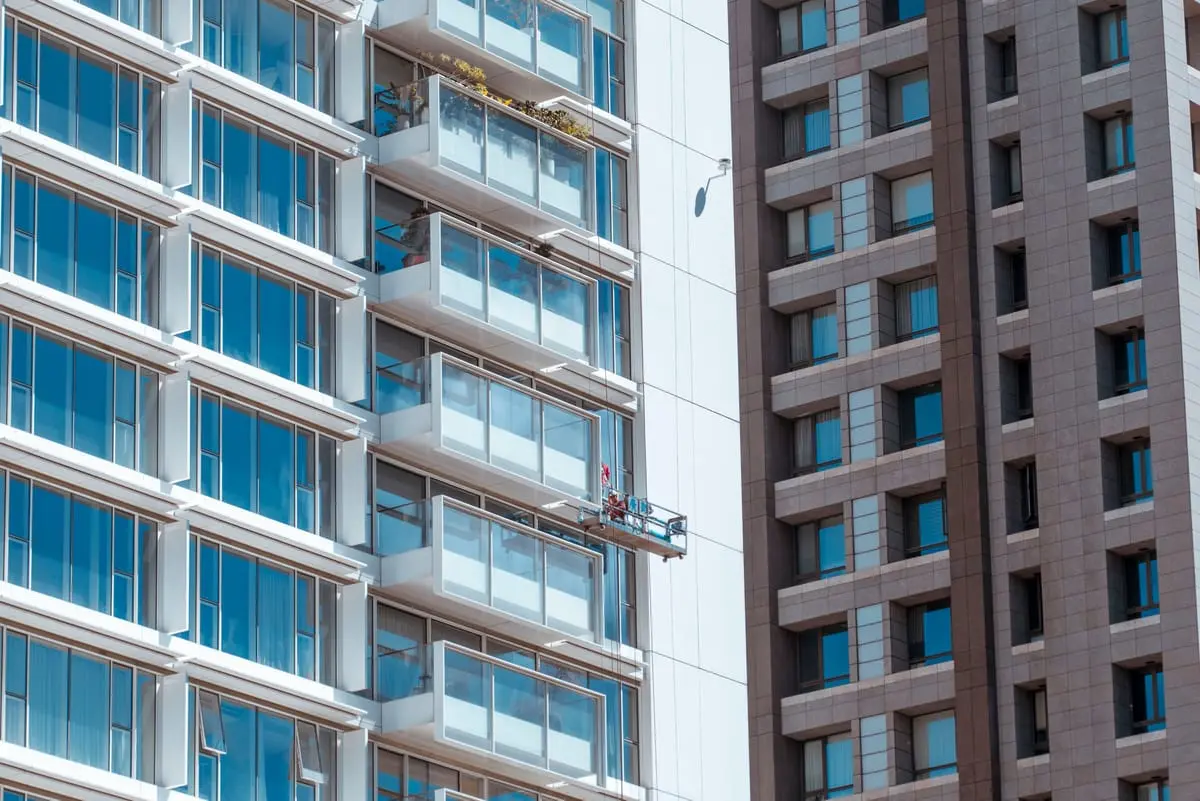
If you're about to buy an apartment or a house inside a condominium, the maintenance fee (cuota de mantenimiento) will be a fixed expense you live with every month. Many buyers focus only on the price and the monthly mortgage payment, and forget that this fee also affects their budget and their relationship with neighbors in the building. In this guide we explain what it covers, how it's usually calculated, what extraordinary fees are, and, above all, what consequences someone faces if they stop paying it.
What is the maintenance fee?
The maintenance fee is the financial contribution each owner makes to cover the condominium's common expenses: everything that doesn't belong to a single unit but to all of them. Security, cleaning of common areas, elevators, gardens, hallway lighting, and the salaries of administrative staff are typical examples.
This arrangement comes from the condominium property regime (régimen de propiedad en condominio), where private areas (your apartment) and common areas (everything shared) coexist. The obligation to pay is usually set out in the constitutive deed (escritura constitutiva) and in the internal rules, and it applies equally to someone who lives in the property and to someone who rents it out or leaves it empty.
Key fact
The maintenance fee is separate from the predial (property tax) and from your unit's own utilities (electricity, water, gas). It is an additional, recurring expense that you should add to your monthly budget from day one.
How the fee is calculated: the indiviso
In most condominiums in Mexico, the fee is not split into equal parts but in proportion to each unit's indiviso. The indiviso is the percentage of the common areas that corresponds to your property. It is usually defined in the regime's constitutive deed, mainly based on the square footage of each unit.
Under this scheme, the owner of a larger apartment normally pays a higher fee, because their percentage share in the property is higher. The annual budget for common expenses is divided among the owners according to that percentage.

In very general terms, the calculation usually follows this logic:
- The owners' assembly approves an annual budget for common expenses.
- That budget is divided according to each unit's indiviso.
- The result is prorated monthly for each owner.
- It may include a portion earmarked for the reserve fund.
Keep in mind that the exact formula and criteria vary from one condominium to another and from one state to another, since condominium property regulation is primarily local. The most reliable approach is to review the constitutive deed and the rules of the property you're interested in.
What the maintenance fee includes
What the fee is spent on depends on what the assembly approves and on the characteristics of the condominium, but it generally covers items such as the following:
| Item | Examples |
|---|---|
| Security | Guards, guardhouses, cameras, and access control |
| Common areas | Cleaning of hallways, gardens, pool, and multipurpose room |
| General services | Electricity and water for common areas, elevators, pumps, and cisterns |
| Administration | Administrator's fees and accounting management |
| Reserve fund | Savings for major repairs and unexpected costs |
The reserve fund matters
Part of the fee is usually set aside in a reserve fund to cover major expenses, such as waterproofing rooftops or repairing an elevator. A condominium with a healthy reserve is less likely to need urgent extraordinary fees.
Extraordinary fees: when the regular fee isn't enough
In addition to the regular monthly fee, the assembly can approve extraordinary fees (cuotas extraordinarias) to cover expenses that weren't included in the budget or that exceed the reserve fund. They are typically approved in assembly and are mandatory for all owners.
Some common examples of expenses financed with extraordinary fees:
- Structural repairs or damage after an earthquake.
- Replacing or modernizing elevators.
- Renovating facades, perimeter walls, or electrical systems.
- Security upgrades, such as new cameras or gates.
Ask before you buy
If the condominium has recent extraordinary fees or pending projects, you could inherit that expense when you buy. Ask for the history of assembly meetings to find out which works have been approved or are coming up.
Delinquency and its legal consequences
Delinquency (morosidad) is one of the most common problems in condominium living. When several owners stop paying, maintenance deteriorates and those who do pay end up covering the shortfall. That's why local laws and internal rules usually provide for consequences for owners who fall behind.
Although the measures vary by state and by the internal rules, some of the most common are:
Common consequences of not paying
- Late-payment interest on overdue fees, as set by the assembly or the rules.
- Loss of voice and vote in assemblies while a debt is outstanding.
- Restriction of certain services or non-essential common areas, where local law and the rules allow it.
- Collection through legal action, since in several states the account statement certified by the administrator can serve as a document to initiate a lawsuit.
Regarding the restriction of services, caution is advisable: not all services can be suspended, and the rules depend on each state's legislation. There tends to be more room to limit non-essential amenities (such as use of the pool or the event room) than to affect basic services. Before applying any measure of this kind, the prudent step is to verify what local law and the condominium's rules permit.
As for collection through legal action, in several states unpaid fees can be claimed through a procedure that, in extreme and prolonged cases, could lead to a seizure of the property (embargo) to guarantee payment. It is a serious consequence that is rarely sought at the outset, but it exists as a backstop to enforce compliance.
How the fee is collected
Collection is usually handled by the condominium's administrator, who keeps track of payments and issues receipts or account statements. The most common methods are bank transfer to the condominium's account, payment at the office window, or, in some cases, digital administration platforms. Always keep your payment receipts: they are your proof if any dispute arises.
What to check before buying
Before signing for an apartment or another condominium property, take your time reviewing the maintenance-related aspects. This will save you surprises after the purchase:
- The current amount of the regular fee and what it includes.
- That the unit is up to date on payments with no inherited debts.
- The internal rules and the regime's constitutive deed.
- The status of the reserve fund and any recent extraordinary fees.
- The assembly minutes, to learn about pending works and decisions.
A practical tip: ask for a certificate of no debt (constancia de no adeudo) signed by the administrator before the deed is executed (escrituración). In many cases, the buyer can end up responsible for maintenance debts tied to the unit, so make sure everything is settled. You can explore options and compare prices in our property search and estimate the value of the one you like with our value calculator.
Frequently asked questions
Do I have to pay the fee if I don't use the common areas?
Generally, yes. The obligation to contribute to common expenses comes from owning a unit within the regime, not from how much you use the amenities. Even if you never use the pool or the gym, you're still taking part in maintaining the property.
Who decides the amount of the fee?
Normally the owners' assembly, based on an expense budget that is usually proposed by the administration. The split among owners is usually made according to each unit's indiviso.
Can they cut off my water or electricity for not paying maintenance?
It depends on local legislation and on the internal rules. In some cases, amenities or non-essential services can be restricted, but suspending basic services is more delicate and isn't always permitted. It's wise to verify the specific rules of your state and condominium.
If I buy a unit with unpaid fees, do I have to pay them?
In many cases, maintenance debt stays attached to the property, so the new owner could be required to cover it. That's why it's essential to ask for a certificate of no debt before closing the deed.
Looking for a condo apartment?
Knowing the maintenance fee and its status helps you make a better decision. Explore our catalog and calculate the value of the property you're interested in.
Listings
Recent properties
 For sale
MX$1,440,000
Land
Land for Sale in Residencial Lomas del Dorado
Boca del Río, Veracruz
 For sale
MX$3,900,000
House
House for Sale in Las Lomas, Riviera Veracruzana | 3 Bedrooms with Private Bathrooms
Alvarado, Veracruz
 For sale
MX$10,900,000
Land
Attention Investors
Puerto Vallarta, Jalisco
Keep reading
Related articles

Delinquent Condo Fees: What the Owners' Assembly Can Do
Neighbors behind on condo fees: what the assembly can do, what is off-limits, how to collect through an executory civil action, and how to set up a payment agreement.
Inmobiliaria32 Team
How to Sue Your Condo's Administration: Options and Steps
How to sue your condo administration: a PROSOC complaint, arbitration, a civil lawsuit or a criminal report, what evidence to gather and how long each route takes.
Inmobiliaria32 Team
Condo Reserve Fund: What It's For and How to Monitor It
What the condo reserve fund is, how much it should hold, what it can be spent on and how to audit it. Check the books before a repair costs you thousands.
Inmobiliaria32 Team
How to Remove a Condo Administrator, Step by Step
How to remove a condominium administrator: evidence, notice, vote, handover of accounts, and what to do if they refuse. Get it done without the resolution being annulled.
Inmobiliaria32 Team
Buying a home
Keep learning before you decide
358 guides on buying a home, and thousands of properties listed across Mexico.