

Commercial vs. Residential Real Estate: Which Is Better?
We compare commercial vs. residential investment in Mexico: returns, risks, financing and investor profile, so you can decide with data.

When someone decides to put capital into real estate, they almost always reach the same crossroads: buy an apartment to rent out, or go for an industrial warehouse, retail space or office? The commercial vs. residential investment question has no single answer, but there are clear criteria you can apply to your own situation: available capital, risk tolerance, time horizon and how involved you want to be in day-to-day operations. In this article we break down the real differences between the two paths, paying special attention to Mexico's current moment, where nearshoring is pushing up demand for industrial and commercial space in several regions of the country.
Important notice
This content is informational and aims to guide your judgment before investing. It does not replace the advice of a financial advisor, tax specialist or attorney specializing in real estate. Before committing capital to any type of property, consult a professional who can review your particular case, since return figures, financing and procedures vary by city, asset type and market timing.
Key differences between the two types of investment
Before comparing numbers, it helps to understand that residential and commercial are different businesses disguised as the same asset called "property." An apartment is rented to a person or family looking to live there; a retail space, warehouse or office building is rented to a business that needs that space to generate income. That fundamental difference changes almost everything else.
In residential, leases tend to be shorter (typically one year, renewable), the tenant is an individual and turnover tends to be more frequent. In commercial, leases tend to be longer (three, five or more years, depending on the type of business), the tenant is a legal entity (persona moral) with different negotiating power, and the tenant often invests in improvements to the space, which reduces their intention to move out soon.
The way the asset is valued also changes: a house or apartment is valued mainly by neighborhood comparables (square meters, location, appreciation of the surroundings). A commercial property is valued, in addition, by its ability to generate rent — known as income-based valuation — so the cash flow of the business occupying it matters as much as the location.
Expected returns and comparison
As a general guideline — with significant variation by city, submarket and timing — commercial usually offers higher rental yields (cap rate) than residential, in exchange for greater vacancy risk and lower liquidity. Residential, on the other hand, tends to be more stable but with tighter rental margins relative to the property's value.
| Characteristic | Residential | Commercial / Industrial |
|---|---|---|
| Rental yield (approximate) | Generally lower, more stable | Generally higher, more volatile |
| Typical lease length | 1 year, renewable | 3 to 10 years or more |
| Type of tenant | Individual | Legal entity / business |
| Ease of financing | Wider range of mortgage loans | More limited loans, different rates |
| Cost of vacancy | Lower impact per unit | Higher impact per vacant unit |
| Liquidity when selling | Broader pool of buyers | More specialized market, fewer buyers |
These figures are approximate and should not be taken as a promise of returns: they depend on the condition, the specific area, the type of property and economic conditions at the time. For a serious estimate, review real comparables in the area where you plan to invest; tools such as the property value calculator can give you a starting point.
There is a tax difference that directly affects net return and is often overlooked when comparing the two asset types: in Mexico, the rental of real estate for residential use is exempt from IVA (value-added tax), while the rental of commercial or industrial property (retail spaces, offices, warehouses) does incur IVA at the general rate on the rent amount. In practice, this means that when calculating your cap rate or net return on commercial you must consider how that tax is passed through (normally the tenant pays it on top of the rent, but it is invoiced and reported), while in residential that tax step simply does not exist. It is not a minor difference: it changes the invoicing mechanics, the administrative burden and, depending on how the lease is negotiated, can affect the net rent you actually keep. Always consult an accountant or tax specialist for your specific case before setting rental prices or projecting returns.
Risks of each asset type
The most commonly discussed risk of commercial is vacancy: if you lose the tenant of a large warehouse or retail space, you can go months without income while you find another business with the right profile, and that vacancy period hits harder because you don't have several small units to spread the blow. By contrast, if an owner has several apartments, losing one tenant affects only a fraction of total income.
Commercial is also more tied to the overall economic cycle and the health of the tenant's business: if the company renting your space closes or scales back operations, your income stops even though you did nothing wrong. Residential depends more on factors such as local employment, interest rates for buyers and the area's population dynamics.
On the other hand, residential has its own risks: in Mexico, eviction proceedings for a problematic tenant can be long and draining if you don't have a well-drafted lease agreement, and it pays to know the tenant rights in Mexico before renting, to avoid legal surprises.
Beware of concentration risk
Putting all your capital into a single retail space or industrial warehouse means your income depends on a single tenant. Diversifying across several smaller properties, or combining commercial with residential, considerably reduces that concentration risk.
Financing and entry amount
One of the most practical factors when deciding is access to financing. Residential has, by far, the widest range of mortgage loans in Mexico, with banks, Infonavit, Fovissste and other institutions competing for that segment. If you need to finance your investment, review a comparison of mortgage loans and understand the step-by-step process before committing.
Commercial and industrial financing, by contrast, tends to have fewer players, different rates and stricter requirements for proof of income and investor experience, especially for large industrial warehouses or larger-scale developments. This makes the effective entry ticket — the equity needed — proportionally higher in commercial, even though the asset itself is not always more expensive.
- Residential: typically lower down payments, long terms, more fixed-rate options.
- Small commercial (retail spaces): mid-range financing, sometimes a mix of bank credit and equity.
- Industrial and large warehouses: usually requires more equity, investment partners or trust structures (fideicomiso).
Don't forget to add to your budget the closing costs (escrituración) and other expenses that often fall outside the initial calculation; also read the article on hidden costs when buying, many of which apply equally to commercial properties.
If the entry ticket for direct commercial and industrial seems high, there is an alternative worth knowing about before ruling out that segment entirely: FIBRAs (Fideicomisos de Inversión en Bienes Raíces, Mexico's real estate investment trusts), which trade on the stock exchange and let an investor buy a fraction of a portfolio of commercial, industrial or office properties without acquiring or managing an entire property directly. It is a way of getting indirect exposure to the sector, with its own risk profile (more tied to stock markets than to the operation of a single property), and it is worth evaluating separately, ideally with the help of a financial advisor.
The nearshoring effect on commercial and industrial
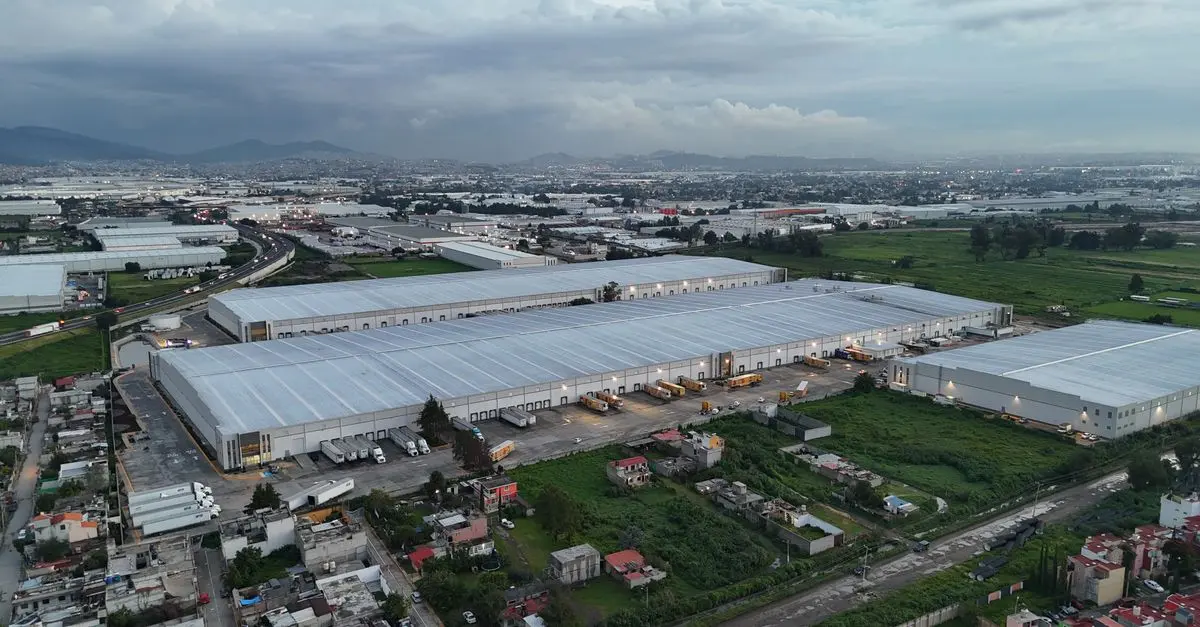
One of the factors that has changed the commercial landscape in Mexico in recent years is the nearshoring phenomenon: companies relocating part of their production or supply chain closer to the United States. This has driven demand for industrial and logistics space in corridors such as the Bajío, the north of the country and certain areas of central Mexico, with indirect effects on offices and retail serving those industries as well.
This phenomenon represents a real opportunity for those investing in commercial and industrial, but it should be analyzed with caution: not every city or corridor benefits equally, logistics infrastructure and the availability of industrial land vary widely by region, and the maturation time of these projects tends to be longer than in residential. If you want to dig deeper, see our analysis of nearshoring and the real estate market in Mexico.
Opportunity, not a guarantee
Nearshoring is generating real demand for industrial and commercial space, but not all areas or all projects benefit equally. Research the region's economic profile, the available infrastructure (highways, ports, power) and the occupancy history before investing based on the trend alone.
How to choose based on your investor profile
There is no universal answer to commercial vs. residential investment; there is the right answer for your particular situation. A few questions that can help you decide:
- How much equity do you have available? If it is limited, residential is usually more accessible thanks to the breadth of financing.
- How involved do you want to be? Commercial, with longer leases, may require less day-to-day management once occupied, but more upfront analysis of the tenant and their business.
- What is your time horizon? Commercial usually matures over longer periods; if you want relatively quick liquidity, residential is easier to sell.
- How much risk can you tolerate? If a prolonged vacancy period would hurt you financially, residential diversified across several units reduces that blow.
- Do you know the area and the economic sector well? Investing in commercial or industrial without understanding the dynamics of the business that will occupy the space considerably increases risk.
Many experienced investors don't choose one or the other exclusively, but combine both: residential for stable cash flow and commercial to pursue higher returns with a smaller share of their portfolio. Before deciding, reviewing the price per square meter in the areas of interest and which factors increase appreciation (plusvalía) gives you a more solid basis for comparing specific opportunities, whether you are looking for houses, apartments or land for commercial development.
Frequently asked questions
Which gives a better return, investing in commercial or residential?
In general terms, commercial usually offers higher rental yields than residential, but with greater vacancy risk and lower liquidity when selling. Residential tends to be more stable although with tighter margins. The right answer depends on the specific area, the type of asset and your risk tolerance, so it pays to analyze real comparables before deciding.
Is it harder to get financing for commercial properties?
Yes, generally. The residential mortgage market in Mexico is much broader, with more institutions and options. Commercial and industrial financing tends to have fewer offerings, stricter requirements and often requires more equity upfront, especially for industrial warehouses or larger-scale developments.
Does nearshoring really benefit every commercial investment?
Not automatically. Nearshoring has driven demand for industrial and logistics space in certain corridors of the country, but the benefit varies widely depending on the region, the available infrastructure and the local economic profile. It pays to research each area thoroughly rather than assume the general trend applies equally everywhere.
Can I combine commercial and residential investment in the same portfolio?
Yes, and in fact many experienced investors do so to diversify risk. Residential provides stable cash flow and greater liquidity, while a portion in commercial or industrial seeks potentially higher returns. The right proportion depends on your capital, time horizon and risk tolerance.
About the author
Carlos Mendoza is a real estate advisor with experience in comparative analysis of residential and commercial investment in Mexico, focused on helping investors evaluate returns, risks and financing before committing capital. This article is informational and does not replace the advice of a certified financial, tax or legal professional who can review your particular case.
Ready to explore investment opportunities?
Find residential and commercial properties across Mexico, or list yours in minutes.
Listings
Recent properties
 For sale
MX$1,440,000
Land
Land for Sale in Residencial Lomas del Dorado
Boca del Río, Veracruz
 For sale
MX$3,900,000
House
House for Sale in Las Lomas, Riviera Veracruzana | 3 Bedrooms with Private Bathrooms
Alvarado, Veracruz
 For sale
MX$10,900,000
Land
Attention Investors
Puerto Vallarta, Jalisco
Keep reading
Related articles

Fractional Real Estate Investing: How It Works
Fractional real estate investing lets you buy part of a property alongside other investors and receive your proportional share of the returns.
Carlos Mendoza

Nearshoring and Mexico Real Estate: 2026 Guide
Nearshoring is transforming Mexico's real estate market: industrial warehouses are filling up.
Carlos Mendoza
Real Estate vs CETES vs Stocks: Where to Invest in Mexico?
Real estate or CETES? We compare return, risk, liquidity and time horizon against the stock market so you can choose with data, not gut feelings.
Carlos Mendoza
What "Llave en Mano" (Turnkey) Means in Real Estate
Turnkey meaning in real estate: a home or project delivered completely finished and ready to move into, with no pending paperwork or work.
Inmobiliaria32 Team
Real estate investing
Keep learning before you decide
58 guides on real estate investing, and thousands of properties listed across Mexico.