

Big House vs. Downtown Apartment: How to Choose
House or apartment isn't a question with one right answer: it depends on your stage of life, your budget and your day-to-day priorities.

The house-or-apartment question comes up sooner or later for anyone looking for a home in Mexico. There is no universal answer: a young couple working downtown doesn't share the priorities of a family with two kids and a pet, or of someone who plans to work from home for the next ten years. In this article we compare a big house against a downtown apartment from concrete angles —space, commuting, maintenance, appreciation and lifestyle— so your decision is based on your actual stage of life, not on a generic preference.
1. Space vs. location: the central dilemma
The house-versus-apartment comparison almost always comes down to a trade-off: more square footage and a yard in exchange for longer commutes, or less space in exchange for being close to everything. A big house on the outskirts or in suburban areas usually offers roomier bedrooms, a garden, parking for several vehicles and, in many cases, the possibility of growing vertically down the road (adding a floor, a secondary structure, a maid's room). A downtown apartment, on the other hand, prioritizes proximity: walking to work, having restaurants and public transportation close by, and drastically cutting the time lost in the car.
Neither option is better in the abstract. The right question isn't "is a house or an apartment better?" but "what do I need to solve over the next five to ten years?". If your life revolves around the city center —work, leisure, your kids' school— paying a bit more per square meter for proximity can end up cheaper than adding hours of commuting every day. If you instead value space, privacy and not sharing amenities with dozens of neighbors, the scale tips toward the house, even if it means living farther out.
2. What each stage of life prioritizes
The stage of life you're in usually weighs more than your available budget. This is what we see most often among people looking for housing in Mexico:
| Stage of life | Usually prioritizes | Typical option |
|---|---|---|
| Single or couple without kids, actively employed | Proximity, social life, low maintenance | Downtown apartment |
| Couple working from home (home office) | Office space, quiet, less neighbor noise | House or spacious apartment, depending on budget |
| Family with school-age children | Bedrooms, yard, security, proximity to schools | Big house, even if it means a longer commute |
| Older adults or retirement stage | Low maintenance, accessibility, nearby services | Apartment with amenities or single-story house |
| Investor or first-time buyer | Appreciation, liquidity, ease of renting | Downtown apartment in an established area |
This table is a guide, not a fixed rule: some large families prefer spacious apartments in buildings with amenities, and some single people would rather have a small house with a garden than share an elevator every day. Use it as a starting point to identify which variable matters most in your case.
3. Real costs beyond the listing price
Comparing a house against an apartment only by sale or rental price is a common mistake. There are recurring costs that change the entire financial picture:
- Maintenance and fees: apartments usually have a fixed monthly maintenance fee (security, common areas, elevator); houses don't have that fee, but maintenance —roof, facade, garden, waterproofing— falls on the owner and tends to be irregular over time.
- Utilities: a big house generally means higher water, electricity and gas bills because of the larger area to heat, cool and light.
- Security: apartments in buildings with security include that cost in the fee; a house may require an alarm, cameras or a private gated entrance separately.
- Transportation: living far from downtown adds gasoline, tolls, vehicle wear or constant rideshare costs, an expense that is rarely factored in when comparing options.
- Taxes and closing procedures: when buying, on top of the property price you usually have to cover the ISAI (Impuesto Sobre Adquisición de Inmuebles, a property acquisition tax whose percentage is set by each state), the fees of the notary public (notario público) who formalizes the deed (escritura), registration at the Registro Público de la Propiedad (RPP) and, in many cases, an appraisal of the property that serves as the basis for calculating these items. The exact amount of each varies by state and property value, so it's wise to ask for an itemized breakdown in writing before deciding.
Before comparing two properties, it's worth adding these recurring costs over a horizon of several years, rather than just looking at the initial price. Tools like the closing costs calculator (gastos de escrituración) help you size up the real upfront outlay of a purchase, including ISAI, notary and RPP.
Practical tip
If you're torn between buying or renting while you decide between a house and an apartment, checking the approximate monthly cost with the rent calculator can help you compare both scenarios before committing to a purchase.
This article is for informational purposes only and does not constitute financial, legal or tax advice. Tax amounts, notary fees and procedures vary by state and property; consult a notary public (notario público) or qualified advisor before making a purchase or rental decision.
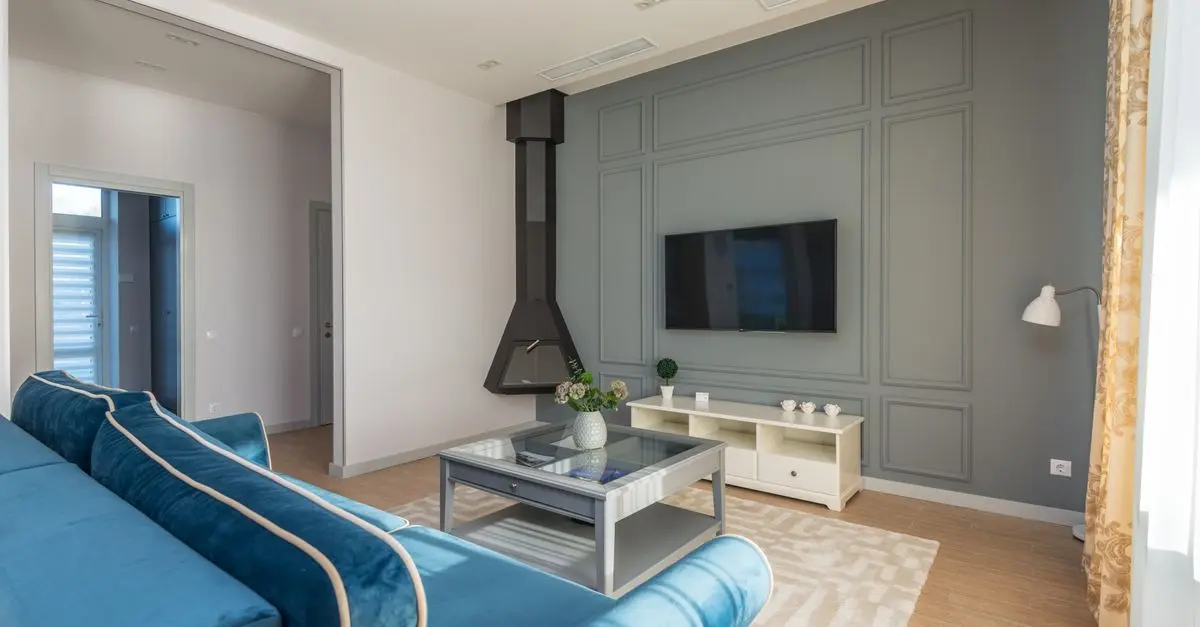
4. Commuting and time: the invisible cost
In many Mexican cities, the distance between an affordable house and your workplace can mean an hour or more each way, several days a week. That time doesn't show up on any bank statement, but it translates into less rest, less time with family and, in some cases, more stress and spending on fuel or transportation. Before choosing a big house solely because of a favorable price, it's worth simulating the real commute at rush hour, not just the distance on the map.
On the other hand, a downtown apartment cuts that time cost but may mean sacrificing space: smaller bedrooms, no yard or limited parking. For people who work from home or have flexible schedules, this factor weighs less; for those who commute to an office every day, it's usually decisive.
5. Appreciation and future liquidity
If, besides living there, you're thinking about the property's future value, location is usually the factor with the greatest influence on long-term appreciation (plusvalía). Established downtown areas, with good connectivity, services and steady demand, tend to hold or increase their value more reliably than expanding peripheral areas, although the latter can also appreciate if new infrastructure arrives (transit, shopping centers, offices). To understand which variables drive a property's value, it's worth reviewing what really increases appreciation (plusvalía) before you buy.
Liquidity also differs between the two options: a well-located downtown apartment usually sells or rents faster thanks to the steady demand from people who want proximity, while a big house in a peripheral area may take longer to find a buyer, especially if it depends on a specific family profile.
Keep in mind
If you're buying with the idea of renting the property out in the future, downtown apartments usually draw more interested tenants. Before renting, it's worth knowing the tenant rights in Mexico and having a clear lease agreement from the start.
6. How to decide without regrets
Rather than looking for the "right" option, it helps to do an honest exercise about your life horizon:
- Define your real horizon: do you plan to stay in that area five years, ten, or is it a transitional stage?
- Calculate the real commute at rush hour, not just the distance on a map.
- Add up the recurring costs (maintenance, utilities, transportation) over several years.
- Consider whether your work situation (office, hybrid, home office) might change soon.
- Review the property's documentation before moving forward, whether it's a house or an apartment, following a checklist of documents for buying a house.
Avoid this common trap
Choosing a big house just because it "gives you more for the price" without calculating the daily commute is one of the most frequent causes of regret in home buying. The extra space quickly loses its value if it translates into less free time each week.
If you already know what type of property you're looking for, you can explore available houses or apartments and directly compare real prices and locations in your city.
Frequently asked questions
Is it better to buy a house or an apartment as a first home?
It depends on your budget and lifestyle. A downtown apartment usually requires less maintenance and is closer to work, while a house offers more space but means longer commutes and maintenance of your own. For a first home, many people prioritize proximity and low maintenance, but it isn't a fixed rule.
Does an apartment lose value faster than a house?
Not necessarily. Appreciation depends more on location, local demand and the condition of the property than on the type of property. Apartments in established downtown areas usually hold good appreciation thanks to steady demand.
What matters more, the size of the property or the location?
Both matter, but location usually has a bigger impact on daily life and on future value. Living far from work or key services can offset the savings you got from extra square footage, especially if the daily commute is long.
How do I figure out whether it's worth paying more to be close to downtown?
Compare the total monthly cost (mortgage or rent, maintenance, utilities and transportation) of both options over a period of several years, and also consider the value of your commuting time. In many cases, paying more for proximity is offset by lower transportation spending and more free hours each week.
Already know what you're looking for?
Explore available houses and apartments in your city and compare real options before you decide.
Listings
Recent properties
 For sale
MX$1,440,000
Land
Land for Sale in Residencial Lomas del Dorado
Boca del Río, Veracruz
 For sale
MX$3,900,000
House
House for Sale in Las Lomas, Riviera Veracruzana | 3 Bedrooms with Private Bathrooms
Alvarado, Veracruz
 For sale
MX$10,900,000
Land
Attention Investors
Puerto Vallarta, Jalisco
Keep reading
Related articles
Duplex Homes: Advantages vs. Single-Family Homes and Condos
What a duplex house is, how it differs from a single-family home and an apartment, and when it makes sense to buy one based on your budget and lifestyle.
Carlos Mendoza

Monterrey's Water Crisis: What It Means for Homebuyers
Monterrey's water crisis: what happened in 2022, how the dams stand today, what infrastructure was built, and what to check in a home before buying in the metro area.
Inmobiliaria32 Team
If Your Developer Goes Bankrupt: What Happens to Your Money and Home
If the developer goes bankrupt on your pre-sale: what happens to your money and your home based on what you signed, who gets paid first in a concurso mercantil, and what to do now.
Inmobiliaria32 Team

Best Neighborhoods in Zihuatanejo to Buy a Home (2026)
A guide to the best areas to buy a home in Zihuatanejo: Centro, La Madera, La Ropa and Playa Larga.
Carlos Mendoza
Buying a home
Keep learning before you decide
358 guides on buying a home, and thousands of properties listed across Mexico.