

Monterrey's Water Crisis: What It Means for Homebuyers
Monterrey's water crisis: what happened in 2022, how the dams stand today, what infrastructure was built, and what to check in a home before buying in the metro area.
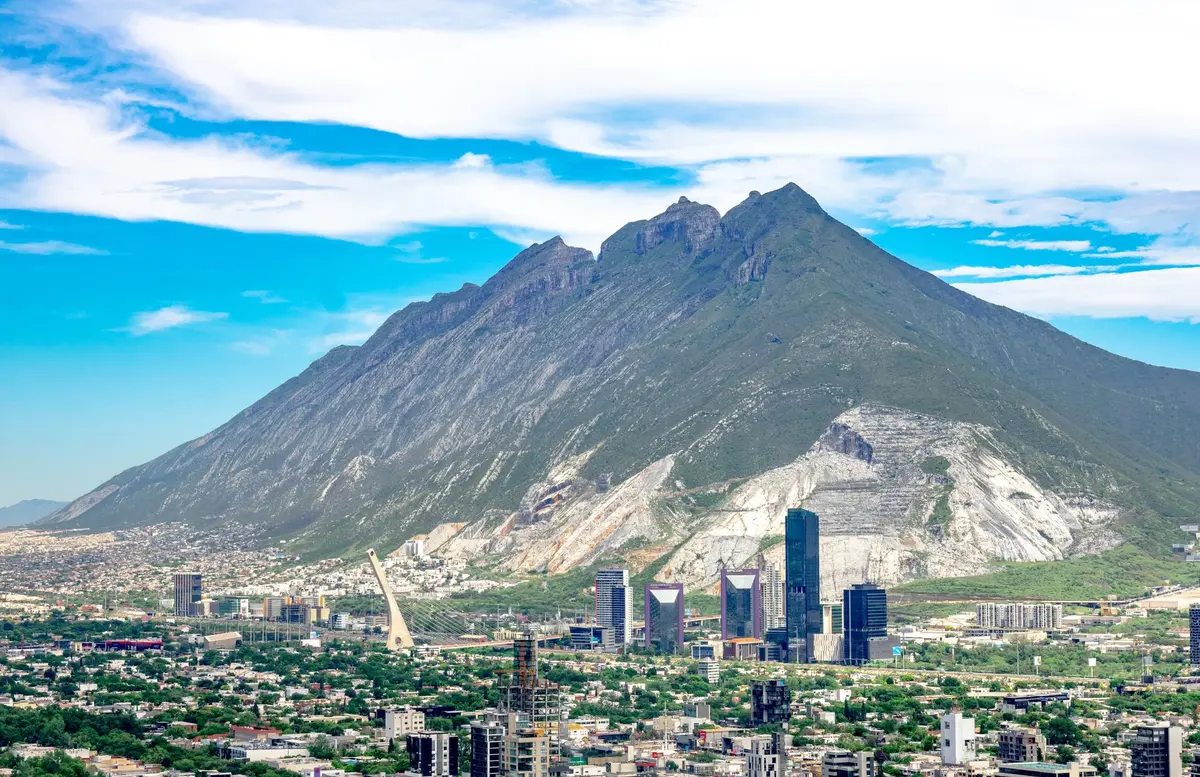
Monterrey's 2022 water crisis is not a reason to rule out the city, but it does change how you should choose a home. That year the Cerro Prieto and La Boca dams fell to levels close to zero, and service was limited to a few hours a day. Since then the El Cuchillo II aqueduct has come online, Tropical Storm Alberto refilled the dams in 2024, and as of early November 2026 La Boca is nearly full and Cerro Prieto is above 80%. The underlying risk is still there: Nuevo León has a semi-arid climate and depends on rain falling over three dams. For a buyer, the smart move is to evaluate the home as if the next drought were on its way: where it sits, how much water it can store, and which source the colonia depends on. Here we explain what happened, where water supply stands today, and what to check before you sign.
What happened in 2022: the worst water crisis in decades
The Monterrey metropolitan area gets its water from three main dams, El Cuchillo (in the municipality of China), Cerro Prieto (Linares) and La Boca (Santiago), along with wells and aquifers. After several years of little rain, the system hit its limit in 2022. Local press described it as the state's worst water crisis in about 30 years.
Figures from Conagua's National Water Information System (SINA), as reported by local media, show the drop:
- April 23, 2022: Cerro Prieto at 5%, La Boca at 12% and El Cuchillo at 49%.
- June 2022: Cerro Prieto at around 2% and La Boca near 8%.
- August 23, 2022: Cerro Prieto at 1%, La Boca at 9% and El Cuchillo at 39%.
Since they began operating (La Boca in 1963 and Cerro Prieto in 1984), neither dam had ever been drained like this. Servicios de Agua y Drenaje de Monterrey (SADM) imposed tandeos (rotating water rationing): water arrived only about six hours a day, and many colonias went days without service. There were tanker-truck deliveries, panic buying of water jugs, and neighbor-led road blockades, including on the Monterrey–Laredo highway.
Rains in September 2022 recovered some of the levels, but the relief was temporary. As of January 1, 2024, according to Conagua data published by El Universal, La Boca stood at 11.2%, Cerro Prieto at 11.3% and El Cuchillo at 44.1%. La Boca and El Cuchillo held less water than at the start of 2022. The risk stayed high until the summer of 2024.
Where the dams stand today (November 2026)
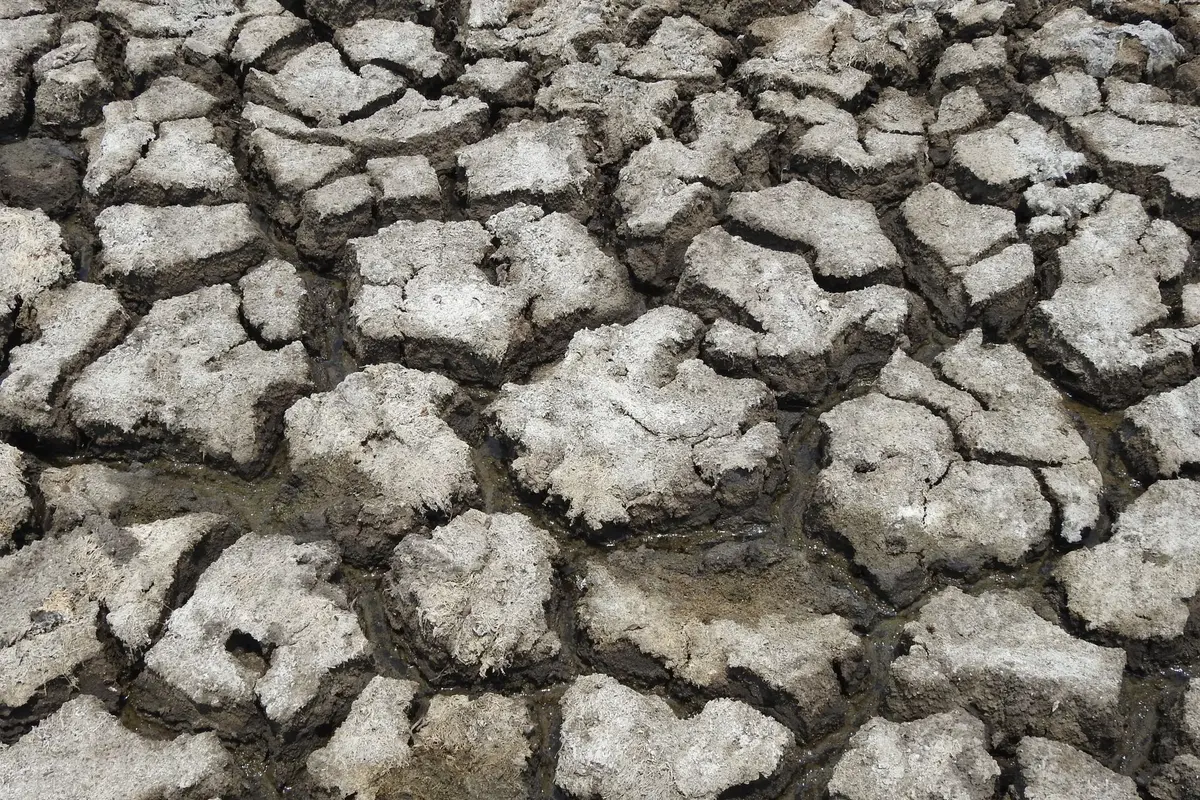
The turnaround came with Tropical Storm Alberto in June 2024. On June 18, Cerro Prieto was at 4.9%, La Boca at 35.4% and El Cuchillo at 31.4%. Six days later, according to records from the Río Bravo Basin Organization, El Cuchillo had risen to 82.4%, Cerro Prieto to 55.7% and La Boca to 95%, to the point that its gates were opened to pass water on to El Cuchillo.
In 2026 the situation is one of ample supply. Conagua's report as of November 2, 2026, after several days of rain in late October, shows these levels:
| Dam | August 2022 | January 2024 | November 2026 |
|---|---|---|---|
| El Cuchillo (China) | 39% | 44.1% | 63.4% |
| Cerro Prieto (Linares) | 1% | 11.3% | 83.0% |
| La Boca (Santiago) | 9% | 11.2% | 97.7% |
Sources: Conagua's SINA (August 23, 2022 and January 1, 2024, via local press) and the daily dam report from Conagua's Río Bravo Basin Organization (as of November 2, 2026).
El Cuchillo is the big dam in the system: its total capacity is around 1,123 million cubic meters, while La Boca stores less than 40 million. That's why 63% at El Cuchillo represents far more water than 98% at La Boca. You can follow drought conditions in real time on Conagua's Mexico Drought Monitor.
Full dams don't mean zero risk
Nuevo León's dams depend on irregular rainfall and on cyclones. Between 2022 and 2024 they went from nearly empty to full in two years, and the reverse can happen too. Also, even when the dams have water, local outages can occur because of leaks or failures: in April 2026 the press reported Monterrey colonias without service for more than 24 hours after a breakdown.
The projects that changed supply: El Cuchillo II and Presa León
The 2022 crisis accelerated two projects that change the city's medium-term risk.
El Cuchillo II aqueduct
Construction began on September 2, 2022, and it was inaugurated on September 13, 2023. It is roughly 93 kilometers of pipeline from the El Cuchillo dam to the San Roque water treatment plant, with a capacity of 5,000 liters per second. That doubles what was already being conveyed from El Cuchillo through the original 1994 aqueduct. It started up in stages and reached full capacity around the end of 2023. According to press reports, it cost about 12 billion pesos, covered jointly by the state and federal governments.
The effect is that the city depends less on the two small dams (La Boca and Cerro Prieto), which were the ones that ran dry in 2022, and more on El Cuchillo, the one with the greatest capacity.
Presa León (formerly Presa Libertad)
This is the fourth dam in the system, in the south of the state. In April 2024 the state government began drawing about 500 liters per second from it using emergency pumping while it was still under construction. On October 19, 2026, the director of Agua y Drenaje, Eduardo Ortegón Williamson, announced that in about 15 days it could be integrated as an official source, with storage of close to 100 million cubic meters and a contribution of up to 4 cubic meters per second depending on how the reservoir behaves. On October 26, Conagua reported it at 44% of capacity.
What this means for buyers
With El Cuchillo II and Presa León, the system has more sources and more conveyance capacity than in 2022. That lowers the likelihood of a repeat of the rationing seen then, though it doesn't eliminate it: if rainfall is low for several years in a row, all the dams drop at the same time.
Is the risk the same across the whole metro area?
No. When SADM lowers pressure or rations water, it doesn't reach every home equally. When choosing a colonia, these are the factors that matter most:
- Elevation and position in the network. Streets on hillsides, hills, or at the end of a distribution line are the first to lose pressure. In 2022, many residents of higher-elevation and outlying areas reported entire days without service while other colonias received water during the rationing window.
- New, expanding colonias. In the fastest-growing municipalities (García, Juárez, Apodaca, Escobedo, Pesquería) there are subdivisions at the edge of the network. Ask whether the development has SADM feasibility approval or its own system, and whether that system has already been handed over to the utility.
- Apartment buildings. They rely on the building's cistern and pumping. A building with a small cistern suffers during rationing even if the colonia has good pressure.
- Areas with their own well. In parts of Santiago or on rural-style lots, some homes have a well or rely on tanker deliveries. That gives autonomy, but it depends on the aquifer and on the well having a valid concession title.
Before you choose, compare colonias using our guide to the best colonias to live in Monterrey and our guide to Monterrey suburbs, then ask about water in each one. You can browse listings by area at properties in Monterrey.
What to check before buying a home in Monterrey
Water should be on your checklist just like the escrituras (property deed) or the predial (property tax). Here is what to confirm during the visit and before signing:
| What to check | How to do it | Why it matters |
|---|---|---|
| SADM bill paid up to date | Ask for the latest bills and a no-debt certificate (constancia de no adeudo). | A water debt delays the deed: the no-debt certificate is usually required to sign. |
| Cistern and rooftop tank (tinaco) | Measure the capacity, inspect the pump and float valve, and check for leaks. | A home with a large cistern can ride out several days of rationing; one with only a tinaco can't. |
| Actual water pressure | Open the taps on the top floor and run the shower during the visit, preferably in the afternoon. | Low pressure today often foreshadows problems when restrictions hit. |
| Colonia track record | Ask neighbors how many days they went without water in 2022. | It's the best indicator of how that street behaves in a drought. |
| Feasibility for new construction | Ask the developer for the SADM feasibility approval or documentation for the private system. | Without it, the delivery of utilities can be delayed. |
| Well (if applicable) | Request the Conagua concession title and confirm it is still valid. | A well without a concession gives no right to the water and can lead to penalties. |
Upgrades worth budgeting for
If you like the house but it has little storage capacity, factor in the cost of enlarging the cistern or adding a tinaco as part of your negotiation. Other upgrades that cut consumption and reliance on the network are rainwater harvesting and greywater recycling. Both make sense in a climate where rain is concentrated in just a few months.
Watch out for what you can't see
A cracked cistern or a failing pump can't be spotted at a glance. If the seller won't let you inspect the cistern, treat it as a red flag and request an inspection before signing the purchase promise (promesa de compraventa).
To figure out how much you need beyond the price (taxes, notary, appraisal), use the closing costs calculator.
Does the water issue affect price and appreciation?
There is no public statistic that isolates how much the 2022 crisis subtracted from or added to housing prices in Monterrey. Demand in the metro area stayed strong after the drought, driven by industrial employment and incoming investment. You can see how prices moved in our report on the price per m² in Monterrey.
What does change is how two similar homes are compared. After 2022, a large cistern, good pressure, and a colonia with no history of outages are selling points, and their absence is a bargaining chip. For an investor, water also weighs on rental appeal: a tenant who lived through rationing asks about the cistern before asking about the finishes. If you're thinking of buying to rent, also check out the guide to investing in Monterrey.
If you're selling in Monterrey, it pays to document these advantages: cistern capacity, recent upgrades, and bills paid up to date. When you list your property, mentioning this in the description answers one of buyers' first questions.
Frequently asked questions
Is there still a water crisis in Monterrey?
Not at the moment. As of November 2, 2026, Conagua reported La Boca at 97.7%, Cerro Prieto at 83% and El Cuchillo at 63.4%, and there is no citywide rationing. The drought risk remains because Nuevo León's climate is semi-arid.
Is it a good idea to buy a home in Monterrey after the water crisis?
It can be if you treat water as part of the purchase: colonia, elevation, cistern capacity, pressure and SADM bills. The El Cuchillo II and Presa León projects gave the system more capacity than it had in 2022.
Which areas of Monterrey suffered most in 2022?
Colonias in higher-elevation areas and at the end of the distribution network were among the first to lose pressure during the rationing. The most reliable approach is to ask the neighbors on the specific street how many days they went without water.
How big should a home's cistern be in Monterrey?
There is no single size: it depends on how many people live in the home and how many days you want to cover without service. Calculate the household's daily consumption and multiply it by the number of reserve days you want; the state government promoted a target of 100 liters per person per day.
Listings
Properties in Monterrey

Keep reading
Related articles

Best Neighborhoods in Zihuatanejo to Buy a Home (2026)
A guide to the best areas to buy a home in Zihuatanejo: Centro, La Madera, La Ropa and Playa Larga.
Carlos Mendoza
Best Neighborhoods to Buy a Home in Manzanillo (2026)
A guide to the best areas to buy a home in Manzanillo in 2026: Las Brisas, Salagua, Santiago, Península de Santiago and the Centro by the port.
María Elena Rodríguez
Best Areas of Cuernavaca to Buy a Home (2026)
2026 guide to the best areas of Cuernavaca to buy a home: Delicias, Vista Hermosa, Rancho Cortés, Reforma, Lomas de Cortés and the Centro.
Carlos Mendoza
Best Areas of San José del Cabo to Buy a Home (2026)
Historic Downtown, the Hotel Zone, Puerto Los Cabos and Querencia: a complete guide to the best areas of San José del Cabo to buy a home in 2026.
Inmobiliaria32 Team
Buying a home
Keep learning before you decide
358 guides on buying a home, and thousands of properties listed across Mexico.