

Living in Santa Fe CDMX: Towers, Traffic and Daily Life in 2026
Is living in Santa Fe CDMX worth it? Zones, tower prices, maintenance fees, traffic, water and who it suits best, before you rent or buy there.
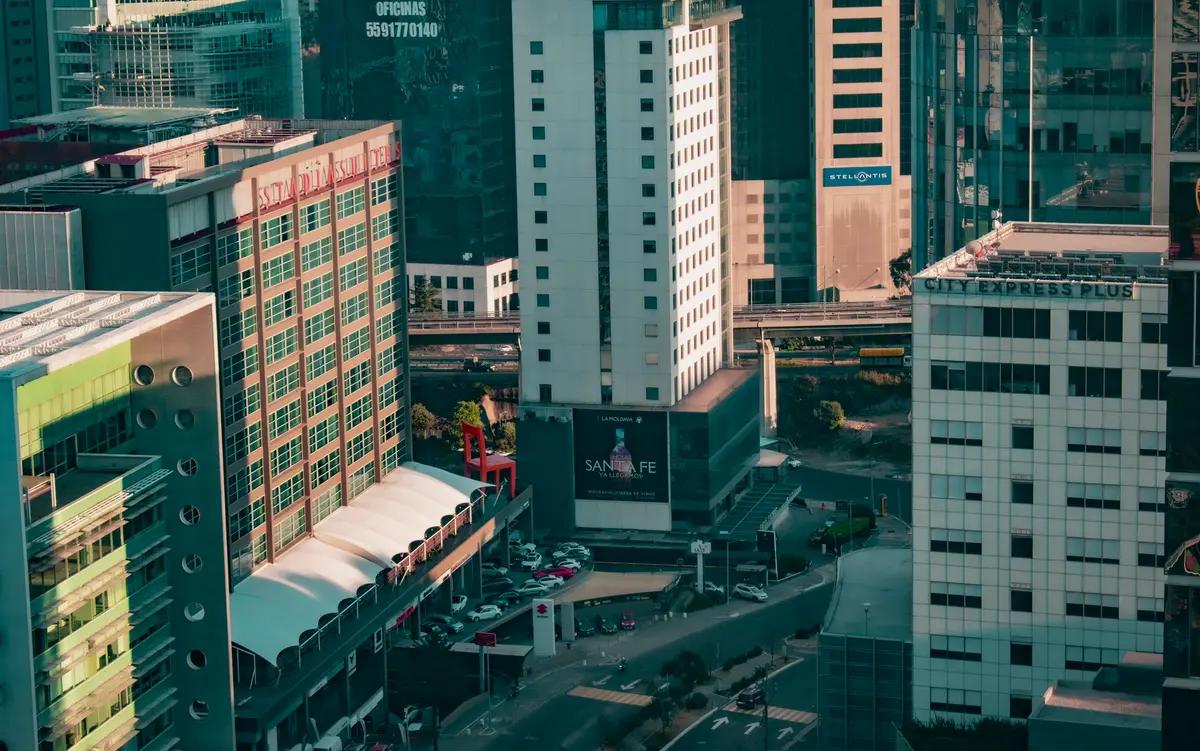
Living in Santa Fe CDMX means living vertically: towers with a pool, a gym and 24-hour security, just minutes from the corporate offices, universities and private hospitals of western Mexico City. The short answer to who it suits: professionals and families who work or study in the area itself and who value building security and amenities more than neighborhood life. Its big problem is traffic getting in and out: Santa Fe has few access roads and almost all of them jam at rush hour. If your daily life happens inside Santa Fe, it is one of the most comfortable areas in the city; if you have to leave it every day, it can be one of the most draining. This guide explains how it is divided, what it costs, what day-to-day life is like and what to check before you sign.
About the figures: the rent ranges, price per square meter and maintenance fees in this article are approximate, based on listing prices on real-estate portals in 2026. Closing prices are usually below list price and vary widely between a tower built in 2005 and one delivered last year. Use them to compare areas, and confirm any specific deal with active listings and an appraisal (avalúo).
What Santa Fe is like: from landfill to business district
Santa Fe is in the west of Mexico City, split between the boroughs (alcaldías) of Álvaro Obregón and Cuajimalpa, on the hills that climb toward the highway to Toluca. Until the 1980s the area was a collection of open-air sand mines and garbage dumps. At the end of that decade the city government turned it into a controlled development zone and sold it off in lots for offices, retail, universities and housing. The Centro Santa Fe mall opened in 1993, and the area has kept growing upward ever since.
The result is a district with no equivalent in the country: wide avenues designed for cars, corporate and residential towers of 20 to over 50 floors, university campuses, private hospitals and large gated complexes, all planned within a few decades. Alongside that corporate Santa Fe, the original village of Santa Fe and working-class neighborhoods (colonias populares) in the ravines still exist, with a very different urban reality. When people talk about "living in Santa Fe" they almost always mean the tower zone.
According to the INEGI 2020 Population and Housing Census, Cuajimalpa has around 217,000 residents and Álvaro Obregón about 760,000; the Santa Fe area is a small fraction of both, but it concentrates a good share of their high-priced housing.
Santa Fe zones and surrounding areas
Living next to the corporate offices is not the same as living in a house in Lomas de Santa Fe or Contadero. These are the sub-areas the market works with:
Central corporate zone
Around Avenida Santa Fe, Vasco de Quiroga, Javier Barros Sierra and Juan Salvador Agraz. This is where the mixed-use towers are, many with loft, one- and two-bedroom apartments, ideal for anyone who works on foot or five minutes away by car. It is the area with the most office life on weekdays and the quietest on Sundays.
La Mexicana and Peña Blanca
The newest residential developments cluster around Parque La Mexicana, built on a former sand mine and opened in 2017. These are towers with full amenities, park views and prices at the high end of the range. Peña Blanca and the streets near the Ibero (Universidad Iberoamericana) add towers 10 to 20 years old with larger apartments.
Lomas de Santa Fe and Bosques de las Lomas
On the Cuajimalpa side, with houses in gated streets and low-rise buildings. Neighboring Bosques de las Lomas is an established residential area of large houses and luxury towers. For families who don't want to live on the 30th floor, these are the natural choice, at the cost of depending on the car even more.
Contadero, Cuajimalpa centro and Interlomas
Contadero and downtown Cuajimalpa offer lower prices a few kilometers away, though the commute also runs through the same bottlenecks. Interlomas is already in the municipality of Huixquilucan, State of Mexico: many people who work in Santa Fe live there for the price and the size of the home, but the predial (property tax), paperwork and notary public (notario) fall under the State of Mexico (Edomex), not CDMX.
Rent, purchase and maintenance prices
Santa Fe sits on the upper rung of the city, in a range similar to Del Valle and below the most expensive parts of Polanco. What sets it apart is the cost of maintaining the tower, which you must always add to the rent or the mortgage. Approximate 2026 ranges:
| Zone | Purchase (MXN per m², approximate) | Rent, 2-bedroom apartment (MXN/month, approximate) | Monthly maintenance (approximate) |
|---|---|---|---|
| La Mexicana (new towers) | $75,000 – $95,000 | $35,000 – $48,000 | $7,000 – $15,000 |
| Central corporate zone | $60,000 – $85,000 | $28,000 – $40,000 | $5,000 – $12,000 |
| Peña Blanca and towers 10–20 years old | $55,000 – $72,000 | $25,000 – $35,000 | $5,000 – $10,000 |
| Lomas de Santa Fe (houses and low-rise buildings) | $50,000 – $70,000 | $25,000 – $38,000 | $2,500 – $6,000 |
| Contadero / Cuajimalpa (reference) | $35,000 – $50,000 | $16,000 – $24,000 | $1,500 – $4,000 |
The maintenance fee for a tower with a pool, gym, high-speed elevators, security and gardens can equal a quarter of the rent of an apartment in another neighborhood. Add it up before comparing: a $30,000 apartment with maintenance included can come out cheaper than one at $26,000 plus a $9,000 fee. The guide to condominium maintenance fees explains what it should cover and how to check that it is properly calculated.
If you are renting, work out what you can afford with the rent calculator, including the fee if it is not part of the price. If you are buying, add 5% to 8% of the price in closing costs with the closing cost calculator (gastos de escrituración). To compare with the rest of the capital, see the price per m² in CDMX by colonia and the Mexico City prices page. The SHF Housing Price Index publishes the quarterly trend by borough, useful for seeing how Cuajimalpa and Álvaro Obregón are moving.
Traffic and getting around: the big issue
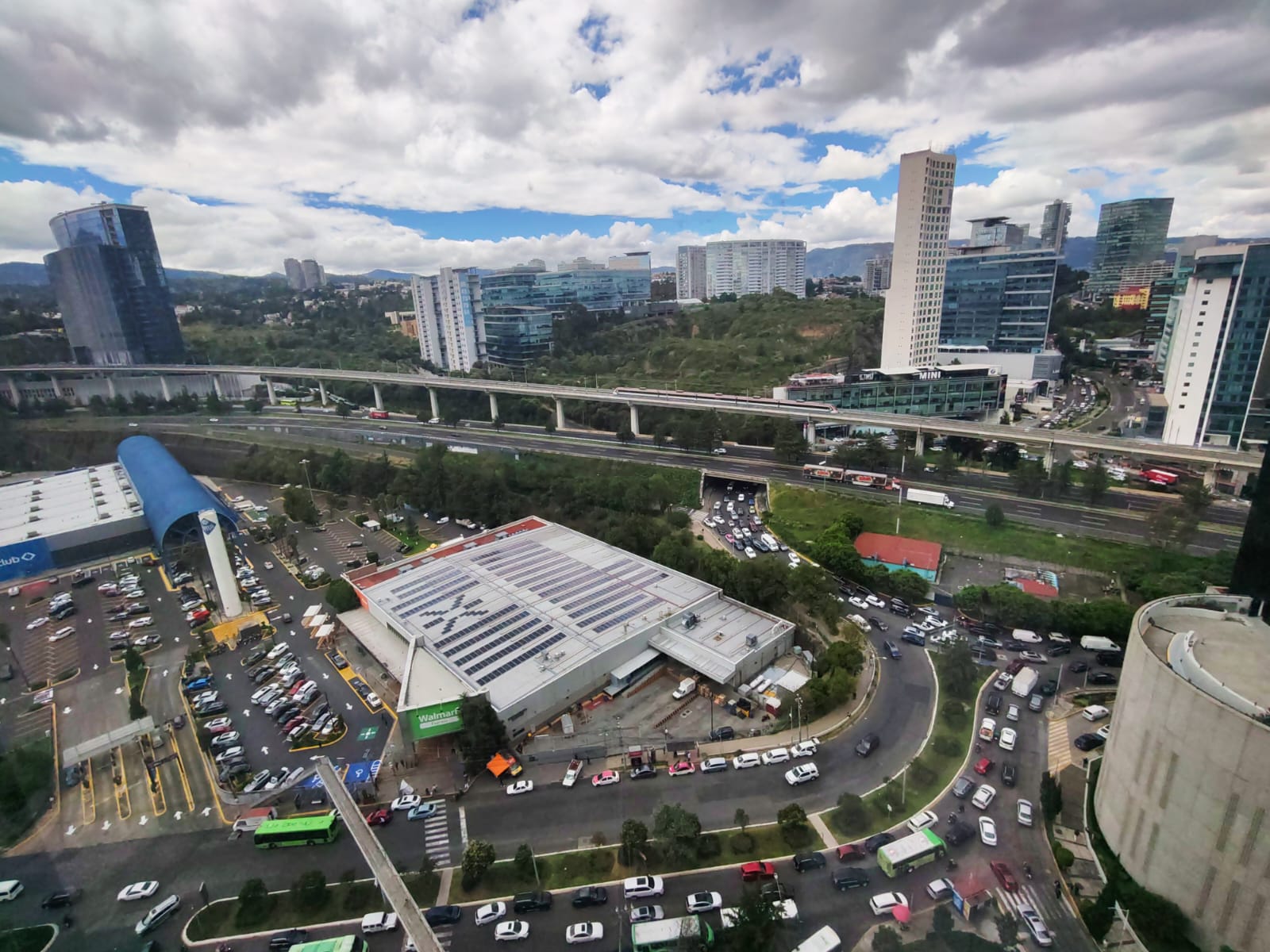
Santa Fe was planned around the automobile and on a topography of hills and ravines, so it has very few roads in and out. When tens of thousands of people arrive for work in the morning and leave in the afternoon, they all meet at the same points.
The access roads and their bottlenecks
- México–Toluca highway and carretera / Paseo de la Reforma: the connection to Lomas, Polanco and downtown. It is the main access and the most congested.
- Avenida Constituyentes: an alternative toward Chapultepec and Tacubaya, with slow stretches at rush hour.
- Vasco de Quiroga and Centenario: exits toward the south and Álvaro Obregón, one or two lanes in several stretches.
- Supervía Poniente (toll road): connects Santa Fe with the south (Periférico and San Jerónimo) in minutes outside rush hour; it is the fastest option toward Pedregal or Coyoacán, with a daily cost.
In practice, a Santa Fe–Polanco trip that takes 20 minutes on a Sunday can take an hour or more on a Tuesday at 6 p.m., and an accident or a protest on the highway blocks the whole area. That is why the golden rule is: live in Santa Fe if you work in Santa Fe, not if you work on Reforma or in the south.
Public transportation
For decades Santa Fe had no mass transit. Today the big news is the Mexico City–Toluca Interurban Train, which has had a Santa Fe station since 2023 and connects with Toluca and, on its final stretch, with Observatorio, where it links to the Metro. There are also bus and microbus routes to Observatorio, Tacubaya and Chapultepec, and many companies offer employee shuttles. Even so, most residents still depend on the car, so an apartment with two parking spaces is almost essential for a family.
If you are deciding where to live based on your job, compare real travel times in the guide to the best areas to live near work in CDMX.
Daily life: services, schools and parks
Inside the area, life is comfortable: almost everything a family needs is 5–10 minutes away, though not always on foot. Sidewalks exist, but the distances, the slopes and the design of the avenues make walking the exception outside a few corridors.
Shopping and health care
Centro Santa Fe is one of the largest shopping malls in Latin America, and around it are supermarkets, smaller plazas and restaurants at every price level, many geared toward office lunches. For health care, the area has top-tier private hospitals, a real advantage for families with young children or older adults. What's missing is neighborhood commerce: markets, fondas (small family-run eateries) and corner shops are in the village of Santa Fe or in Cuajimalpa, not among the towers.
Universities and schools
Santa Fe is home to campuses such as the Universidad Iberoamericana, the Tecnológico de Monterrey campus and UAM Cuajimalpa, plus numerous private bilingual schools in the area and in Bosques de las Lomas and Interlomas. For families with children at those schools, living nearby avoids the worst traffic in the city twice a day.
Parks and outdoor life
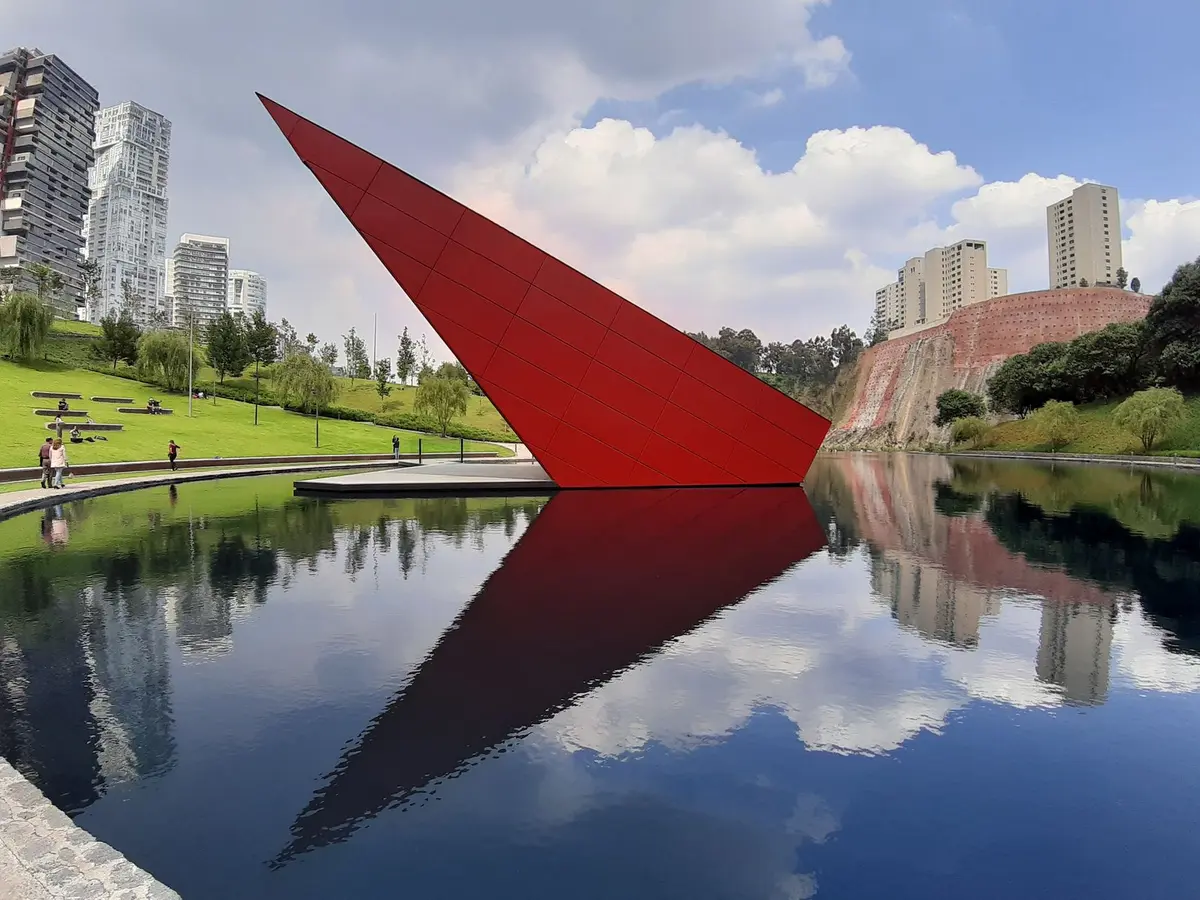
Parque La Mexicana changed life in the area: a lake, running tracks, dog areas and playgrounds in a large park ringed by towers. Outside it, the green space is in each condominium's gardens and in the ravines. On weekends many people head to Desierto de los Leones or La Marquesa, a few minutes west, an advantage few parts of the city have.
Climate
Because of the altitude, Santa Fe is cooler and rainier than the center of the city, with cold winter mornings and frequent fog. It is worth checking orientation, windows and dampness in the apartment, especially on low floors or with a ravine view.
What to check before buying or renting in a tower
Soil, earthquakes and hillsides
Santa Fe is in the hills zone, with firmer soil than the old lakebed where colonias like Roma or Del Valle sit, which generally reduces seismic amplification. But much of the area was built on backfilled mines, former dumps and ravine edges. Before buying, look up the property in Mexico City's Risk Atlas (Atlas de Riesgos), ask for the tower's structural report or engineering assessment, and follow the guide on what to check when buying a home after an earthquake.
Water
The west of the city depends largely on the Cutzamala System, and in drought seasons the area has had pressure drops and outages, which many towers solve with water trucks (pipas) paid for by the condominium. Ask the administration how many water trucks were bought in the past year, what the cistern capacity is, and whether that expense was charged to the regular fee or as an extraordinary assessment.
Condominium administration
In a 200-apartment tower, the administration is as important as the apartment. Ask for the last year's financial statements, the reserve fund, the bylaws and the minutes of owners' meetings, and ask about big pending works: waterproofing, elevator replacement, facades. A tower with high delinquency or no reserve fund will end up charging extraordinary fees. The article on the condominium property regime explains which documents must exist.
Warning about pre-sales in Santa Fe
The area has several projects that took years to be delivered or were delivered with amenities different from those promised. Before putting down a deposit, verify the construction permit, the land use and the number of floors authorized, and that the land is free of liens. Follow the guide to verify a developer's permits in a pre-sale and the one on the advantages and risks of buying pre-sale.
Elevators, parking spaces and storage
On the 25th floor, an elevator out of service is a serious problem. Ask how many elevators there are per tower, their age and the maintenance contract; the guide on apartments with or without an elevator helps you evaluate it. Confirm in the deed (escritura) or the contract how many parking spaces and storage units come with the apartment and whether they are assigned or first-come, first-served.
Who is Santa Fe for (and who is it not for)?
With all of the above, this is the profile for which the area makes the most sense:
| Profile | Is Santa Fe a good fit? | Where to look or what to compare |
|---|---|---|
| Professional working at a Santa Fe corporate office | Yes, it's the strongest profile | Central corporate zone, loft or 1–2 bedrooms |
| Family with children in schools in the west | Yes | La Mexicana, Lomas de Santa Fe or Bosques de las Lomas |
| Student at the Ibero or the Tec (or parents investing) | Yes | Towers 10–20 years old near the campuses |
| Foreign executive on a temporary assignment | Yes | Furnished apartment with amenities |
| Someone who works on Reforma, in Polanco or in the south | No | Polanco, Del Valle or Coyoacán |
| Someone who wants neighborhood life and to walk everywhere | No | Roma, Condesa or Del Valle |
| First-time buyer on a tight budget | Difficult | Contadero, Cuajimalpa or nearby municipalities |
If you are torn between Santa Fe and a more central area, the natural comparison is living in Polanco (more expensive, but walkable and well connected) or living in Del Valle (more neighborhood life, with public transit). If what you want is neighborhood life and nightlife, read the guide to living in Roma-Condesa. The full picture is in the best colonias to live in CDMX and the colonias with the highest appreciation in CDMX.
Tip before you decide
Before you sign, do the actual commute to your job or your children's school on a weekday at the time you would leave, both ways. And visit the tower on a Saturday: you'll see how the amenities, the visitor parking and the administration work. Compare against the apartments and condominiums listed in Ciudad de México with a similar fee.
If you already own an apartment in Santa Fe and plan to sell or rent it, corporate demand is steady: you can list your property with photos of the amenities and the maintenance fee stated clearly from the start.
Frequently asked questions
How much does it cost to rent an apartment in Santa Fe CDMX?
As an approximate 2026 reference, a 2-bedroom apartment runs from about $25,000 to $35,000 pesos a month in towers 10 to 20 years old, $28,000 to $40,000 in the central corporate zone and $35,000 to $48,000 in the new La Mexicana towers. On top of that you must add the maintenance fee if it isn't included, which usually runs from $5,000 to $15,000 a month.
Is Santa Fe a good place to live?
It is a good option if you work or study inside the area: it offers secure towers with amenities, nearby hospitals and private schools, and Parque La Mexicana. It is a poor option if you have to head out daily toward Reforma, Polanco or the south, because of traffic on its few access roads, or if you want neighborhood life and to walk everywhere.
How long does it take to get from Santa Fe to Polanco or Reforma?
Outside rush hour, about 20 to 30 minutes by car. At weekday rush hour the trip can exceed an hour, and an accident on the México–Toluca highway or on Constituyentes can stretch it much longer. The Mexico City–Toluca Interurban Train and company shuttles are the alternatives to driving.
Is Santa Fe a high-risk seismic zone?
Santa Fe is in the hills zone, with firmer soil than the old lakebed of the center, which generally reduces the amplification of earthquakes. The risk lies in properties built on backfilled mines, former dumps or ravine edges, so it is wise to check Mexico City's Risk Atlas and ask for the tower's structural report.
Is Santa Fe or Interlomas the better choice?
Interlomas, in Huixquilucan, State of Mexico, usually offers more square footage and houses for the same money, but its access roads to Santa Fe also jam up, and the paperwork, predial and notary public are those of the State of Mexico. Santa Fe is better if you want to be closer to the corporate offices and the Interurban Train; Interlomas, if you're looking for a house and a lower price per meter.
Listings
Properties in Ciudad de México
 For sale
MX$4,440,000
Apartment
Your Apartment In The Best Area Of Santa Fe, Facing Parque la Mexicana
Ciudad de México, Ciudad de México
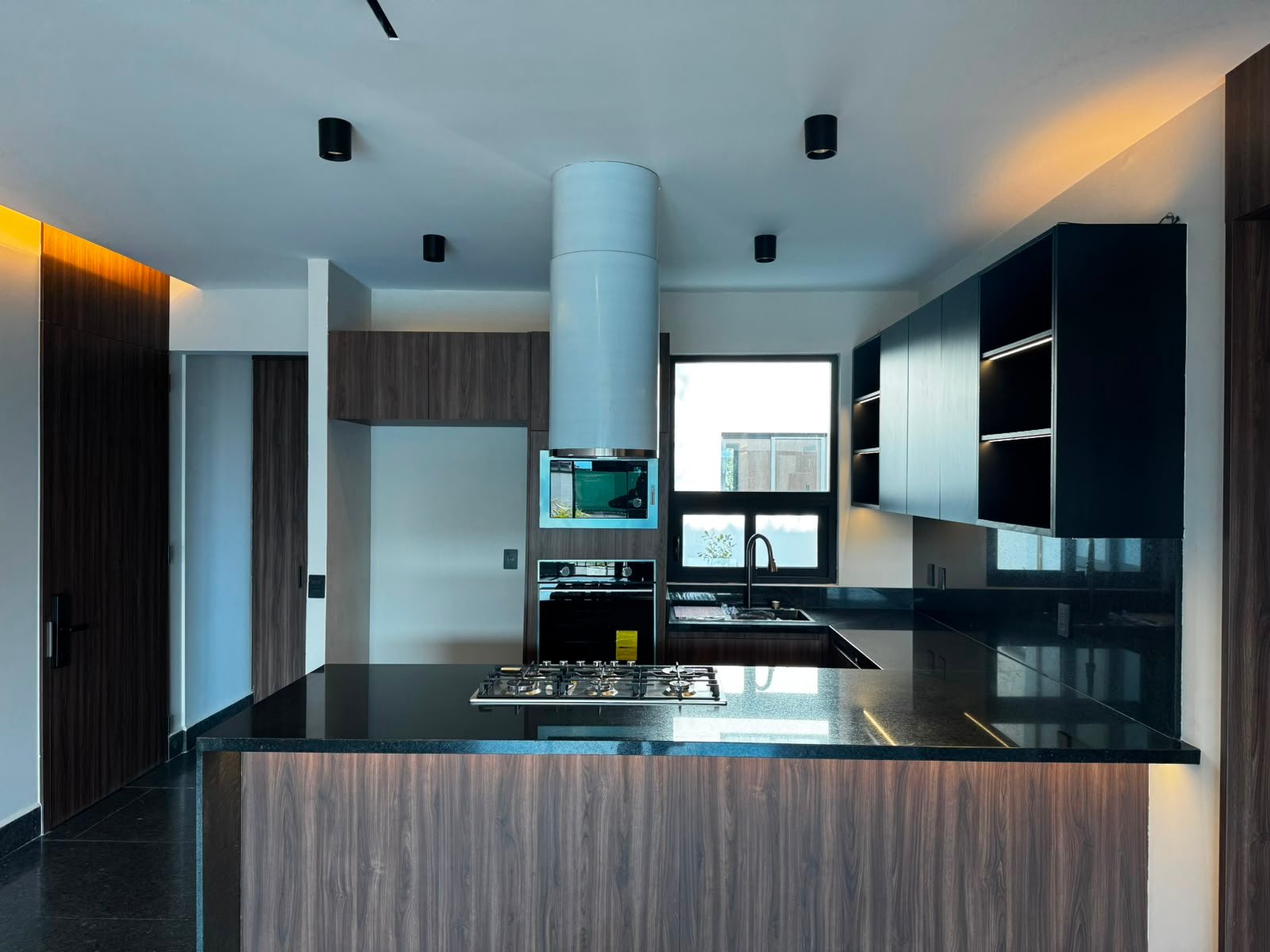 For sale
MX$6,900,000
Apartment
Spectacular Nearly New Apartment in Las Águilas | 2 Bedrooms, 3 Bathrooms, 2 Parking Spaces
Ciudad de México, Ciudad de México
Keep reading
Related articles
Living in Colonia Del Valle: Who It's For and What It Costs in 2026
Is living in Del Valle worth it? Prices by zone, getting around, earthquakes, water and who this Benito Juárez neighborhood suits, before you rent or buy.
Carlos Mendoza
Living in Coyoacán: Prices, Neighborhoods and Vibe in 2026
Is Coyoacán worth living in? Rent and purchase ranges by colonia, getting around, water, earthquakes and who it suits. A practical guide before you rent or buy.
María Elena Rodríguez
CDMX vs Guadalajara vs Monterrey: Full Comparison for Living
CDMX, Guadalajara or Monterrey: we compare housing, rent, jobs, climate, mobility and water so you can pick the city that best fits your life and your budget.
María Elena Rodríguez
Cost of Living in Mexico City 2026: Rent & Budget
The cost of living in Mexico City (CDMX) in 2026 varies widely by borough. Rent, utilities, transportation and food: a practical guide with ballpark ranges and recommended salary.
María Elena Rodríguez
City guides
Keep learning before you decide
158 guides on city guides, and thousands of properties listed across Mexico.