

Mortgage Loans for Mexicans Living Abroad: Your Options
A practical guide to financing a home in Mexico from the U.S.: which banks lend to Mexican nationals abroad, what they require, and what alternatives exist.

Every year, thousands of Mexicans who live and work in the United States and other countries look to buy property in Mexico, whether to return someday, for their family, or as an investment. The most common obstacle isn't the decision itself but the financing: most Mexican banks require proof of income in Mexico, and many migrants give up on the idea, assuming that a loan for Mexicans in the U.S. to buy in Mexico simply doesn't exist. The reality is different: there are paths forward, though they require more paperwork and planning than a traditional mortgage.
Important notice: This article is for informational purposes only and does not constitute financial, legal, or tax advice. Mortgage requirements, rates, and loan programs change frequently and vary depending on the bank, the applicant's immigration status, and the current exchange rate. Before making a decision, consult directly with the financial institution and, if possible, with a certified mortgage advisor in Mexico.
Real options for financing from abroad
There is no single "migrant loan." Instead, there are several routes that are often combined depending on each person's profile:
- Peso-denominated mortgages from certain Mexican banks that do serve Mexican nationals abroad. At various times, some Mexican banks have offered programs or exceptions for Mexicans living outside the country, generally requiring a guarantor or co-borrower in Mexico with verifiable income; the specific offerings change frequently, so it's worth checking directly with each institution to see which one currently maintains this type of product.
- Dollar-denominated financing through specialized intermediaries who work with binational clients, evaluating U.S. income and, in some cases, U.S. credit history (credit score).
- Co-financing with Infonavit or Fovissste if the buyer (or their spouse) is still contributing in Mexico, although this route usually requires in-person presence and paperwork that complicates a long-distance transaction.
- Cash purchase or scheduled payments made directly to the developer, very common in tourist and residential developments aimed at migrants, with monthly payment plans and no bank involved.
- Bridge loans secured by a fully paid-off property in Mexico, when the buyer or a close relative already owns a property free of liens that can be used as collateral.
The exact availability of each option varies by bank and changes over time, so it's wise to request up-to-date quotes before committing to any route. If you want to understand the general mortgage process in Mexico step by step, check out our guide to the mortgage loan process step by step.
Key fact: Many banks consider a "Mexican abroad" to be someone who lives outside the country but keeps their Mexican nationality and an active RFC (tax ID). This is not the same as being a foreigner buying in Mexico, a case with different rules, especially in the restricted zone (see our article on the fideicomiso (bank trust) for foreigners in the restricted zone).
Requirements banks ask for
Although each institution has its own policy, most programs aimed at Mexicans abroad share a similar baseline of conditions. In general, the goal is to reduce the risk that the bank cannot verify income or pursue legal action in case of default, so they typically ask for:
- A higher down payment than on a traditional loan, roughly between 20% and 40% of the property's value, depending on the bank and the applicant's profile.
- Proof of income from the country where the applicant resides, translated and in some cases apostilled.
- A guarantor or co-borrower residing in Mexico with verifiable income, who backs the loan in case of any contingency.
- A clean credit history, both in Mexico (Buró de Crédito) and, in some programs, in the country of residence.
- A power of attorney so that a representative in Mexico can sign paperwork if the buyer can't travel for each stage.
- An active bank account in Mexico to receive and manage loan payments.
These requirements are indicative and can vary significantly between institutions and over time, so it's always a good idea to request the current term sheet directly from the bank.
Immigration and income documents
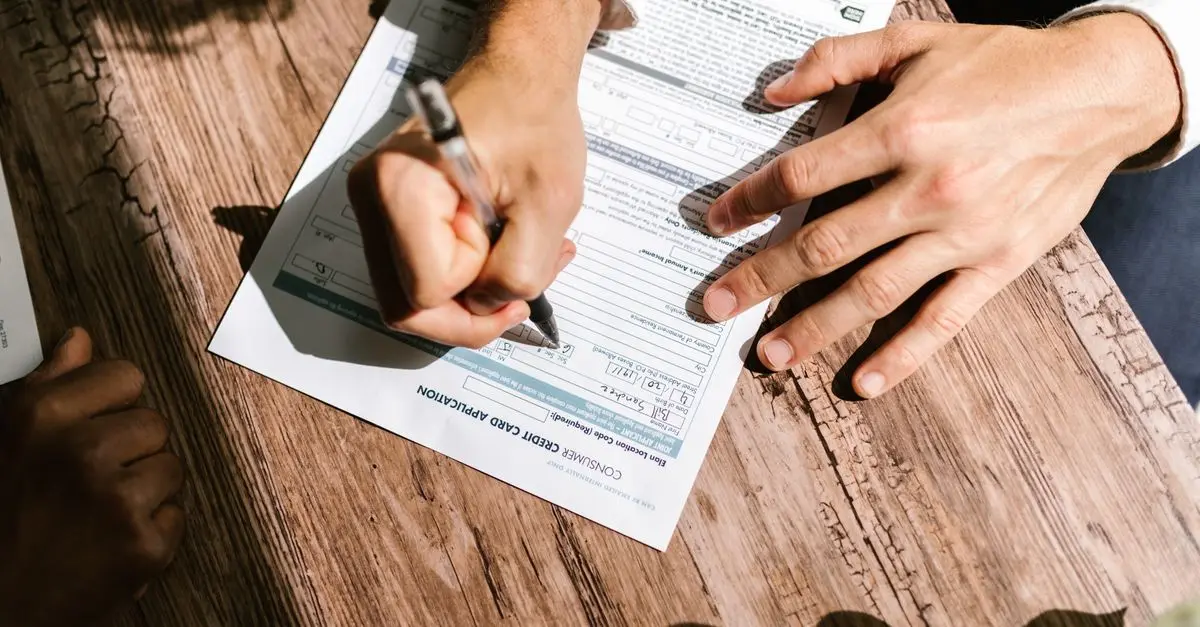
The part that most often delays these transactions is the documentation, because it combines Mexican paperwork with paperwork from the country of residence. Here is what is normally requested:
| Document type | Examples | Notes |
|---|---|---|
| Identification | Mexican passport, matrícula consular, ID from country of residence | Must be valid throughout the entire process |
| Proof of income | Pay stubs, W-2s, tax returns | Usually requires translation and sometimes an apostille |
| Credit history | Buró de Crédito report (Mexico), credit history or credit score (abroad) | Not all banks ask for both |
| Tax documents | RFC, constancia de situación fiscal (tax status certificate) | Must be kept active even while living abroad |
| Power of attorney | Granted before a notary public or a Mexican consulate | Useful if you can't travel to sign at each stage |
Handling paperwork at the Mexican consulate in the country where you live can speed up the process considerably, especially for powers of attorney and matrícula consular procedures. Before signing any offer, also review our checklist of documents for buying a home, which applies equally if you're buying from abroad.
Comparison of alternatives
Each financing route has different advantages and limitations. This comparison is for guidance only and is meant to help you identify which option to explore first based on your situation:
| Option | Main advantage | Main limitation |
|---|---|---|
| Mexican bank with a program for nationals abroad | Peso-denominated rate, formal and regulated process | Requires a guarantor in Mexico and more paperwork |
| Dollar financing through an intermediary | Evaluates U.S. income and credit | Rates and fees that should be compared carefully |
| Infonavit/Fovissste co-financing | Makes use of your housing subaccount balance | Requires continued contributions or an available balance |
| Direct payment to the developer | Less banking paperwork, more flexible | Depends on the developer's solidity and reputation |
| Loan secured by a mortgage on another property | Can offer better terms | Requires already owning a property free of liens |
If you're comparing rates and terms across different banks, our 2026 mortgage loan comparison can be a useful starting point before focusing on the specific options for residents abroad.
Common mistakes that delay the process
After helping dozens of families through similar processes, these are the stumbling blocks that come up most often:
- Not keeping your RFC active. Many migrants stop filing tax returns, and this complicates tax procedures at the time of purchase.
- Looking for a guarantor at the last minute. Finding a co-borrower with verifiable income in Mexico can take weeks; it's best to identify one from the start.
- Underestimating the time needed for translation and apostille of foreign income documents, which can add several weeks to the process.
- Not verifying the legal status of the property before committing money. Requesting the certificado de libertad de gravamen (lien-free certificate) is a step that should not be skipped (see our guide to the certificado de libertad de gravamen).
- Trusting verbal promises from sellers or informal "fixers" who offer quick loans without bank backing. This type of fraud is more common than it seems; we recommend reading about common real estate scams in Mexico.
Practical recommendation: Before signing any purchase agreement, ask the bank or intermediary for a written pre-qualification. This gives you a realistic idea of the approved amount and keeps you from committing a deposit to a seller while you still don't know whether the loan will go through.
Recommended steps before buying
An orderly process reduces risks and downtime. In general terms, this is a reasonable order to follow:
- Verify your RFC and tax status with the SAT (Mexico's tax authority), even if you live abroad.
- Check your record with Buró de Crédito and, if applicable, your credit history (credit score) in the country where you live.
- Identify a potential guarantor or co-borrower in Mexico with verifiable income.
- Request quotes and pre-qualifications from more than one bank or financial intermediary.
- Calculate the total cost of the transaction, not just the down payment, with our closing cost calculator.
- Review the legal status of the property and consider hiring a trusted notary public (notario público) in Mexico.
- Explore available properties under houses for sale or apartments for sale, filtering by the city where you plan to buy.
If you also want to understand what other costs are often overlooked in a purchase, it's worth reading our article on hidden costs of buying a home, which applies equally to buyers living outside the country.
Frequently asked questions
Can a Mexican living in the United States get a mortgage loan in Mexico?
Yes, although not all banks offer this product as a standard option. Some Mexican institutions have programs or exceptions for nationals abroad, generally asking for a guarantor with verifiable income in Mexico and a larger-than-usual down payment. It's best to check directly with each bank, since availability changes over time.
What if I don't have a guarantor in Mexico?
Without a co-borrower or guarantor with verifiable income in Mexico, your options narrow. You can explore dollar financing with intermediaries that specialize in binational clients, direct payment plans with the developer, or save a larger down payment to reduce the risk the bank takes on.
Do I need to travel to Mexico to sign the loan?
In many cases at least one in-person signature is required, although a power of attorney granted before a notary public or a Mexican consulate may allow a representative to sign certain documents on your behalf. This varies by bank and type of transaction, so it's important to confirm it at the start of the process.
Is it better to pay cash or get a loan if I live abroad?
It depends on your financial situation. Paying cash avoids bank paperwork and interest, but it ties up a significant amount of capital. A loan, although slower to process from outside the country, may make sense if you prefer to preserve liquidity or take advantage of favorable financing terms. A mortgage advisor can help you compare both scenarios using your real numbers.
Looking for your next property in Mexico from abroad?
Browse thousands of verified listings and find the one that fits your budget and your plans.
Listings
Recent properties
 For sale
MX$1,440,000
Land
Land for Sale in Residencial Lomas del Dorado
Boca del Río, Veracruz
 For sale
MX$3,900,000
House
House for Sale in Las Lomas, Riviera Veracruzana | 3 Bedrooms with Private Bathrooms
Alvarado, Veracruz
 For sale
MX$10,900,000
Land
Attention Investors
Puerto Vallarta, Jalisco
Keep reading
Related articles

Mortgage for Freelancers and the Self-Employed in Mexico
Work for yourself and want to buy a home? Learn how to prove income without pay stubs and which banks tend to be more flexible.
Inmobiliaria32 Team

Mortgage Loans for Seniors in Mexico: A Buyer's Guide
How mortgages for older adults work in Mexico: age limits, insurance, co-borrowers, and alternatives if a bank turns you down because of your age.
Carlos Mendoza

Mortgage Loan Step by Step: From Paperwork to Keys
How do you get a mortgage in Mexico? We walk you through the whole process step by step: prequalification, documents, appraisal, approval.
Carlos Mendoza

Zero Down Payment: Does It Exist and Is It Worth It?
Does a no-down-payment mortgage exist in Mexico? We explain when INFONAVIT and certain programs come close to allowing it.
Carlos Mendoza
Credit and mortgages
Keep learning before you decide
86 guides on credit and mortgages, and thousands of properties listed across Mexico.