

How to Keep Squatters Off Your Vacant Lot: Prevention Guide
How to prevent the invasion of a vacant lot in Mexico: paperwork in order, fencing, visits, predial and proof of possession. Concrete steps before it happens.
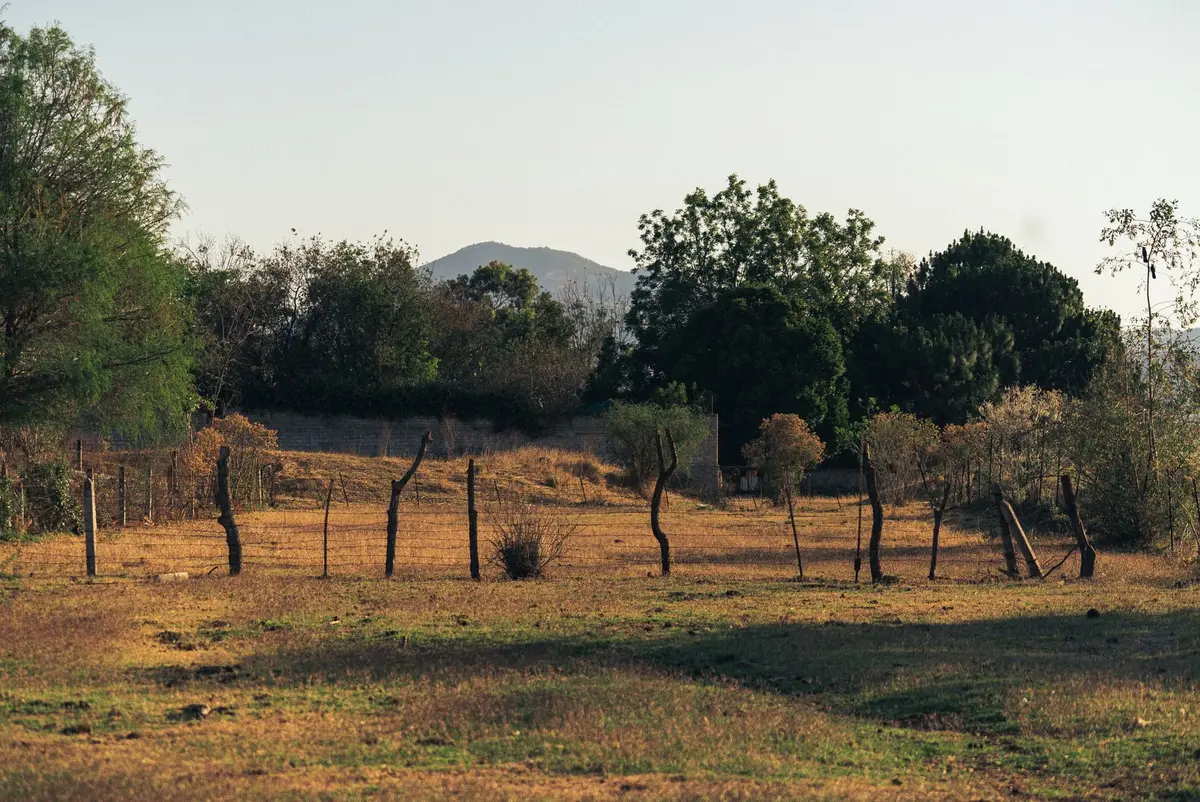
To prevent the invasion of a vacant lot you need two things at once: the property has to look occupied, and you have to be able to prove you possess it. In practice that means having the deed (escritura) registered in the Registro Público de la Propiedad, the predial (property tax) paid in your name, the perimeter fenced and signposted, periodic visits with dated photos, and someone you trust nearby who will alert you. Squatters (paracaidistas) look for lots with no wall, no visible owner and weak paperwork; if your lot doesn't fit that profile, they almost always pass it by. This guide explains what to do, in what order, and how much effort each measure takes. It is general information: civil and criminal rules vary by state, so confirm your case with a local attorney or notary public (notario público).
Why some lots get invaded and others don't
An invasion is rarely improvised. Whoever occupies someone else's property, whether a family looking for a place to live or an organized group that later "sells" lots, watches first. What they look for is a lot where nobody reacts quickly and where the owner will have a hard time proving their rights. These are the traits that come up most often:
- No wall or fence, or a collapsed fence that nobody repairs.
- Tall weeds and trash: a sign that nobody has visited in months.
- Absent owner: lives in another city or abroad, or the lot is part of an estate (sucesión) the family hasn't sorted out.
- Weak paperwork: there's only a private contract, the deed is still in the name of a deceased relative, or the predial is in someone else's name.
- Growth area: new colonias on the outskirts, next to irregular settlements or on ejido land in the process of being regularized.
That's why prevention has two fronts. The physical front makes the lot not look available; the documentary front means that, if someone does get in, you can get them out quickly through legal channels. One without the other leaves a gap: a wall doesn't do much if the deed isn't registered, and a flawless deed won't stop someone from moving onto a lot nobody visits.
First line of defense: paperwork in your name and in order
When there's an invasion, the prosecutor's office (Fiscalía) and the judge will ask you for two things: proof that you're the owner and proof that you were in possession of the lot before they entered. Prepare that evidence before you need it.
Registered public deed
A private purchase contract proves an agreement between two people, but it is not enforceable against third parties until it is formalized before a notary public and registered in the Registro Público de la Propiedad (RPP). If you bought that way, get the deed (escritura) done as soon as possible; we explain the difference in private contract vs. public deed, and you can estimate the cost with the closing cost calculator. Once it's registered, periodically request a certificate of freedom from liens (certificado de libertad de gravamen) or check your folio real to confirm that nobody has recorded anything strange against your property. Ask the RPP in your state whether it offers online lookups or any alert service.
Predial in your name and up to date
Predial receipts don't prove ownership by themselves, but they do show there is an active owner exercising acts of ownership year after year. If the property is still in the seller's or a relative's name, have the transfer of title (traslado de dominio) done at the catastro office. If you're not sure how it's calculated, read what the predial is and how it's calculated. Keep every receipt, even ones from ten years ago.
Clear measurements and boundaries
Many invasions start as "just a little piece": the neighbor moves his wall over, someone puts up a lean-to in the corner. If your deed describes boundaries that no longer exist, commission a topographic survey and, if needed, the land boundary survey and measurement (deslinde) process. A plan with coordinates is much harder to dispute than "borders the mesquite tree on the north."
Inherited lots: if the registered owner has died and the estate hasn't been processed, nobody in the family can easily prove ownership in their own name. It's one of the most commonly invaded profiles. Opening the probate proceeding (juicio sucesorio) or handling the succession before a notary is, in itself, a preventive measure.
Fencing and signposting the perimeter
A fenced lot tells anyone passing by that it has an owner and that the owner takes care of it. Legally, too, someone who breaks a fence or wall to get in can hardly claim they occupied the property in good faith or without violence.

What kind of fence makes sense
The right option depends on the property's value, the area and your budget. A block wall is the strongest deterrent in an urban area, but it requires a permit or construction notice in most municipalities; we detail costs and permits in perimeter wall: price per linear meter and permits. On large or rural lots, posts with barbed wire or chain-link mesh do the job at lower cost.
| Measure | Relative cost | Deterrent effect | When it makes sense |
|---|---|---|---|
| Posts with barbed wire | Low | Medium | Rural or very large lots |
| Chain-link mesh | Medium | Medium-high | Suburban and outlying lots |
| Block wall | High | High | Urban areas, high-value lots |
| Gate with padlock | Medium | High, if combined with a fence | Any fenced property |
| Private property sign | Very low | Medium | Always |
| Solar-powered camera with mobile data | Medium | Medium, high as evidence | Owners who live far away |
The sign matters more than it seems
Put up a visible, sun-resistant sign reading "Propiedad privada" (private property), preferably with a contact detail (a phone number or the name of whoever manages the lot). You don't need to put your home address. One thing to be clear about: a "for sale" sign on an unfenced, weedy lot advertises that the owner isn't around, so if you're going to sell, fence and clean up first.
Cleaning and upkeep
Clearing the weeds and hauling away trash every season costs little and changes how the property is perceived. Many municipal regulations require vacant lots to be kept clean and provide for fines if they aren't, so you also save yourself a problem with the city hall (ayuntamiento).
Presence: visits, neighbors and surveillance
No wall replaces presence. Most invasions are discovered weeks or months later, when there's already a sheet-metal room, an illegal power hookup (a "colgada") and a family claiming to have been there a long time. The sooner you find out, the easier it is to act.
- Visits on a fixed schedule. If you live nearby, at least once a month. If you live far away, assign someone to do it for you.
- A trusted neighbor. The next-door neighbor is your best alarm. Give them your phone number, ask them to let you know if they see activity and, if possible, offer a small payment for keeping an eye on things.
- Caretaker or night watchman. On large or high-value properties, a caretaker who stops by daily or lives in a guard shack greatly reduces the risk. Do it with a written contract stating that they look after the lot on your behalf (we explain why below).
- Cameras. Today there are cameras with solar panels and mobile data connections that need neither electricity nor internet on the property. They won't stop anyone from entering, but they alert you and leave a time-stamped record.
- Orderly temporary use. Planting crops, storing materials or using the lot as parking under a contract are ways to keep visible activity going. Always with a document making clear that the use is loaned or rented, not transferred.
And if you also have a house that sits empty most of the year, many of these measures overlap with those for securing unoccupied homes.
Build proof of possession starting today
The crime of despojo (dispossession) and possessory lawsuits protect possession, not just ownership. That means that, besides the deed, you'll be asked to show that you were there first. Put together a simple file and keep it up to date:
- Dated photos and videos on every visit, taken from the same spots (the four corners and the entrance). Store them in the cloud, not just on your phone.
- Invoices and receipts for the wall, brush clearing, cleaning or payments to the caretaker, in your name.
- Predial receipts and, if there are any, water or electricity receipts.
- Statements from neighbors or from the colonia's local auxiliary authority recognizing you as the possessor.
- Notarial record of facts (fe de hechos) on the condition of the lot. It costs more than a photo, but a notary certifying that the property was fenced and unoccupied on a given date is very solid evidence. It's worth doing when you buy and every time you complete a major improvement.
Tip: keep a digital copy of the deed, the certificate of freedom from liens, the survey plan and your latest predial receipts in a folder you can open from your phone. If one day you get a call saying someone has entered, you'll need them that very day before the Ministerio Público (public prosecutor's office).
Why it matters: the risk of adverse possession (usucapión)
An invasion isn't just a problem for today. The Federal Civil Code (arts. 1151 and 1152), and state codes with similar rules, allow someone to acquire real estate through positive prescription (prescripción positiva) if they possess it as an owner, peacefully, continuously and publicly: five years if in good faith and ten if in bad faith, under the federal code. Time periods and requirements vary by state. An owner who doesn't visit, doesn't pay and doesn't object is handing time to the possessor. We explain how that lawsuit works in positive prescription step by step.
The good news: under the same code (art. 1168), prescription is interrupted, among other causes, by a lawsuit or any judicial demand served on the possessor. In other words, claiming your rights in time through legal channels stops the clock; letting the years go by does not.
Mistakes that invite an invasion
Some well-intentioned decisions open the door to someone ending up with your lot. Avoid them:
- Lending the lot "on your word." If you let someone live or farm there without a written loan (comodato) or lease contract, it will be easy for them to later claim they occupy it as the owner. With a contract, their possession is derivative and, under the Federal Civil Code (art. 826), only possession as an owner can lead to prescription.
- Letting the caretaker build and move in with his family without a document stating that he's there in your name and at your request.
- Paying the predial in the seller's name or not paying it for several years.
- Buying without inspecting the lot in person. Many "invasions" were already there on the day of signing. Before buying, review the warning signs in ejido land and the risks of regularizing it, and visit the property with the survey plan in hand.
- Negotiating alone with whoever has already entered or signing any paper for them "so they'll leave." A receipt for money or a poorly drafted agreement can later be used as proof that you sold or ceded something to them.
- Letting time pass because "it's only a little room." Every month counts, both for the criminal route and for the deadlines in the civil route.
If they get in anyway: the first hours
Even with every precaution, it can happen. What you do in the first few days determines whether the problem lasts weeks or years:
- Document with photos and video from the public street, without confronting anyone.
- File a complaint for dispossession (despojo) with your state's Fiscalía. The crime is set out in the Federal Criminal Code (art. 395) and in state criminal codes; bring your file of proof of possession.
- Hire an attorney to assess the interdicto to recover possession, which in most states must be filed within one year of the dispossession.
- Don't remove them yourself. Article 17 of the Constitution prohibits taking justice into your own hands, and an eviction carried out with violence can turn you into the accused.
We have a complete guide to the process, covering the criminal route, the civil route and the reivindicatory lawsuit: land invaded by squatters: how to recover it legally.
And if you've concluded that you can't look after a lot from a distance, selling it while it's still free and its paperwork is in order is also a valid decision: that's when it's worth the most. Check out how to sell a lot fast, compare prices in the land for sale section or list your lot for free on Inmobiliaria32.
Frequently asked questions
What's the most effective way to keep a vacant lot from being invaded?
The combination of a visible fence, frequent visits and paperwork in order. The fence and your presence deter; the registered deed, the predial in your name and dated photos let you react quickly through legal channels if someone gets in.
Is it mandatory to wall off a vacant lot?
It depends on the municipality. Some regulations require walling or fencing vacant lots in urban areas, and almost all require keeping them clean. Building a block wall normally requires a permit or construction notice, so check with your municipality's urban development office.
Does paying the predial keep someone from taking my lot?
Not by itself, but it helps a lot. Receipts in your name show that you exercise acts of ownership and serve as evidence in a dispossession complaint or in a lawsuit. What really protects you is the combination of a registered deed, an up-to-date predial and a presence on the property.
How long does a squatter need to end up with my lot?
The Federal Civil Code provides for five years of good-faith possession or ten of bad-faith possession, provided it is as an owner, peaceful, continuous and public. Each state has its own deadlines and requirements, and a lawsuit served on the possessor interrupts prescription. That's why it pays to act as soon as you find out.
Can I let someone look after or use my lot without risk?
Yes, if you do it with a written loan (comodato), lease or services contract stating that the person is there at your request. That way their possession is not as an owner and can't be used to claim the lot through adverse possession (usucapión).
Listings
Recent properties
 For sale
MX$1,440,000
Land
Land for Sale in Residencial Lomas del Dorado
Boca del Río, Veracruz
 For sale
MX$3,900,000
House
House for Sale in Las Lomas, Riviera Veracruzana | 3 Bedrooms with Private Bathrooms
Alvarado, Veracruz
 For sale
MX$10,900,000
Land
Attention Investors
Puerto Vallarta, Jalisco
Keep reading
Related articles

Infonavit Self-Build Loan: Build Your Home on Your Own Land
Infonavit self-build housing: requirements, loan amount, how funds are released in stages, and what your land must meet to build your home with credit.
Inmobiliaria32 Team

Used Furniture on Facebook Marketplace: Buy Without Getting Scammed
Buying used furniture on Facebook Marketplace in Mexico: the most common scams, how to pay safely, what to check on sofas and wood, and what to do if you've been scammed.
Inmobiliaria32 Team

Villahermosa Flood Risk: High-Risk Zones and Prevention
Villahermosa flooding: which colonias flooded in 2007 and 2020, how to check a home's flood risk, and what to verify before buying or renting in Tabasco.
Inmobiliaria32 Team
Squatters on Your Land: How to Legally Get It Back
If squatters took over your lot, act fast: file a dispossession complaint, an interdicto, a reivindicatorio suit, and know what never to do. A step-by-step guide.
Inmobiliaria32 Team
Buying a home
Keep learning before you decide
358 guides on buying a home, and thousands of properties listed across Mexico.