

Rent Increase in Mexico: How Much Can Landlords Raise It?
How much can rent go up each year in Mexico? We explain what your lease says and what the law allows.

Your lease is a few weeks from its one-year mark when the message arrives: "next term the rent is going up." The question almost every tenant and every landlord asks at that moment is the same: how much can the rent legally go up? The short answer is that there is no single mandatory percentage for all of Mexico, but there are clear criteria, starting with the signed lease, that determine whether an increase is reasonable or disproportionate. In this guide we walk through those criteria step by step, with ballpark figures and without inventing numbers that change over time.
Important notice
This article is for informational purposes only and does not replace personalized legal or tax advice. Rental law is local (each state has its own Código Civil, or Civil Code), and inflation figures change month to month. Before signing, renewing, or rejecting an increase, confirm current figures with official sources or consult a lawyer who specializes in rental law.
The general rule: the lease comes first
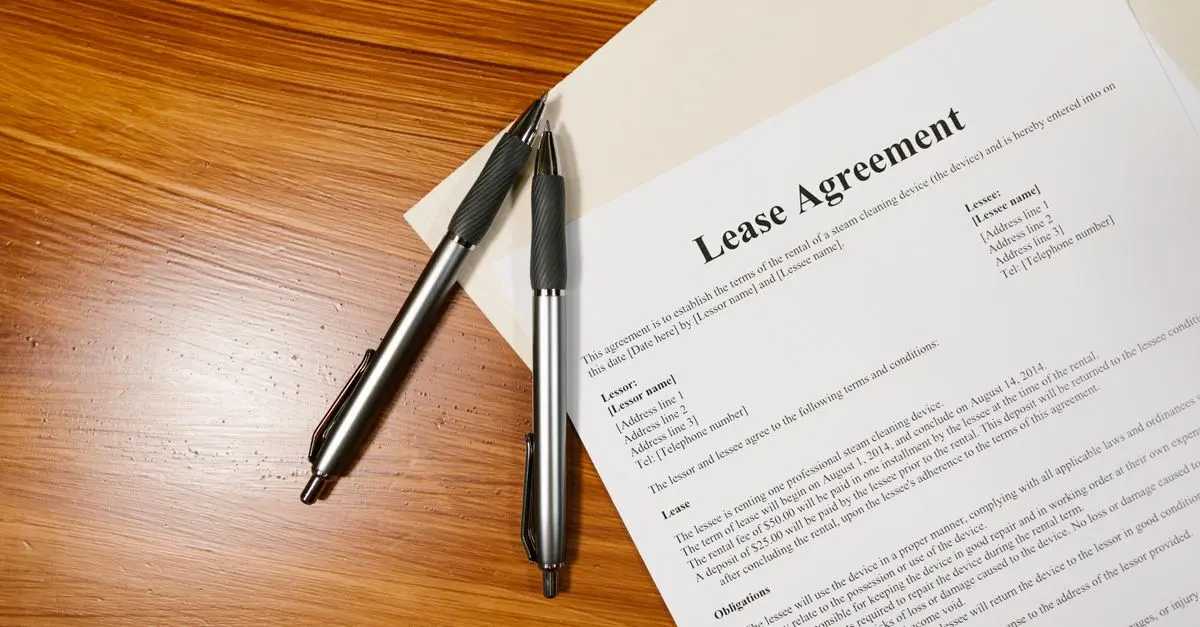
Before searching online for a "legal" percentage, review your own lease agreement. In the vast majority of cases, the document signed by landlord and tenant is the first source governing the increase: if it includes a clause specifying how and by how much the rent goes up each year, that clause applies, as long as it does not contradict the law of the state where the property is located.
Increase clauses are typically written in one of three ways: a fixed percentage agreed from the start, a reference to inflation (usually the Índice Nacional de Precios al Consumidor, or INPC, Mexico's national consumer price index), or a combination of both. If your lease says nothing on the matter, what your state's Civil Code provides comes into play, and that can vary from one state to another. If you are about to sign a new lease, it helps to start from a lease agreement template that spells out this clause clearly from the beginning.
Key fact
There is no single federal cap on residential rent increases in Mexico. What exists is what the lease provides and, as a complement, what local civil law establishes. Checking both is the first step before accepting or questioning an increase.
Why the INPC is used as a benchmark
When a lease does not set a fixed percentage, the most common benchmark, and the one both landlords and tenants tend to consider reasonable, is annual inflation as measured by the Índice Nacional de Precios al Consumidor (INPC), published by INEGI (Mexico's national statistics institute). The logic is simple: if the cost of living rose by a certain percentage during the year, adjusting the rent by a similar proportion preserves the real value of the owner's income without passing a disproportionate increase on to the tenant.
The problem is that inflation varies from year to year, and also between periods within the same year, so any specific figure mentioned here would quickly become outdated. The right approach is for both parties, at renewal time, to look up the current official annual INPC variation on the INEGI website and use it as the starting point for the conversation, rather than relying on what is "going around" in the market or on figures from previous years.
How to find the right figure
- Look for the cumulative annual percentage change in the INPC, not the monthly one.
- Use the most recent figure available close to the lease renewal date.
- If the lease mentions a different index (for example, a regional one), verify exactly which one applies.
- Save a screenshot or printout of the figure as backup in case a dispute arises.
Ballpark increase ranges
Although each case depends on the lease and the area, some general patterns tend to show up in practice in the Mexican residential rental market. Treat them as guidance, not fixed figures: they vary by city, property type, and the terms of the relationship between landlord and tenant.
| Scenario | Ballpark reference |
|---|---|
| Lease tied to the INPC | Increase close to the current annual inflation rate |
| Lease with an agreed fixed percentage | The exact number agreed at signing applies |
| High-demand area or recent renovation | The owner may propose a larger adjustment at renewal, subject to negotiation |
| Increase with no clear benchmark or justification | Valid reason to ask for an explanation or negotiate it down |
As an additional reference, you can use our rent calculator to compare the amount being proposed against the approximate market value in your area, so you can go into the negotiation with concrete data instead of hunches.
What happens if there is no written lease
In informal arrangements, with no signed lease or only a verbal one, the situation is more fragile for both parties, but especially for the tenant. Without an increase clause agreed in writing, the landlord has more room to propose whatever increase they see fit, and the tenant's only real protection is what their state's Civil Code provides as a default rule, plus the option of negotiating directly.
That is why the practical recommendation, whether you are renting or renting out, is always to formalize a written lease, even between relatives or acquaintances, specifying the initial amount, the term, how increases work, and the notice mechanism. This reduces conflicts and gives both parties a clear framework for when renewal time comes.
How to negotiate an increase
A proposed increase does not have to be accepted as it arrives. These steps help keep the conversation orderly and with less friction for both sides:
- Review your lease and confirm exactly what the increase clause says, if there is one.
- Check the current annual INPC variation as an objective point of comparison.
- Compare the current and proposed rent against the market value of similar properties in your area.
- If the tenant has paid on time and taken good care of the property, that is a reasonable argument for negotiating a smaller adjustment.
- Ask that any final agreement be put in writing, signed by both parties, before the renewal date.
Signs of an unreasonable increase
Not every large increase is automatically illegal, but some signs should raise a red flag and prompt you to look at the situation more carefully before signing or resigning yourself to paying:
When to question the increase
- The proposed percentage is double or triple annual inflation with no apparent justification.
- The increase is applied in the middle of the current lease term, without the lease allowing it.
- You were not given reasonable advance notice, only a few days before the lease expires.
- The original lease mentions no increase mechanism and the landlord imposes one unilaterally.
If you spot any of these signs, you have the right to ask for a written explanation, propose a reasonable counteroffer, or, if no agreement is reached, seek legal advice or turn to the housing consumer protection body that applies in your locality. Knowing your rights and obligations as a tenant helps a great deal here: see our guide to tenant rights in Mexico for more detail.
Frequently asked questions
How much can rent legally go up in Mexico each year?
There is no single percentage for the whole country. It depends first on what your lease says and, if it does not specify, on what your state's Civil Code establishes. When the lease ties the increase to inflation, the increase usually comes close to the annual INPC variation in effect at the time of renewal.
Can the landlord raise the rent before the lease ends?
Generally not, unless the lease itself expressly allows it. The usual practice is that any adjustment applies when the renewal date arrives or the agreed term ends, not arbitrarily in the middle of the current period.
What should I do if I think the increase is too high?
Review your lease, compare the proposed percentage with official inflation and with market prices in your area, and put a counteroffer in writing. If you cannot reach an agreement, you can seek legal advice or turn to the housing consumer protection body that applies, but avoid withholding the current rent as a form of protest.
Do I have to be notified in advance of the new amount?
Many leases require prior written notice before renewal, and even when it is not spelled out, it is a recommended practice in every case. Check your lease to confirm the specific notice period that applies to your situation.
Planning to negotiate your renewal?
Compare the proposed amount with the market value in your area and explore other rental options before deciding whether to accept the increase or move.
Listings
Recent properties
 For sale
MX$1,440,000
Land
Land for Sale in Residencial Lomas del Dorado
Boca del Río, Veracruz
 For sale
MX$3,900,000
House
House for Sale in Las Lomas, Riviera Veracruzana | 3 Bedrooms with Private Bathrooms
Alvarado, Veracruz
 For sale
MX$10,900,000
Land
Attention Investors
Puerto Vallarta, Jalisco
Keep reading
Related articles

Annual Rent Increases in Mexico: What's Allowed
How much can your rent go up each year in Mexico? Learn how the annual increase works, the role of inflation, and the INPC as a reference.
Inmobiliaria32 Team

How to Waterproof a Flat Roof and How Often to Redo It
A practical guide to waterproofing a flat roof (azotea): types of sealant, application steps, how often to renew it, and signs your home already needs it.
Carlos Mendoza

Average Home Prices by State in Mexico: 2026 Guide
An overview of the average home price in Mexico by state in 2026, with ballpark ranges, the factors that move the market, and how to compare before you buy.
Carlos Mendoza

How Much Rent to Charge for Your Property (Pricing Guide)
Learn how to set the rental price for your property in Mexico: gross yield, local comparables, factors that raise or lower value, and mistakes that leave your property vacant.
Inmobiliaria32 Team
Renting and leases
Keep learning before you decide
99 guides on renting and leases, and thousands of properties listed across Mexico.