

Annual Rent Increases in Mexico: What's Allowed
How much can your rent go up each year in Mexico? Learn how the annual increase works, the role of inflation, and the INPC as a reference.

Every time a lease renewal approaches, the same question comes up: how much can my landlord raise the rent this year? In Mexico there is no single fixed figure that applies nationwide, because the annual rent increase is governed primarily by what both parties agreed to in the contract and, in a complementary way, by what each state's Civil Code provides. In this guide we explain, with general information and no false precision, how the annual increase works, why inflation and the INPC (Mexico's National Consumer Price Index) are commonly used as a reference, what caps exist in some states, and what you can do if you believe the increase is abusive.
What is the annual rent increase?
The annual rent increase is the adjustment a landlord applies to the monthly rent, generally when the lease reaches one year or at the time of renewal. It is a common and legitimate practice: its purpose is to keep the rent from falling behind the general rise in prices. What matters is that the increase is neither arbitrary nor unlimited; it must comply with what was agreed and with the applicable legislation.
In Mexico, residential leasing is regulated by the Civil Code of each state (entidad federativa), not by a single federal law. This means the specific rules on rent increases can vary from one state to another. That is why you should review both your contract and your state's civil code before accepting or rejecting an increase.
Key fact
There is no single percentage that is valid across the whole country. The real limit on your increase depends, first, on what you signed in your contract and, second, on what your state's civil code establishes.
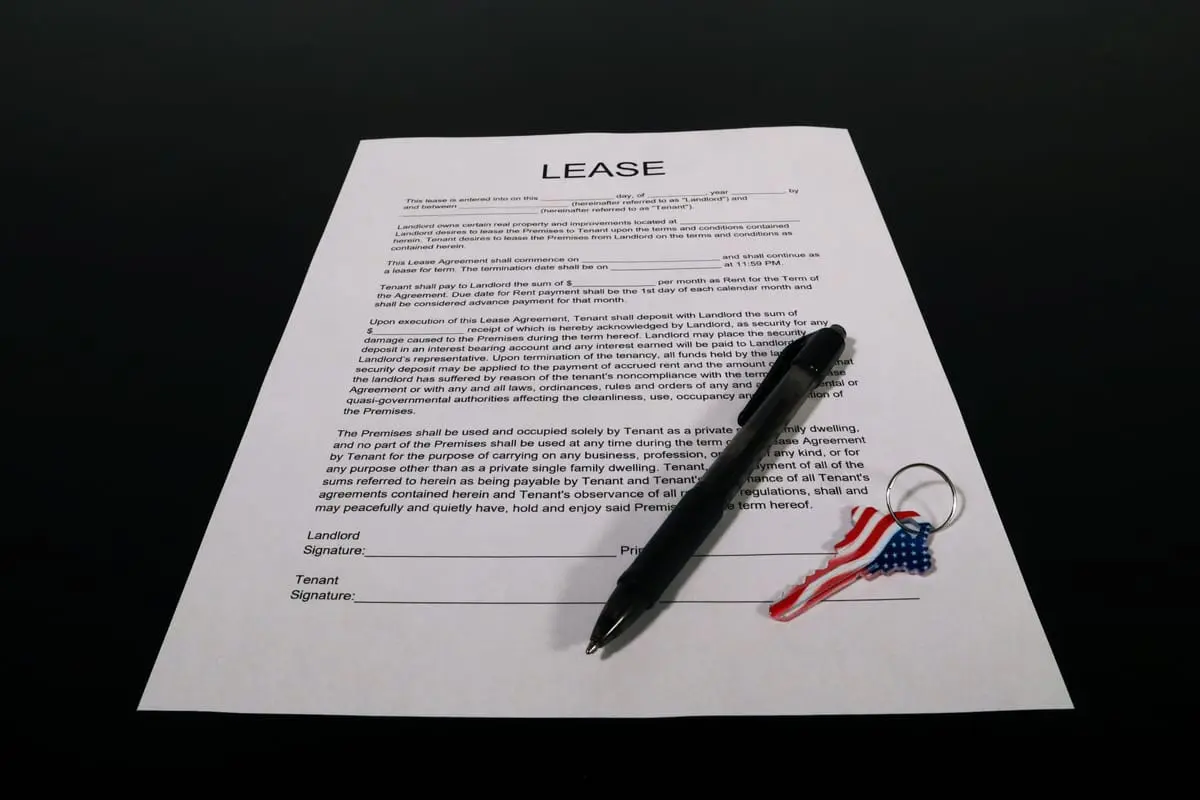
Your contract comes first
The first document you should review is your own lease agreement. Most contracts include an increase clause that defines how and by how much the rent can go up each year. This clause is usually worded in one of these ways:
- Fixed percentage: the contract sets a specific annual increase, for example a flat percentage agreed on by both parties.
- Inflation reference: the increase is tied to the Índice Nacional de Precios al Consumidor (INPC, the National Consumer Price Index) published by INEGI.
- Combination: some contracts take inflation and add a few extra percentage points.
If your contract already sets the form of the increase, that agreement governs, as long as it does not contradict local law. That is why it is so important to read carefully before signing. You can use our lease agreement template to see how a clear increase clause is drafted.
Watch out for ambiguous clauses
If the contract does not specify the percentage or the reference for the increase, the door is open to disputes. Before signing, insist that the clause clearly states the mechanism (for example, "the equivalent of annual inflation as measured by the INPC") to avoid surprises at renewal.
Inflation and the INPC as a reference
The most common and reasonable reference for a rent increase is annual inflation, measured through the Índice Nacional de Precios al Consumidor (INPC) published by INEGI. The logic is simple: if prices in general rose by a certain percentage over the year, adjusting the rent by a similar proportion preserves its real value without penalizing the tenant excessively.
When a contract states that the increase will be "in line with inflation" or "according to the INPC," the usual approach is to take the cumulative change over the previous twelve months at the time of renewal. That percentage changes from year to year, so you should not assume a fixed figure: the right approach is to check the official figure in effect when the increase is due to be applied.
How to verify inflation
- Check the INPC directly on INEGI's official website.
- Look at the cumulative annual change, not the monthly one.
- Use the figure for the period closest to your contract's renewal date.
- Keep a screenshot or printout as backup for the figure used.
Caps on increases in some states
Some state civil codes set limits or criteria for residential rent increases, especially when the contract does not specify one. The most frequently cited case is Mexico City (Ciudad de México), whose Civil Code has included provisions so that the annual increase on residential rent does not exceed a certain benchmark, often tied to a maximum percentage or to inflation as measured by the INPC.
Because these rules change and differ between states, the table below is only a general guide. Always verify the current text of your state's civil code or consult an attorney before making decisions.
| Situation | Usual reference |
|---|---|
| The contract sets the increase | What was agreed applies, if it respects local law |
| The contract does not specify it | The state civil code governs |
| States with a cap (e.g., CDMX) | Usually tied to a maximum or to inflation (INPC) |
Keep in mind that a local cap generally applies as a reference when there is no express agreement, or to protect tenants from disproportionate increases. Knowing your rights gives you room to negotiate; we explain this in more detail in our guide to tenant rights in Mexico.
Advance notice and lease renewal
A rent increase should not come as a surprise. It is advisable, and in many contracts required, for the landlord to give advance written notice a reasonable time before the renewal date, stating the new amount and the basis for the increase. That notice lets you decide whether to accept, negotiate, or look for another place to live.
Lease renewal is the natural moment to review the increase. Some contracts renew automatically with the agreed increase; others require signing a new document or an amendment agreement (convenio modificatorio). In any case, it is wise to put everything in writing to avoid future misunderstandings.
Before renewing, check
- That the increase matches what your contract says.
- That the percentage is consistent with inflation or the applicable cap.
- That the notice reached you with enough time.
- That the new amount and term are in writing and signed.
What to do if the increase is abusive
If you believe the proposed increase is disproportionate or does not match what was agreed, you have options. Acting in good faith and with documents in hand is usually the best path to reaching an agreement:
- Review your contract and confirm what the increase clause says.
- Compare the proposed increase with annual INPC inflation.
- Check your state's civil code in case a cap applies.
- Send the landlord a reasonable counteroffer in writing.
- If there is no agreement, go to the Procuraduría Social or the housing consumer protection agency in your area, or seek legal advice.
Keep in mind that, unless an applicable legal cap exists, the landlord is free to propose a new price when the contract ends, and you are free to decline it and move out. That is why maintaining good terms and a cordial relationship usually benefits both parties.
Avoid these mistakes
- Accepting increases verbally without putting them in writing.
- Withholding rent as a form of protest: it can cause you legal problems.
- Ignoring the increase notice and waiting until the last day to react.
- Signing a renewal without reading the new increase clause.
Frequently asked questions
How much can rent legally go up each year?
There is no single figure for all of Mexico. It depends on what your contract says and, where applicable, on your state's civil code. When the contract ties it to inflation, the increase tends to be close to the annual change in the INPC.
Can the landlord raise the rent in the middle of the lease?
Generally not, unless the contract expressly allows it. The usual practice is for the increase to apply at renewal or when the agreed period ends, not during the agreed term.
Is the landlord required to notify me of the increase?
Many contracts require advance written notice, and it is good practice in all cases. Review your contract to confirm the required notice period.
Can I refuse to pay an increase I consider abusive?
You can negotiate or decline to renew under those conditions, but you cannot stop paying the current rent. If you believe a legal cap is being violated, gather evidence and seek advice before acting.
Did your rent go up more than expected?
If you're thinking about moving, explore rental options that fit your budget and find out the market value in your area before deciding.
Listings
Recent properties
 For sale
MX$1,440,000
Land
Land for Sale in Residencial Lomas del Dorado
Boca del Río, Veracruz
 For sale
MX$3,900,000
House
House for Sale in Las Lomas, Riviera Veracruzana | 3 Bedrooms with Private Bathrooms
Alvarado, Veracruz
 For sale
MX$10,900,000
Land
Attention Investors
Puerto Vallarta, Jalisco
Keep reading
Related articles

Rent Increase in Mexico: How Much Can Landlords Raise It?
How much can rent go up each year in Mexico? We explain what your lease says and what the law allows.
María Elena Rodríguez

Income Tax for Foreign Landlords Renting Property in Mexico
How income tax (ISR) works for foreign landlords in Mexico and when it is withheld.
María Elena Rodríguez

Coliving and Shared Rentals: The Option for Young Renters in 2026
Coliving in Mexico is growing as an alternative for young people: shared spaces, flexible rent and built-in community.
María Elena Rodríguez
Legal Representative in Mexico If You Live Abroad
Having a legal representative to buy remotely speeds up banking, tax and notary procedures when you can't be in Mexico in person.
Inmobiliaria32 Team
Renting and leases
Keep learning before you decide
99 guides on renting and leases, and thousands of properties listed across Mexico.