

Rent-to-Own in Mexico: How to Structure It Properly
A rent-to-own agreement lets you live in a home while you decide whether to buy it.

Rent-to-own (renta con opción a compra) is an arrangement that sounds appealing both to tenants who aren't ready to buy and to owners who want to secure a serious buyer. In theory, it combines the best of both worlds: time to save or improve your credit history, and the chance to "lock in" a sale price. In practice, it is a hybrid contract that demands far more legal precision than a standard lease, and when it is poorly drafted, it ends in costly disputes. In this article we review how to structure it correctly in Mexico, which clauses are essential, and which mistakes to avoid.
Important notice
This article is for informational purposes only and does not replace the advice of an attorney specializing in real estate law or a notary public (notario público). Tax conditions, the down payment percentages applicable to the final price, and deadlines vary by case, by state, and by the policies of each financial institution. Before signing a contract of this kind, consult a professional.
What exactly is rent-to-own?
Rent-to-own (renta con opción a compra, sometimes called a lease with an option to buy) is really two contracts living side by side: a traditional lease and a purchase option that gives the tenant the right, but not the obligation, to acquire the property within a set period and at a previously agreed price. It is different from a casual "I'll rent it to you and someday we'll talk about selling": here the terms of the eventual sale are fixed in writing from the start.
This arrangement is typically used when the tenant needs time to gather the down payment, improve their credit bureau (buró de crédito) record, or wait for a mortgage application to be resolved, while the owner prefers to collect rental income until the sale is completed rather than leave the property vacant on the market.
It is important to understand that, unlike a sale with seller financing, the property does not change hands here until the option is exercised and the corresponding deed (escritura) is signed before a notary. In the meantime, the tenant is not an owner, does not automatically build equity or appreciation in their favor, and remains subject to the rules of a lease.
Key elements the contract must include
A well-structured rent-to-own contract is not a lease with an extra paragraph tacked on at the end. Among other points, it must explicitly address the following:
- Option period: the timeframe during which the tenant may exercise the right to buy, typically between one and three years, although this is negotiable.
- Fixed purchase price or adjustment mechanism: whether the price is frozen from the start or will be updated according to an index or a later appraisal.
- Option premium or consideration: an amount the tenant pays to acquire the right to buy, which may be separate from the monthly rent.
- Percentage of rent credited toward the final price: whether a portion of each monthly payment is deducted from the purchase price if the option is exercised.
- Condition of the property: who bears major maintenance, structural repairs, payment of the predial (property tax), and condominium maintenance fees during the lease term.
- Consequences if the option is not exercised: what happens to the premium paid and to the accumulated percentage of rent if the tenant decides not to buy.
- Encumbrance status: confirmation that the property is free of liens through the corresponding certificate of freedom from encumbrances (certificado de libertad de gravamen), both at the start and at the time the option is exercised.
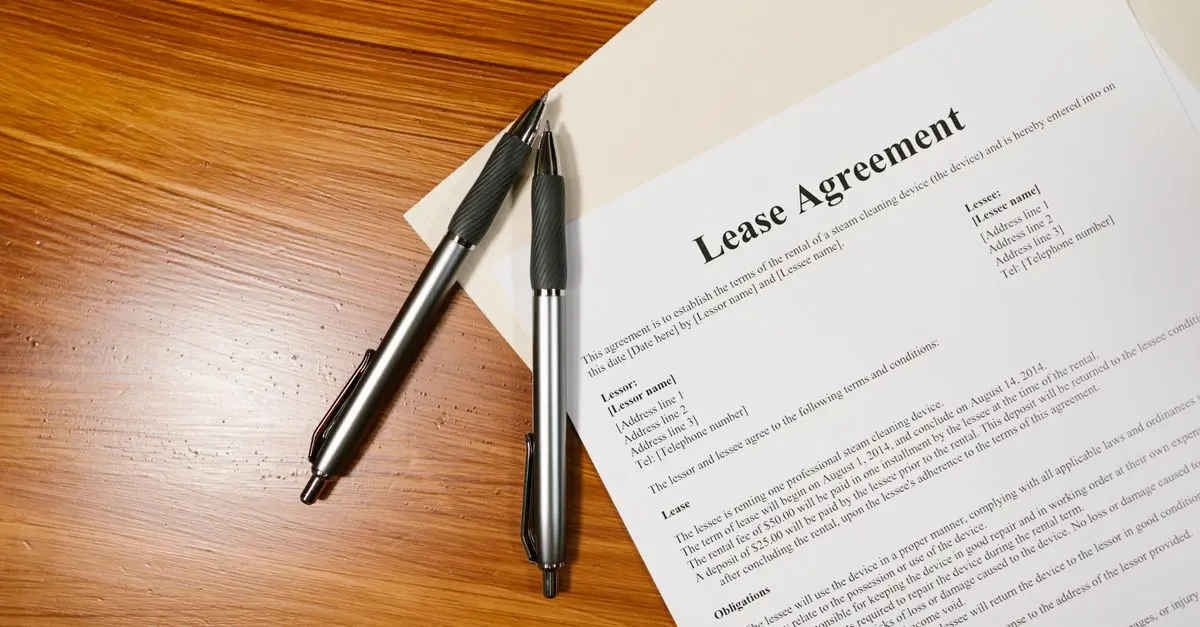
Each of these points must be set out in the document in clear language, with no ambiguity about dates, amounts, or percentages. A generic lease, like the one used for a conventional rental, does not cover these elements; it is worth reviewing a lease agreement template as a reference and then adapting it with a lawyer's help to incorporate the purchase option clause.
| Concept | What it defines | Why it matters |
|---|---|---|
| Option premium | Upfront payment for the right to buy | Usually non-refundable if the tenant doesn't buy |
| Rent credited toward the price | Monthly percentage deducted from the final price | Reduces the future down payment, but makes the monthly rent higher |
| Option period | Deadline to exercise the option | If it expires unexercised, the right is usually lost |
| Agreed price | Fixed value or update mechanism | Protects against surprises if the market rises or falls |
How to set the price and the applicable down payment
One of the most delicate points is how to set the sale price that will be carried out months or years after the contract is signed. There are basically two approaches: a fixed price from the start, or a price determined by an appraisal at the time the option is exercised, with or without a cap on variation. A fixed price gives both parties certainty, but it can cause dissatisfaction if the market moves a lot during the option period; a later appraisal is fairer in the face of market changes, but it introduces uncertainty for the tenant who is planning their budget.
As for the down payment (enganche) the buyer will need when exercising the option, it's worth checking in advance what percentage the bank or institution you plan to use for the mortgage requires, and whether the portion of rent accumulating in the buyer's favor actually counts as a valid contribution for that process. Not all banks accept this arrangement in the same way, so it is advisable to discuss it with a mortgage advisor before signing. Tools such as a rent calculator can help you gauge whether the proposed monthly amount is reasonable relative to the tenant's income.
Practical tip
Ask that the contract specify in pesos, not just as a percentage, how much of each monthly payment will be credited toward the purchase price. This avoids confusion if the rent is adjusted over time for inflation or under other clauses.
Common risks for tenants and owners
For the tenant, the main risk is paying a premium and months of rent in the expectation of buying, only to fail to qualify for the mortgage or be unable to come up with the full down payment, losing what was paid if the contract so provides. There is also the risk that the owner sells the property to a third party during the option period, if the contract does not include a clause expressly prohibiting it or requiring the option to be recorded in some verifiable way.
For the owner, the risk is tying up the property for a long period at a fixed price while the market rises, or being stuck with a tenant who damages the property knowing they may never buy it. Friction can also arise if the tenant invests in improvements expecting to end up with the house, and then the deal falls through.
Red flag
Be wary of any verbal agreement or any contract that does not clearly specify what happens to the premium and to the portion of rent credited toward the price if the purchase does not go through. Ambiguity on this point is the most frequent cause of legal disputes in this type of arrangement. Also check out our guide on common real estate scams in Mexico before committing any money.
Steps to formalize the agreement correctly
- Verify the legal status of the property, including the certificate of freedom from encumbrances and that the person signing as owner is actually listed on the property title.
- Negotiate and document in writing the price, the premium, the applicable rent percentage, and the option period, avoiding verbal agreements or informal promises.
- Have an attorney review the contract before signing; this document is not equivalent to a standard lease and requires specific drafting.
- If possible, formalize the purchase option before a notary or at least with certified signatures, to give the agreement greater legal force.
- During the term, keep receipts for every payment and for which portion goes to rent and which portion accumulates toward the purchase price.
- As the deadline approaches, confirm your credit situation well in advance and start the mortgage process with enough time so you don't lose the option to an administrative delay.
If you ultimately decide to buy, the deed process (escrituración) follows the same rules as any other sale: it helps to review in advance which documents are needed to buy a home and to estimate costs with the closing cost calculator, since these expenses are usually not included in the premium or in the rent paid during the option period.
Frequently asked questions
Is rent-to-own legal in Mexico?
Yes, it is a valid contractual arrangement based on freedom of contract, as long as it is properly documented and does not violate public-order provisions. There is no single federal law that specifically regulates this arrangement, so the clarity of the contract is essential.
What happens if I don't exercise the purchase option at the end of the term?
It depends on what the contract says. Generally, the premium paid for the option and, in some cases, the portion of rent that had been accumulating toward the purchase price are forfeited or remain with the owner, unless otherwise agreed.
Can the owner sell the property to someone else while the contract is in force?
They shouldn't be able to if the contract includes an exclusivity clause prohibiting it while the option is in effect. Without that explicit clause, the tenant is exposed to the owner breaching the agreement, so it is essential to negotiate it from the start.
Is this arrangement better than saving up and buying outright later?
It depends on the situation. It can make sense if the tenant needs time to improve their credit history or gather the down payment and wants to lock in a price and a specific property. If there is no real certainty of being able to buy at the end of the term, it can end up costing more than a conventional rental without an option.
Looking for a property to rent with an option to buy, or want to list your own?
Listings
Recent properties
 For sale
MX$1,440,000
Land
Land for Sale in Residencial Lomas del Dorado
Boca del Río, Veracruz
 For sale
MX$3,900,000
House
House for Sale in Las Lomas, Riviera Veracruzana | 3 Bedrooms with Private Bathrooms
Alvarado, Veracruz
 For sale
MX$10,900,000
Land
Attention Investors
Puerto Vallarta, Jalisco
Keep reading
Related articles

Rent-to-Own in Mexico: Mistakes You Should Avoid
A rent-to-own arrangement sounds appealing, but common contract mistakes can cost you money. Here are the most frequent ones.
Carlos Mendoza
Infonavit Rent-to-Own Program Explained
Apoyo Infonavit is a program that lets you rent a home with the option to buy it later using your Infonavit credit.
Carlos Mendoza

Coliving and Shared Rentals: The Option for Young Renters in 2026
Coliving in Mexico is growing as an alternative for young people: shared spaces, flexible rent and built-in community.
María Elena Rodríguez

Used Furniture on Facebook Marketplace: Buy Without Getting Scammed
Buying used furniture on Facebook Marketplace in Mexico: the most common scams, how to pay safely, what to check on sofas and wood, and what to do if you've been scammed.
Inmobiliaria32 Team
Renting and leases
Keep learning before you decide
99 guides on renting and leases, and thousands of properties listed across Mexico.