

Ground-Floor vs. High-Floor Apartments: Which to Choose
Ground-floor or high-floor apartment? Compare noise, security, light, price, views and maintenance to pick the floor that best fits your lifestyle.

When you're shopping for an apartment, sooner or later the question comes up: ground floor or a high floor? It's not a minor detail. The level you live on affects how much noise you hear, how much natural light comes in, how easy it is to move, how much you pay in maintenance, and even the resale price. In this guide we compare both options in depth, with their real pros and cons, so you can decide based on your routine, your budget and your priorities, and not just out of habit.
Ground-floor apartment
A ground-floor apartment is one located at street level or at the common-area entrance level, with no need to climb stairs or rely on the elevator. It's a common choice for older adults, families with small children, people with reduced mobility, or anyone who simply values the convenience of getting in and out quickly.
Advantages of the ground floor
- Immediate access: you don't depend on the elevator or on climbing stairs, which is key if you have reduced mobility, older adults at home, or frequently carry heavy loads.
- Simpler moves: moving furniture and appliances is faster and cheaper than moving them to a high floor.
- Sometimes with a patio or garden: some developments offer a small private outdoor space exclusive to ground-floor apartments.
- Quick exit in emergencies: in the event of an earthquake, fire or elevator failure, evacuating is more direct.
- More affordable entry price: in many buildings, the ground floor is usually listed below average, especially if it has no view.
What to check before buying or renting
This guide is informational and does not replace the advice of a real-estate professional, a property appraiser (perito valuador) or a specialized attorney. Before signing, confirm with the developer, the condominium administration or a trusted advisor the specific points on security, noise and value for the unit you're interested in, since they vary by building and by area.
Disadvantages of the ground floor
- Less privacy: windows tend to be visible from the street or from busy common areas, which means using curtains or blinds more often.
- Greater exposure to break-ins: street-level windows and doors are more accessible, so it's worth checking the building's perimeter security.
- Street noise: traffic, nearby businesses or neighbors walking to the elevator can filter in more easily.
- Less natural light: if there are nearby buildings or walls, the amount of light coming in can be lower than on upper floors.
- No panoramic view: the view is generally limited to the street, the parking lot or the adjacent building.
- Risk of dampness and flooding: in areas with heavy rainfall, the ground floor is more vulnerable to leaks or standing water than high floors.
High-floor apartment
A high floor is usually considered to start at the third or fourth level, although in very tall buildings the real range of a "high floor" can reach much higher levels. It's the preferred option for those seeking peace and quiet, views and a greater sense of privacy from the street.
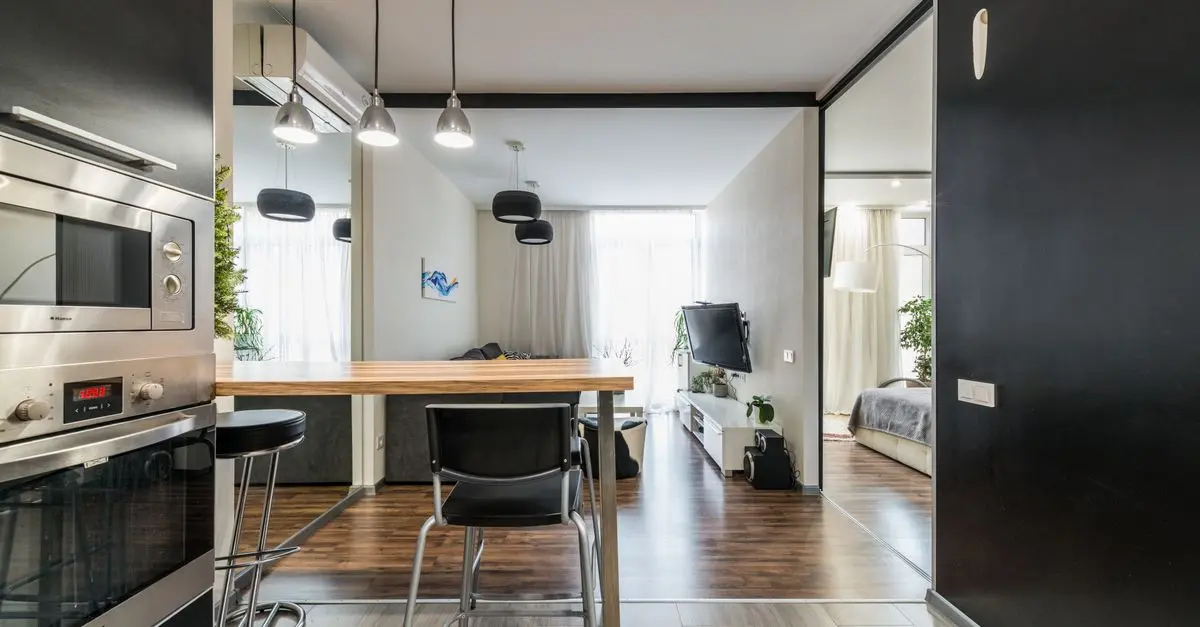
Advantages of the high floor
- Greater privacy: being farther from street level, it's less likely that anyone can see directly into the interior.
- Less street noise: traffic, horns and foot traffic are perceived less intensely the higher up the apartment is.
- More natural light: with no nearby obstacles, light tends to come in more easily during the day.
- Views: depending on the surroundings, you may have a view of the city, a park or green areas, something that usually shows up in the price.
- Lower risk of break-ins through windows or doors: direct access from the outside is practically impossible.
- Lower risk of dampness from rain or standing water: since it isn't at street level, it's less vulnerable to surface water leaks.
Appreciation (plusvalía) can vary by floor
In many buildings, high floors with good views are priced above the building's average, while the ground floor usually sells or rents for less. That difference is not a fixed rule: it depends on the surroundings, whether there is a reliable elevator, the noise in the area and the specific demand for the building. If you want an objective reference before deciding, you can estimate the value of a property taking into account the floor, the view and the condition of the unit.
Disadvantages of the high floor
- Dependence on the elevator: if it breaks down or the building loses power, walking up and down can be very tiring, especially with groceries or pets.
- More expensive moves: moving large furniture to high floors usually requires more time, more people and sometimes special maneuvers, which raises the cost.
- Slower evacuation: in the event of an earthquake or fire, going down several levels by stairs takes longer, a point to consider in seismic zones.
- Water pressure: in buildings without an adequate pumping system, the highest floors can have lower water pressure.
- Higher price: floors with a view or greater height usually carry a premium over intermediate or lower levels.
If the building you're interested in is a condominium, it's also worth looking at how the condominium maintenance fee (cuota de mantenimiento) works, since elevator use and common areas can influence the amount that all owners pay, regardless of which floor they live on.
Side-by-side comparison
This table summarizes the most relevant differences. Take it as a general reference: each building, area and specific unit can vary, so always confirm the particular conditions before deciding.
| Aspect | Ground floor | High floor |
|---|---|---|
| Access and convenience | Immediate, no elevator | Depends on the elevator |
| Street noise | Greater exposure | Lower, the higher you go |
| Privacy | Lower | Higher |
| Natural light | Variable, sometimes limited | Generally greater |
| View | Limited to street or parking lot | May include city or green-area views |
| Security against break-ins | Requires more protective measures | Lower risk of direct access |
| Emergency evacuation | Fast | Slower |
| Moving cost | Lower | Higher, depending on the height |
| Indicative price | Usually more affordable | May carry a premium for the view |
| Risk of dampness | Higher, depending on the area | Lower |
Factors that should tip your decision
Beyond the general comparison, there are concrete elements of the building and of your personal situation that carry more weight than an aesthetic preference for one floor or another:
- Elevator reliability: ask how many elevators the building has, whether maintenance is scheduled, and what happens during a prolonged power outage.
- Building security: a guard booth at the entrance, cameras, an automated gate and bars on ground-floor windows reduce a good part of the risk associated with the lower levels.
- Seismic or risk zone: in tall buildings located in seismic zones, check the evacuation routes and whether the building has a certified earthquake-resistant structure.
- How you'll use it: if you work from home and frequently receive visitors or packages, the practicality of the ground floor may outweigh the view.
- Household makeup: older adults, people with reduced mobility or families with strollers tend to benefit more from the ground floor or from lower floors with a reliable elevator.
- Long-term budget: consider not only the purchase or rental price, but the recurring cost of moves, elevator maintenance and possible repairs for dampness.
What suits you based on your profile
There is no "right" floor in absolute terms. These profiles can help you identify which option best fits your situation:
The ground floor may suit you if...
- You have reduced mobility or older adults at home.
- You prioritize quick, inexpensive moves.
- You're looking for the lowest entry price in the building.
- A direct exit in an emergency gives you peace of mind.
A high floor may suit you if...
- You value privacy and quiet above other factors.
- You want to take advantage of more natural light and a possible view.
- The building has reliable elevators and good maintenance.
- You can absorb a moving cost and, in some cases, a price premium.
Before deciding, confirm
- The actual condition of the elevator and its history of breakdowns or maintenance.
- The specific security measures for the unit you're interested in.
- Whether the building has a history of dampness, leaks or standing water on the ground floor.
- The terms of the rental or purchase-sale contract, including the maintenance fee.
- If you're looking to rent, also review your tenant rights in Mexico before signing.
Whatever your inclination, the best approach is to compare real options before deciding. You can browse the full catalog of apartments for sale and rent and filter by area, price and floor level according to your needs.
Frequently asked questions
Is a ground-floor apartment cheaper than a high-floor one?
In many buildings it is, especially if the ground floor has no view or private patio. But it's not a universal rule: the price difference depends on the building, the area, demand and whether the ground-floor unit includes some exclusive outdoor space. It's worth comparing similar units within the same development before assuming which is cheaper.
Which floor is safer against break-ins?
High floors usually have a lower risk of direct access through windows or doors, since you can't enter from the street. However, actual security depends more on the building as a whole: a guard booth, cameras, access control and the condition of the locks matter as much as or more than the level the apartment is on.
What happens if the elevator breaks down and I live on a high floor?
You'd have to use the stairs until it's repaired, which can be uncomfortable or difficult depending on your physical condition and the height of the building. That's why it's worth asking, before buying or renting, how many elevators the building has, how old they are and how quickly breakdowns are usually repaired.
Does the ground floor lose resale value compared to a high floor?
It can in buildings where high floors have a view or greater demand, but it's not an absolute rule. A ground floor with a private patio, good security and a practical location can also hold its value. The best approach is to evaluate the specific case with data from the area instead of assuming a general trend.
Do you already know whether you prefer the ground floor or a high floor?
Explore available apartments in your area and compare real floors, prices and amenities before deciding.
Listings
Recent properties
 For sale
MX$1,440,000
Land
Land for Sale in Residencial Lomas del Dorado
Boca del Río, Veracruz
 For sale
MX$3,900,000
House
House for Sale in Las Lomas, Riviera Veracruzana | 3 Bedrooms with Private Bathrooms
Alvarado, Veracruz
 For sale
MX$10,900,000
Land
Attention Investors
Puerto Vallarta, Jalisco
Keep reading
Related articles

Living in La Paz, Baja California Sur: Complete Guide 2026
Living in La Paz means a seaside malecón, the Sea of Cortez and a relaxed pace, far from the mass tourism of Los Cabos.
Inmobiliaria32 Team
How to Legally Negotiate Your Rent Down
Negotiating your rent down is possible with the right arguments and the right timing. These strategies work without damaging your relationship with the landlord.
María Elena Rodríguez
Pet-Friendly Apartments: What to Ask Before Renting
Not every apartment advertised as 'pet friendly' follows the same rules. Here are the key questions to ask before signing a lease with a pet.
Carlos Mendoza
Choosing a City When Returning to Mexico: Key Factors
What to consider when choosing where to live after returning to Mexico: cost of living, climate, connectivity, returnee community and proximity to family.
Carlos Mendoza
Buying a home
Keep learning before you decide
358 guides on buying a home, and thousands of properties listed across Mexico.