

Downsizing in Retirement: Moving to a Smaller Home
How to downsize your home in retirement and when it makes sense.

Reaching retirement with a three- or four-bedroom house that is no longer fully used is a common situation in Mexico. The "empty nest" — when the kids move out and rooms sit unused — often coincides with a change in income and a desire to simplify daily life. Downsizing, or reducing the size of your home, is one of the most important financial decisions a person can make close to retirement, and it deserves careful thought before you act.
This article is for informational and general guidance purposes only; it does not constitute legal, tax or financial advice. Matters involving ISR (income tax), mortgage loans and notary procedures vary from case to case, so you should always confirm with a notary public (notario público), an accountant or a financial advisor before making decisions.
Signs it's time to downsize your home
There is no exact age for deciding to downsize, but there are signs that tend to repeat among those who have already done it. The first is space: bedrooms that have been closed for years, a yard that has become hard to maintain, or a two-story house whose stairs are starting to be a real obstacle and not just an occasional nuisance.
The second sign is financial. If maintenance, the predial (property tax), utilities and repairs on a large house are absorbing a growing share of a retirement income that is now fixed (and probably lower than what you earned during your working years), moving to a smaller home can free up monthly cash flow and, at the same time, release capital tied up in real estate.
The third sign has to do with location: many people who retire want to be closer to healthcare services, transportation or a family member, and this almost always means changing neighborhoods as well as changing the size of the home.
Practical tip: before deciding, it's worth calculating what your current home is really worth on the market. You can use the Inmobiliaria32 valuation tool to get a reference figure before talking to an agent.
Financial and lifestyle benefits
The most frequently cited benefit of downsizing is financial: when you sell a large house and buy (or rent) a smaller one, there is usually a leftover amount of capital that can be used to top up your retirement fund, be invested in fixed-income instruments, or serve as a cushion for medical expenses, which tend to grow with age.
Beyond the money, there is an operational benefit that many people underestimate until they experience it: a smaller house or apartment means less cleaning, less maintenance, lower utility costs (water, electricity, gas) and, in buildings with amenities, less worry about security and exterior repairs.
There is also an emotional component that shouldn't be ignored: for some people, leaving the home where they raised their children is a difficult process, and the financial savings don't always make up for the emotional cost. That's why the decision should be made over time, without pressure, and preferably with your family's support.
Costs and procedures to budget for
Selling a house and buying a smaller one is not a free operation. Although exact amounts vary by state, property type and transaction value, you should keep the following items in mind before running optimistic numbers on "how much I'll have left over":
| Item | Who usually pays? | Notes |
|---|---|---|
| Real estate agent commission | Seller | Varies by agreement and area; negotiated before signing |
| Income tax (ISR) on the sale | Seller | Exemptions may apply if it's your primary residence; confirm with your notary public or accountant |
| Closing costs (escrituración) for the new property | Buyer | Vary widely by state; use an estimating calculator |
| Moving and setting up the new space | Both sides of the transaction | Includes getting rid of furniture that no longer fits |
| Certificate of freedom from liens (certificado de libertad de gravamen) and other documents | Seller | Required to sell without setbacks |
To get a rough idea of what it will cost to close on the new property, check out our closing cost calculator, and if your question is about what you'll pay in your state, see the article on how much it costs to close by state.

Selling and buying smaller vs. other alternatives
Downsizing doesn't always mean selling and buying right away. There are several routes, each with its own advantages and risks:
- Sell and buy with cash: the most direct option if your current home is paid off and the proceeds are enough for the new property without additional financing.
- Sell and rent: useful if you haven't yet decided which city or area to settle in for good, or if you'd rather invest the capital before committing it to another property. Review tenant rights in Mexico before you sign.
- Rent out your current home and move to something smaller: keeps your wealth intact and generates monthly income, but it means still owning two properties and taking on the role of landlord.
- Move to a retirement-oriented development: some developments offer smaller units with amenities geared toward older adults; it's worth exploring options under houses before deciding.
The right option depends on how certain you are about where you want to live for the rest of your retirement, on each person's financial health, and on how comfortable you are managing more than one property.
Tip: if you still have an active mortgage on your current home, review the prepayment terms before listing it. A miscalculation here can shrink the leftover amount you were counting on for your downsizing.
Practical steps to make the move
- Define the "why": are you looking for lower monthly costs, less maintenance, proximity to healthcare services, or to free up capital for retirement? The answer changes the type of property you should look for.
- Get your current home valued with a reference tool or a local agent so you know how much real capital you'll be working with.
- Get your documents and paperwork in order before listing the property: escrituras (deeds), predial up to date, certificate of freedom from liens. Our document checklist also works as a reference for the buyer's side.
- Explore smaller areas and property types: look at apartments or compact homes under houses depending on the city where you want to settle.
- Run the numbers with all costs included, not just the sale and purchase prices, to avoid last-minute surprises.
- Plan the move and the letting go of belongings well ahead of time; getting rid of furniture and items accumulated over the years usually takes longer than expected.
Frequently asked questions
At what age should I start thinking about downsizing for retirement?
There is no fixed age; it depends more on personal circumstances than on the calendar. Many people start evaluating it when their children no longer live at home or when their expected retirement date approaches, so they have time to plan the sale and the move without rushing.
Does downsizing always save money?
Not necessarily. The savings depend on the difference between the sale value of your current home, the cost of the new property and all the expenses of the transaction (commissions, taxes, closing costs, moving). It's wise to do a detailed calculation before assuming there will be money left over.
Is it better to sell the big house before or after finding the new one?
Both routes carry risks: selling first can leave you without a place to live temporarily if it takes time to find the new one, while buying first can put you under financial pressure if the sale is delayed. Many people opt for a temporary rental as a bridge between the two transactions.
What happens with my mortgage if it isn't paid off yet?
If your current home has an outstanding mortgage, it must be paid off (usually with the proceeds of the sale) before or at the time of signing the deed in the buyer's favor. Check with your bank about prepayment terms and whether there are penalties, since this affects the capital available for downsizing. If your loan is from INFONAVIT or FOVISSSTE, also look into those institutes' own portability and early-payoff options (different from those of traditional banks), and confirm the current balance and timelines directly with INFONAVIT, FOVISSSTE or your bank before listing the property.
Ready to take the next step toward a more manageable home?
Explore options near you or find out what your current home is worth before you decide.
Listings
Recent properties
 For sale
MX$10,900,000
Land
Attention Investors
Puerto Vallarta, Jalisco
 For sale
MX$11,900,000
House
House For Sale With Spacious Layout And Excellent Opportunity In Joyas de Mocambo
Boca del Río, Veracruz
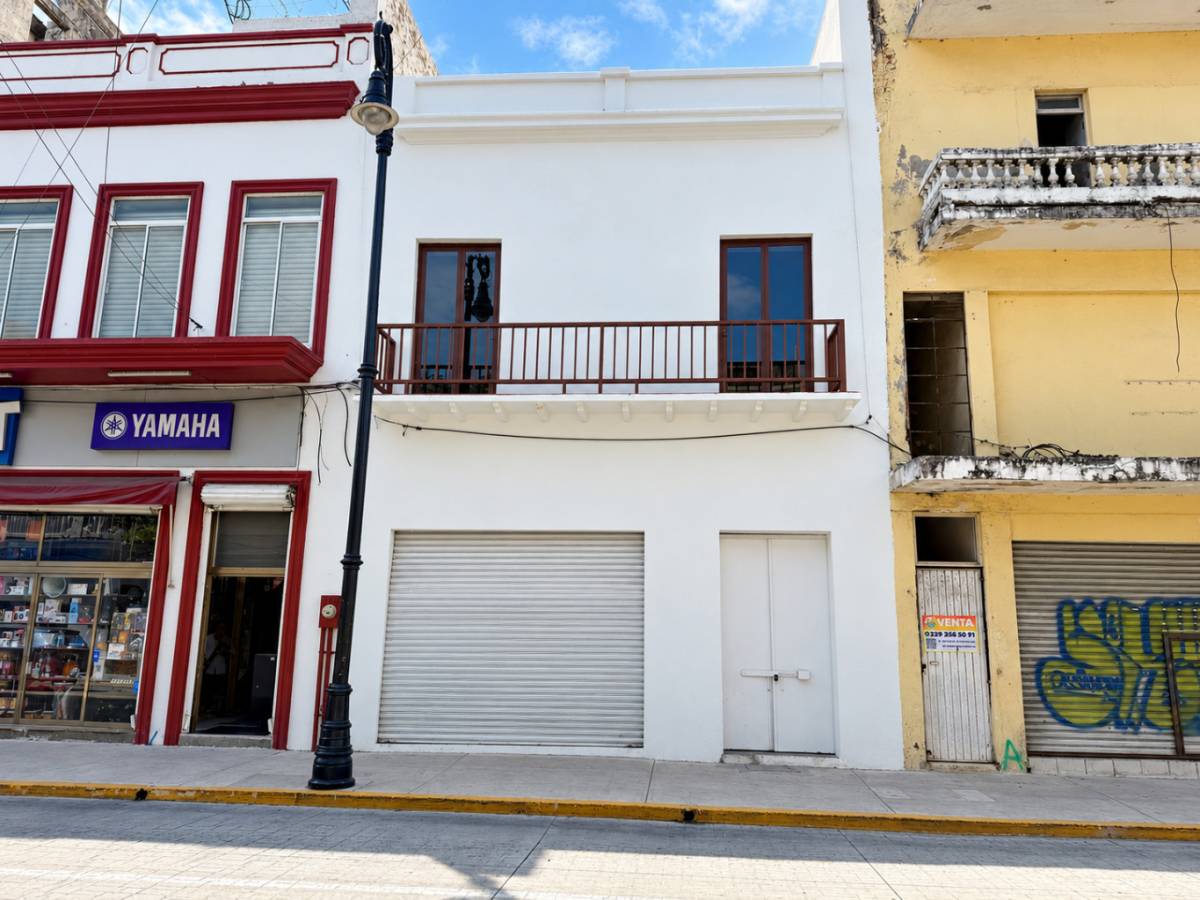 For rent
MX$55,000/month
Commercial space
2-Story Commercial Space With Double Access
Veracruz, Veracruz
Keep reading
Related articles

Living in San Pedro Garza García: Mexico's Priciest Municipality
Living in San Pedro Garza García costs more than anywhere else in Mexico. Why it's so expensive, prices by area, taxes and traffic, before you buy or rent there.
Inmobiliaria32 Team

Building Gym and Pool: Are You Overpaying for Amenities?
Before you pay for building amenities, find out if you're overpaying for a gym and pool. Calculate whether you'll really use them or just end up subsidizing what others enjoy.
Inmobiliaria32 Team
What Matters More: The House or the Location?
When weighing the house against the location, most real estate experts recommend putting location first.
María Elena Rodríguez

Sustainable Homes in Mexico: What Makes Them Worth More
A sustainable home in Mexico can cost more to build, but it often saves on utilities and adds resale value.
Inmobiliaria32 Team
Buying a home
Keep learning before you decide
358 guides on buying a home, and thousands of properties listed across Mexico.