

Studio Apartments: Who They Work For and Their Returns
Is renting out a studio a smart investment? We break down which tenant profiles studios suit and how to estimate their real return in Mexico.
Studio apartments have become a common fixture in new urban developments across Mexico, especially in areas with high rental demand. They are small, single-room apartments designed to maximize the number of units per square meter of construction. If you are thinking about investing in a studio as a rental property, the central question is not whether they "look good" on the floor plan, but whether the type of tenant they attract and the numbers they generate justify the capital you are about to commit. In this guide we look at which tenant profiles studios genuinely work for and how to estimate their return realistically.
Important notice: This article is for informational and educational purposes only. It is not financial, tax or legal advice, nor an investment recommendation. Prices, rents and return percentages vary by city, colonia, market timing and the specific characteristics of the property. Before investing in a studio, validate the numbers with a real estate advisor and, if necessary, an accountant.
What exactly is a studio?
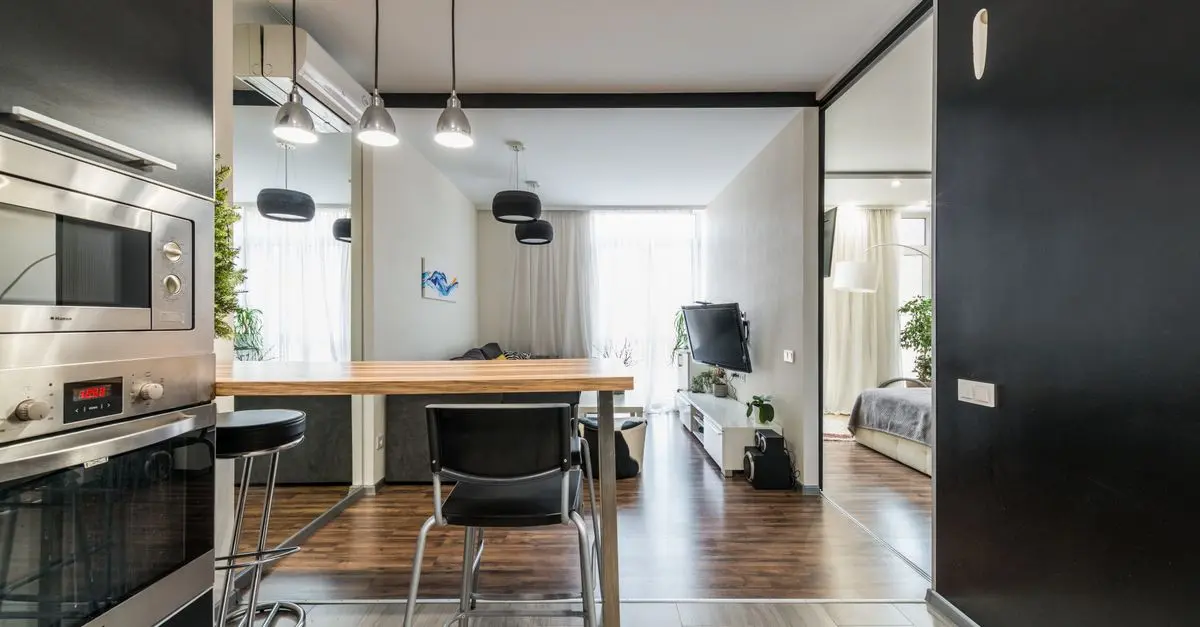
A studio is a single-room apartment that combines the living area, dining area, kitchen (or kitchenette) and sleeping area in one open space, usually with a separate bathroom. Unlike a one-bedroom apartment, there is no physical division between the sleeping area and the rest of the unit, although some developments add half walls or split levels to create a sense of separation.
A studio's floor area is typically considerably smaller than that of a conventional apartment, which lowers the entry price for both the tenant who rents and the investor who buys. That combination—lower purchase price and lower monthly rent—is exactly what explains its popularity in the segment of apartments aimed at renters.
It is important not to confuse a studio with a "loft": a loft usually has double-height ceilings and a more industrial design, while a studio is, above all, a space-efficiency solution that maximizes the number of sellable or rentable units within a single building.
Who renting a studio works for
Before buying with the idea of renting out a studio, it helps to understand clearly what type of tenant looks for this format, because the demand and turnover you will face as a landlord depend directly on it.
- Young single professionals: people who prioritize proximity to work or well-connected areas, and who don't need more space than a studio offers.
- Graduate and exchange students: especially near universities, they look for medium-term stays with affordable rent and a walkable location.
- Executives on temporary assignments: profiles that relocate for work (including the nearshoring phenomenon in some cities) and need functional housing without committing to a long lease or a large space.
- People who live alone and prioritize location over square footage: willing to pay more per square meter in exchange for being close to work, transit or their social life.
- Short- and medium-stay tenants: in tourist or business areas, some studios work well for rentals of a few weeks or months.
What almost never works well in a studio is family demand or couples with children, and it is also rarely the first choice for people who work from home permanently and need a separate office space. If your target market in the area is families, a studio is probably not the right product for that lot or building.
How to estimate a studio's return
A studio's return is not measured only by "how much it rents for per month," but by the relationship between that rent and all the costs associated with the property. A basic calculation of gross annual return would look like this:
| Item | What to consider |
|---|---|
| Expected monthly rent | Research prices for comparable studios in the same colonia, not citywide averages |
| Gross annual rent | Monthly rent x 12, as an initial reference before subtracting expenses |
| Gross return | (Gross annual rent / purchase price) x 100, as a rough percentage |
| Fixed expenses | Maintenance fee, predial (property tax), insurance and, where applicable, lease management fees |
| ISR (income tax) on rental income | The income tax (ISR) triggered by renting out the property significantly reduces the actual net return; the tax regime and applicable rate depend on your tax situation, so it's best to calculate it with an accountant |
| Net return | Gross return minus the proportional weight of fixed expenses, ISR and estimated vacancy |
A key point many investors overlook with studios is that maintenance fees are usually calculated per square meter or per unit, and in buildings with extensive amenities (pool, gym, coworking, roof garden) they can represent a larger share of the monthly rent than in a traditional apartment, precisely because the studio generates less absolute rent to dilute that fixed cost.
Another commonly underestimated item is the income tax (ISR) generated by rental income: along with vacancy, it is one of the factors that most separates the "paper" (gross) return from the real return that ends up in the investor's pocket. Depending on your tax situation there are different schemes for reporting this income and different applicable deductions, so it's best to plan it with an accountant before buying, not after renting.
If you are weighing a cash purchase versus financing, it is also worth reviewing the property's estimated value and comparing the studio's price per square meter against local benchmarks before closing the deal.
Key idea: Studios often show a higher gross return per square meter than larger apartments in the same area, because the rental price per square meter tends to rise the smaller the space is. But that advantage can be diluted if maintenance fees and vacancy are high relative to the rent.
Advantages and risks compared with a traditional apartment
Comparing a studio against a one- or two-bedroom apartment in the same area helps you see clearly what field you are playing in as an investor.
- Lower entry price: you can usually get into a studio with less capital than a traditional apartment in the same location, which makes it easier to diversify across more than one property.
- A narrower tenant market: the pool of people looking to rent a studio (mostly singles or couples without children) is smaller than that of people looking for a one-bedroom apartment.
- Potentially higher turnover: studio tenants tend to stay for shorter periods (students, temporary work assignments), which can mean more lease management and more vacant days between tenants.
- High sensitivity to exact location: a studio depends far more on being close to transit, offices or universities than a family apartment does, because its typical tenant values proximity over space.
- Lower absolute maintenance cost: because the space is smaller, wear and renovation costs between tenants tend to be lower in absolute terms.
Where this investment tends to make the most sense
A studio's return depends heavily on the urban context where it is located. In general terms, this format tends to perform better in:
- Areas with a high concentration of offices and formal employment: where there is a steady base of professionals looking to live near their jobs.
- Colonias near universities or educational centers: with recurring demand from graduate or exchange students.
- Cities that attract investment and technical personnel: where nearshoring and the arrival of companies have created demand for medium-stay housing for workers who relocate alone.
- Areas well connected by public transit: because the typical studio tenant tends to rely more on transit than on a personal car.
Outside these contexts—for example, in suburban residential areas aimed at families—a studio can become hard to rent consistently, even if the purchase price looks attractive on the floor plan.
Common mistakes when investing in studios
These are the most frequent missteps we see in investors who buy studios based solely on the entry price:
- Calculating the return using only gross rent, without subtracting maintenance, predial and expected months of vacancy.
- Buying pre-construction (preventa) without verifying real rental demand in the area once the building is delivered, and without reviewing, before signing, documents such as the escritura or purchase agreement, the predial account statement, the condominium bylaws and current maintenance fees, and the property's certificate of freedom from liens (certificado de libertad de gravamen).
- Failing to consider that a building with many studios competing against each other can push rents down if supply outstrips local demand.
- Drafting the lease without specifying basic points such as the security deposit, the guarantor (aval) or additional guarantee, the minimum term, who covers maintenance and under what grounds the lease can be terminated; this, combined with not knowing the tenant rights in force in the state, can create avoidable conflicts given the high turnover typical of this segment.
- Not using a rent calculator to compare different price and return scenarios before committing capital.
Practical recommendation: Before buying a studio to rent out, walk the area at different times of day, check how many similar studios are currently for rent in the same colonia, and ask a local advisor how long they typically take to rent. That information is worth more than any optimistic projection from a seller.
Frequently asked questions
Is renting out a studio as an investment more profitable than a traditional apartment?
It can be in terms of gross return per square meter, because rental prices tend to be proportionally higher in small spaces. But that advantage depends on location, vacancy and the weight of maintenance fees, so it's best to compare concrete scenarios before assuming a studio always beats a one-bedroom apartment.
What type of tenant looks to rent a studio?
Mainly young single professionals, graduate students, people on temporary work assignments and those who prioritize location over the size of the home. It is rarely the first choice for families or couples with children.
What are the main risks of investing in a studio as a rental?
The most common risks are higher tenant turnover, a narrower demand market than that of conventional apartments, and maintenance fees that can represent a high percentage of the rent if the building has many amenities. It is also sensitive to oversupply if the building or area concentrates many similar studios.
In which areas does a studio usually work best as an investment?
It usually works best in areas with a concentration of offices and formal employment, proximity to universities, good public transit connectivity, and cities that steadily receive investment and technical personnel. In suburban areas aimed at families, rental demand for studios tends to be much more limited.
Looking for a studio to invest in or rent?
Explore available apartments and studios and compare options before making your decision.
Listings
Recent properties
 For sale
MX$1,440,000
Land
Land for Sale in Residencial Lomas del Dorado
Boca del Río, Veracruz
 For sale
MX$3,900,000
House
House for Sale in Las Lomas, Riviera Veracruzana | 3 Bedrooms with Private Bathrooms
Alvarado, Veracruz
 For sale
MX$10,900,000
Land
Attention Investors
Puerto Vallarta, Jalisco
Keep reading
Related articles
Living in Colonia Del Valle: Who It's For and What It Costs in 2026
Is living in Del Valle worth it? Prices by zone, getting around, earthquakes, water and who this Benito Juárez neighborhood suits, before you rent or buy.
Carlos Mendoza
Airbnb Profitability in Puerto Vallarta: What to Know First
Analyze Airbnb profitability in Puerto Vallarta: high-demand areas, real costs, estimated occupancy and regulations to review before you invest.
Carlos Mendoza

Closing Negotiation: Who Pays Which Costs
Who pays closing costs is one of the most common questions in any property sale.
Inmobiliaria32 Team
Social Interest Housing in Mexico: What It Is and Who Qualifies
What is a casa de interés social and who can buy one? We explain the requirements, ballpark prices and available credit options.
Carlos Mendoza
Renting and leases
Keep learning before you decide
99 guides on renting and leases, and thousands of properties listed across Mexico.