

How to Choose the Best Area to Live In (Practical Guide)
Safety, commutes, schools, services, appreciation and risks: a practical guide to evaluating colonias and choosing the best area to live in Mexico.
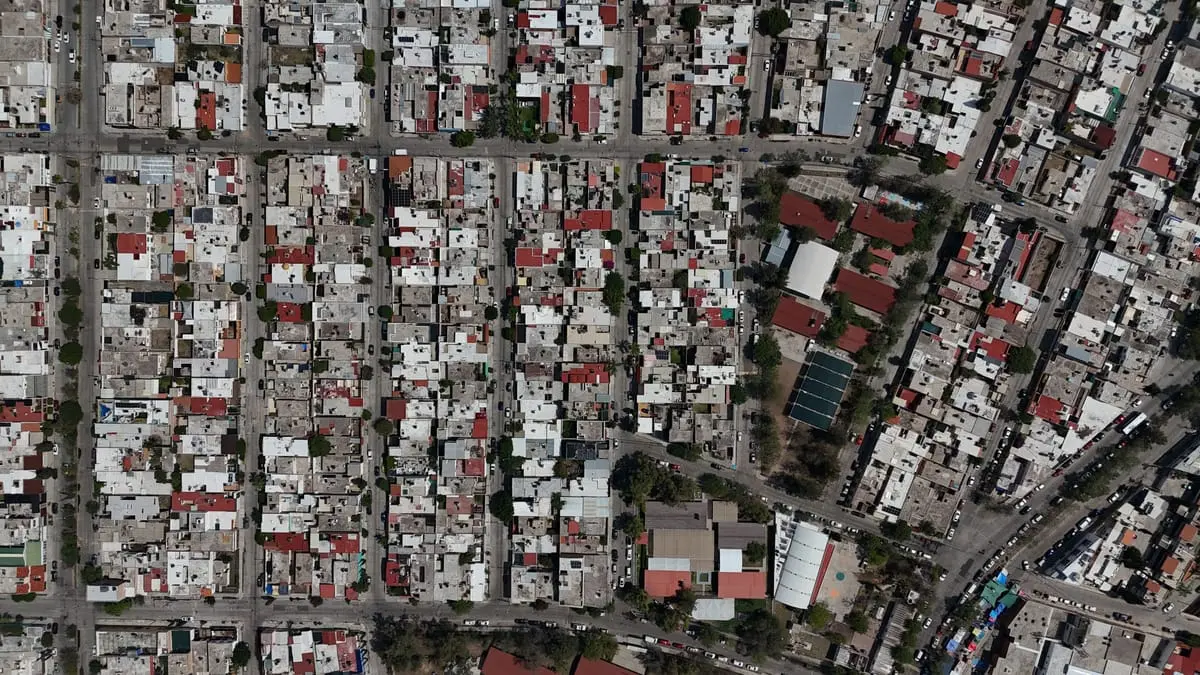
Choosing where to live often matters as much as the house itself, if not more. You can remodel a kitchen or replace the flooring, but you can't move your home to another colonia (neighborhood). That's why, before falling in love with a property, it pays to carefully evaluate the area around it: how safe it is, how long it would take you to get to work, what schools and services are nearby, and how its value might behave over time. In this practical guide we share the key factors and a simple way to research a colonia before you decide.
Why the area matters so much
Location shapes a large part of your daily quality of life: the minutes you lose in traffic, how comfortable you feel walking at night, how close your kids' school or the grocery store is. The area is also usually the factor that most influences how a property's value evolves over time. A well-maintained house in a troubled colonia rarely appreciates the way an average house in a growing area does.
That's why it's worth treating the choice of colonia as its own decision, with its own research, and not as a mere accessory to the house you happened to like.
Rule of thumb
Buy the worst house on a good street before the best house on a problematic one. You can improve the house; the surroundings, almost never.

The factors you should evaluate
Not every priority carries the same weight for everyone. A young couple without children will value proximity to schools differently than a family with kids. Even so, these are the factors worth checking in almost any case:
Safety
For most people, this is factor number one. Look at the condition of the streets, whether there is security patrolling or guard booths, how the homes look, and how many people are out and about at different times of day. Also ask neighbors and local businesses how safe they feel, and look at news or reports about the area. No single source is conclusive, so it's best to cross-check several.
Transportation and commutes to work
A long commute is paid for every single day. Before deciding, work out how long it would take you to get from the colonia to your job or school at rush hour, not on a quiet Sunday. Consider proximity to public transportation, main avenues and access roads, as well as the monthly cost of gas or fares. A cheaper house that's far away can end up costing you more in time and money.
Schools and healthcare
Even if you don't have kids, being close to good schools tends to sustain demand and value in an area. Check which schools, clinics, hospitals and pharmacies are within a reasonable radius, and how crowded or accessible they are.
Services and shops
Daily life gets more comfortable when you have supermarkets, markets, banks, transportation and green areas nearby. Also verify that the colonia has reliable basic services: water, drainage, electricity, street lighting and trash collection. Ask about how consistent the water supply is, which can be a sore spot in some areas.
Future appreciation (plusvalía)
Look for signs of growth: infrastructure projects, new businesses, urban improvements or transportation projects. They tend to anticipate higher demand. We go deeper on this in our guide on what increases a property's appreciation (plusvalía). Keep in mind that appreciation is never guaranteed; it's a probable trend, not a promise.
Noise and atmosphere
A busy avenue, a nearby bar, a market or an industrial zone can generate noise, traffic or bad odors at certain times. What looks peaceful during the day can change at night or on weekends. That's why it's wise to visit the colonia at different times before deciding.
| Factor | What to look for | How to verify it |
|---|---|---|
| Safety | Security patrols, lighting, foot traffic on the street | Visits at different times and chats with neighbors |
| Commutes | Travel time to work at rush hour | Test the real route on a workday |
| Services | Water, shops, schools, healthcare | Walk the area and ask local businesses |
| Appreciation | Infrastructure projects, new businesses, urban improvements | Compare prices and projects on the map |
Budget vs. area
You'll almost always have to balance what you want with what you can afford. The same amount of money can buy a spacious house in a distant area or a smaller one in a central, well-connected colonia. There's no universally correct answer: it depends on your lifestyle, your job and your priorities.
A useful exercise is to first define your non-negotiables (for example, safety and a tolerable commute) and then adjust the size or type of home from there. To compare real options by location and price, you can explore properties across all of Mexico or filter by your needs in our search.
Beware of false savings
A cheaper home in a distant area or one with poor services can end up costing you more in commuting, lost time and lower appreciation. Add up those costs before comparing just the listing price.
Risks that are often overlooked
Beyond the obvious, there are risks that only show up with careful research:
- Flooding and standing water: ask whether the street floods during the rainy season. A lot in a low-lying area or near a river or canal can be problematic.
- Land use (uso de suelo): confirm that the zoning is residential and compatible with what you're looking for. A change of use or the arrival of businesses or industry can affect both tranquility and value.
- Geological risks: in some regions there are areas with subsidence, cracks or unstable soil. It's worth asking locally.
- Future construction: a nearby road project or high-density development can completely change the character of the colonia.
Much of this information can be obtained from the municipal authority or through local risk maps. Not all data is always available, so it's best to combine official sources with direct observation.
How to research a colonia
This is where most people fall short. Seeing the house just once, on a Saturday morning, isn't enough. Here are the best ways to really get to know an area:
Investigate like a detective
- Visit at different times: go on weekdays and weekends, by day and by night. The atmosphere can change completely.
- Talk to the neighbors: nobody knows the colonia better than the people who live there. Ask about safety, water, noise and community life.
- Check price maps: compare what similar properties around it cost to see whether the price is reasonable. Our property map helps you locate options by area.
- Explore on foot: walking the colonia reveals details you miss from a car: sidewalks, lighting, shops, the condition of the streets.
- Test your commute: drive the real route to your workplace on a workday, at the time you would actually do it.
Take the time to repeat these visits. A decision of this magnitude deserves more than one afternoon of exploring, and what you learn will give you far more peace of mind when it's time to sign.
Checklist before you decide
Before committing to an area, make sure you can answer these points with confidence:
- I visited the colonia on different days and at different times.
- I tested the real commute to my job or school at rush hour.
- I talked to at least a couple of neighbors about safety and services.
- I confirmed that the water supply and basic services are reliable.
- I verified the land use and asked about flood risk.
- I compared prices of similar properties in the area.
- I identified signs of growth or deterioration.
- I added up commuting costs when comparing the price of the house.
Frequently asked questions
What matters more, the house or the area?
In general, the area. You can remodel or expand a house over time, but the surroundings, safety and location are out of your hands. That's why many experts suggest prioritizing the colonia first and then finding the best home within your budget there.
How do I know if an area has good appreciation potential?
There are no guarantees, but good signs usually include new infrastructure, new businesses, urban improvements and sustained demand. Comparing how prices have evolved nearby also helps. Check our guide on what increases appreciation (plusvalía) for more detail.
Is it worth moving farther out to pay less?
It depends. Moving farther out can give you more space for the same money, but also more commuting time and cost. Before deciding, calculate how much time you would lose each day and factor that into the analysis, not just the property's price.
How do I confirm a colonia's land use?
You can check with the municipal authority or request a land-use certificate (certificado de uso de suelo). This is especially advisable if the area mixes housing with commercial or industrial uses, or if you plan to use the property for something other than residential purposes.
Find the ideal area for you
Now that you know what to evaluate, explore properties by location and compare colonias on the map to make a confident decision.
Listings
Recent properties
 For sale
MX$1,440,000
Land
Land for Sale in Residencial Lomas del Dorado
Boca del Río, Veracruz
 For sale
MX$3,900,000
House
House for Sale in Las Lomas, Riviera Veracruzana | 3 Bedrooms with Private Bathrooms
Alvarado, Veracruz
 For sale
MX$10,900,000
Land
Attention Investors
Puerto Vallarta, Jalisco
Keep reading
Related articles

Ensenada Neighborhoods: Which Area to Choose for Living
Ensenada areas and colonias compared: Centro, Chapultepec, Valle Dorado and the coast toward Punta Banda. What to check before buying or renting a home there.
María Elena Rodríguez
Best Neighborhoods to Live in Puebla (2026): Price per m² & Zone Guide
Angelópolis, La Vista, Lomas de Angelópolis and the Centro Histórico: approximate prices per m² and profiles of the best neighborhoods in Puebla to live in for 2026.
Inmobiliaria32 Team
Living in Mexicali: A Practical Guide
A practical guide to living in Mexicali: extreme summer heat, the maquiladora industry.
María Elena Rodríguez
Living in Zacatecas City: A Practical Guide
What it's like to live in Zacatecas City: typical neighborhoods, cost of living.
María Elena Rodríguez
Buying a home
Keep learning before you decide
358 guides on buying a home, and thousands of properties listed across Mexico.