

How Much Does It Cost to Build a House in Mexico in 2026?
Cost-per-m² ranges for building a house in Mexico in 2026 by finish level, what shell and finished construction include, and timelines.
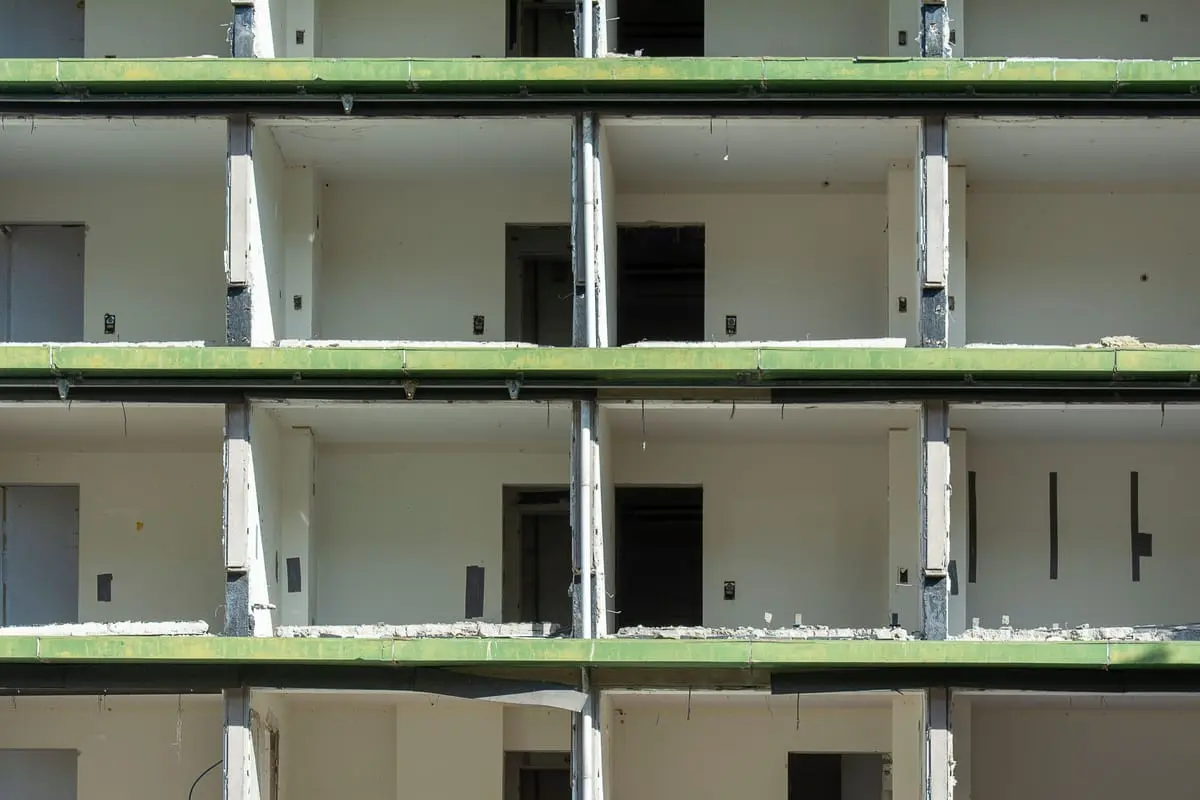
Building your own home sounds like the best way to get exactly what you want, but the first question is always the same: how much does it cost? The honest answer is that it depends on many factors, and any fixed figure tends to be misleading. In this 2026 guide we give you realistic cost-per-square-meter ranges by finish level, explain what each stage includes, and show you how to finance your project without surprises.
Cost per m² by finish level
The most useful way to estimate construction in Mexico is by the cost per square meter of construction (not of land). That cost varies a lot depending on the finish level you choose, the region of the country, the topography of the lot, and material prices at the time work begins. The ranges below are approximate and indicative for 2025-2026; treat them as a starting point and always confirm with local quotes.
Before you read the numbers
There is no single "national price." Building in a large city with expensive labor doesn't cost the same as in a small town, and a sloped lot or one with poor access makes foundations more expensive. Use these ranges to size your project, not as a final budget.
| Finish level | Approx. range per m² (finished construction) | What to expect |
|---|---|---|
| Economy | Around 8,000 to 12,000 pesos | Basic materials, simple finishes, functional design |
| Mid-range (interés medio) | Around 12,000 to 18,000 pesos | Better quality finishes, more detailing, greater durability |
| Residential / premium | From 18,000 pesos and up | High-end materials, architect-designed, no ceiling on cost |
As you can see, the difference between one level and the next is enormous. A 120 m² house can cost very different amounts depending on whether you build at the economy or the residential level. That's why it pays to define your finish level and budget first, and then adjust the square footage, not the other way around.
What shell and finished construction include
When you ask for quotes, you'll hear two key terms: obra gris (shell construction) and obra terminada (finished construction). Confusing them is one of the most common causes of budgets that blow up.
Obra gris (shell construction)
This is the structure of the house without final finishes: foundation, walls, slabs, castillos (reinforced concrete columns), basic hidden utilities and, sometimes, plastering. When the shell is done you have a house that is "standing," but not yet fully livable. It usually represents a significant share of the total cost, although the percentage varies by project.
Obra terminada (finished, or "turnkey")
It includes everything that makes the house livable: floors, paint, doors, windows, kitchen, full bathrooms, finished electrical and plumbing systems, and carpentry. This is where the finish level either drives up or contains the cost, because imported porcelain tile and domestic ceramic tile can differ greatly in price.
Watch out for "cheap" quotes
If a budget looks suspiciously low, check whether it covers only the shell. A shell-only quote will always look cheaper than a finished-construction one, but you're not comparing the same thing. Always ask them to specify what is and isn't included.
Land is counted separately
A common mistake is to add up the construction cost and assume that's everything. The land is paid for separately, and its price depends entirely on location: a lot in an established urban area can cost far more than the construction itself, while in outlying areas the proportion is reversed.
Before buying a lot to build on, browse the options in our land for sale section and, very importantly, verify the land use (uso de suelo): not every lot allows housing. We explain how to do it in our guide on how to verify land use.
Costs that are also separate
Besides the land and the construction, budget for municipal licenses and permits, architectural and structural design, utility hookups (water, electricity, sewer), and the deed process (escrituración). These items can add up to a meaningful percentage that many people overlook.
Labor vs. materials
The cost per m² is split, broadly speaking, between materials and labor. The exact proportion varies by region and by project, but both weigh heavily and both move with inflation.
- Materials: cement, steel, block, sand, gravel, utilities and finishes. Their prices fluctuate with the market, so a quote has an "expiration date."
- Labor: can be hired by administration (you buy the materials and pay the workers) or at a fixed price (a contractor quotes everything). Each arrangement has different advantages and risks.
Hiring at a fixed price gives you cost certainty, but it tends to run a bit higher because the contractor builds in a margin for taking on the risk. Building by administration can save money if you have the time to supervise and compare prices, but you're exposed to price swings and miscalculations.
How long does construction take?
The timeline depends on the size of the house, the complexity of the design, the weather and the availability of resources. As a rough guide, a mid-sized single-family home usually takes several months, and it's not unusual for a complete project to stretch close to a year once you count permits, design and fine finishes.
The factors that most often lengthen timelines are rain, delays in paperwork, last-minute changes to the plans, and a lack of cash flow to buy materials on time. Planning with some slack avoids pressure and rushed decisions.
How to finance your construction
Not everyone has the full amount saved, and that's what financing options designed specifically for building on your own land are for. These are the most common ones:
Bank construction loan
Several banks offer loans for self-building or building on your own land. They usually release the money in stages as the work progresses, after an appraisal or inspection. They require proof of income, a good credit history and, generally, that you own the land.
INFONAVIT ConstruYO
For members (derechohabientes), INFONAVIT has programs geared toward self-built housing, such as ConstruYO INFONAVIT, which lets you use your loan to build on land you own. Terms, amounts and requirements can change, so always check the current information directly on the Institute's official website before making decisions.
Before applying for financing
- Confirm that the land has a recorded deed (escriturado) and is free of liens.
- Have the design plans and a detailed stage-by-stage budget on hand.
- Compare the Total Annual Cost (CAT) across lenders.
- Leave a cushion for the unexpected; almost no project finishes exactly on the initial budget.
Tips to stay within budget
- Define the finish level from the start. Switching from "mid-range" to "residential" halfway through the build drives up the cost.
- Hire an architectural design. Building without plans usually costs more because of mistakes and wasted material.
- Get several quotes and compare what each one includes (shell vs. finished).
- Keep a contingency fund equal to a percentage of the total budget.
- Buy materials in stages so you don't tie up cash or risk deterioration from storage.
- Supervise, or hire supervision. An experienced eye catches problems before they become costly.
And if along the way you discover that building isn't for you, you can always compare with what the market offers in ready-made homes. Explore options in our property search and estimate what your finished home would be worth with our tool to calculate the value of a property.
Frequently asked questions
Is it cheaper to build or to buy an existing house?
It depends on the case. Building can be a good deal if you already own the land and want a custom design, but it involves time, supervision and the risk of cost overruns. Buying a finished home gives you price certainty and immediate availability. It's worth comparing both scenarios with real numbers for your area.
Does the cost per m² include the land?
No. The cost per square meter of construction refers only to building the house. The land, permits and utility hookups are budgeted separately.
Can I use my INFONAVIT loan to build?
Yes, there are options for self-built housing on your own land, such as ConstruYO. Requirements and amounts can change, so verify the current terms on the Institute's official website.
Build or buy? Compare before you decide
Explore move-in-ready properties and calculate what your finished home would be worth. That way you make the best decision for your budget.
Listings
Recent properties
 For sale
MX$1,440,000
Land
Land for Sale in Residencial Lomas del Dorado
Boca del Río, Veracruz
 For sale
MX$3,900,000
House
House for Sale in Las Lomas, Riviera Veracruzana | 3 Bedrooms with Private Bathrooms
Alvarado, Veracruz
 For sale
MX$10,900,000
Land
Attention Investors
Puerto Vallarta, Jalisco
Keep reading
Related articles

How Much Does It Cost to Deed a House in Mexico? Breakdown
How much does it cost to formalize a home purchase with a deed (escritura) in Mexico? Here is the full breakdown of taxes, notary fees, registration and certificates, with a real calculation example so you can budget without surprises.
Inmobiliaria32 Team

How Much Does It Cost to Close on a Home in Mexico, by State (2026)
Closing on a home (escrituración) costs between 4% and 8% of its value, but it varies widely by state because of the ISAI and registration fees.
Carlos Mendoza

Cameras and Alarms: What It Costs to Secure Your Home
An overview of what it costs to secure your home with cameras and alarms: what drives the price, basic vs. advanced options, and how to prioritize your budget.
Carlos Mendoza
How Much Does a Kitchen Remodel Cost in Mexico?
A practical guide to kitchen remodel costs in Mexico: price ranges by finish level, what drives the budget up, and how to avoid surprises during construction.
Carlos Mendoza
Building and remodeling
Keep learning before you decide
33 guides on building and remodeling, and thousands of properties listed across Mexico.